
Appendectomy,
does it really help with Definitive treatment and long-term recurrence prevention for CT-confirmed uncomplicated acute appendicitis in adults?
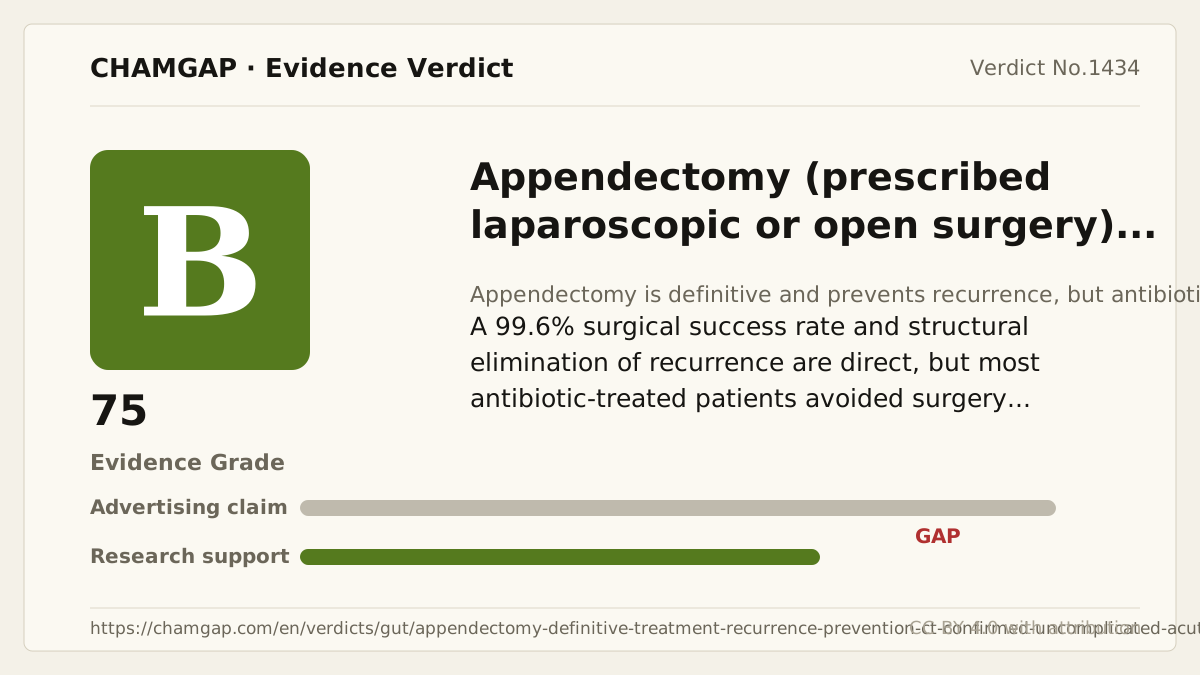
research showsAppendectomy is rated B because it provides highly reliable one-time treatment and prevents recurrence from the same appendix in adults with CT-confirmed uncomplicated acute appendicitis. In the APPAC randomized trial, 272 of 273 operations succeeded, a 99.6% rate, while the antibiotic group had 39.1% cumulative recurrence at five years. About 61% of antibiotic-treated patients nevertheless remained recurrence-free for five years, and complications were more frequent after surgery, so definitive treatment alone does not justify grade A.
ads claimA surgical description can emphasize zero recurrence while hiding the chance of avoiding surgery with antibiotics, whereas a nonsurgical description can emphasize successful antibiotic treatment while minimizing roughly 39% five-year recurrence. Definitiveness, recurrence tolerance, complications, and recovery time all belong in the comparison.
Useful facts when choosing a product
- Appendectomy removes the inflamed appendix laparoscopically or through an open incision as urgent or semi-urgent prescribed surgery; complicated disease may also require drainage and additional antibiotics.
- APPAC enrolled adults aged 18 to 60 years after CT excluded perforation, abscess, a mass, and other complicated features, so its results do not directly cover pregnancy, children, older adults, or complicated appendicitis.
- Laparoscopic surgery is common today, but APPAC used a standard open appendectomy protocol, so its recovery and complication estimates should not be transferred unchanged to every contemporary operation.
- Wound infection, bleeding, intra-abdominal abscess, adhesive obstruction, and anesthesia complications can occur. Choosing antibiotics instead accepts a risk of initial failure, recurrence, and return visits.
Chamgap Semantic Classification Code
Candidate index · review held
P.appendectomy.procedural.definitive-treatment-and-long-term-recurrence-prevention-for-ct-confirmed-uncomplicated-acute-appendicitis.prevent.UNKProcedures, devices and tests > Appendectomy > Procedural > Definitive treatment and long-term recurrence prevention for CT-confirmed uncomplicated acute appendicitis > Occurrence-prevention claim > Unknown
An automated migration candidate, not an issued permanent code; exact claim scope remains under review. This machine-generated migration candidate helps retrieval but is not a permanent assignment. The original verdict ID and URL remain authoritative.
What the research actually shows
APPAC randomized 530 adults aged 18 to 60 years with CT-confirmed uncomplicated acute appendicitis to standard open appendectomy or intravenous ertapenem followed by oral levofloxacin and metronidazole. Surgical success was 99.6%, while 27.3% of the antibiotic group underwent surgery within one year and the prespecified noninferiority criterion was not met. Five-year cumulative recurrence was 39.1%, but most later operations still found uncomplicated disease, and overall complications were 24.4% after surgery versus 6.5% after antibiotics. The findings are limited to adults whose CT excluded perforation, abscess, or a mass.
Why this is classified as B (75)
In a randomized trial of CT-confirmed uncomplicated appendicitis, surgery succeeded in 99.6% and five-year recurrence after antibiotics was 39.1%, directly supporting definitive treatment and recurrence prevention. Most antibiotic-treated patients avoided long-term surgery, surgical complications were higher, and the open-label trial centered on open surgery in selected adults, supporting B with 75 points.
Counterpoint. Perforation, abscess, systemic instability, or another complicated feature lies outside this antibiotics-first comparison. Even in uncomplicated disease, preferences for avoiding recurrence versus avoiding surgery differ and support shared decision-making.
Rejudgment record. New verdict — Accepted 99.6% surgical success and 39.1% five-year recurrence in the antibiotic group in APPAC as direct evidence of definitive treatment and recurrence prevention, while applying the B ceiling for the fact that most antibiotic-treated participants avoided surgery, surgical complications were higher, and evidence centered on CT-confirmed uncomplicated disease in adults aged 18 to 60 years with an open-surgery protocol
Sub-claim grades by effect
This ingredient is marketed for several effects. A single overall grade blends strong and weak claims together, so each effect is graded separately here. The overall grade reflects the strongest disconfirming or core claim.
| Effect (sub-claim) | Grade | Basis |
|---|---|---|
| Reliable initial definitive treatment | B | Appendectomy succeeded in 272 of 273 participants, or 99.6%, although this was the surgical primary endpoint in an open-label trial. |
| Long-term prevention of recurrence from the same appendix | B | Removal eliminates the source of recurrence, while five-year cumulative recurrence after antibiotics was 39.1%. |
| Reduction in retreatment and later surgery compared with antibiotics alone | B | Surgery avoids later appendectomy, but about 61% of the antibiotic group also avoided recurrence and surgery for five years. |
Cross-check — AI research and Codex final gate
Evidence Table
| Study | Design | Sample | Funding | Endpoint | Result | Weight |
|---|---|---|---|---|---|---|
| Salminen P et al. APPAC Trial 2015 | Multicenter open-label randomized noninferiority trial | 530 adults with CT-confirmed uncomplicated appendicitis; 273 assigned to surgery and 257 to antibiotics | Finnish governmental and academic research support | Surgical success and clinical resolution without surgery at one year in the antibiotic group | Appendectomy succeeded in 272 of 273 participants (99.6%), while 70 of 256 antibiotic-treated participants (27.3%) underwent surgery within one year. | Key direct comparative randomized trial |
| Salminen P et al. APPAC five-year follow-up 2018 | Five-year observational follow-up of the original randomized cohort | 530 participants from the original APPAC trial | Finnish governmental and academic research support | Cumulative recurrence after antibiotics and long-term complications in both groups | Five-year cumulative recurrence after antibiotics was 39.1%, while overall complications were 24.4% after surgery versus 6.5% after antibiotics. | Key long-term recurrence and harm evidence |
Receipt — 2 References
All 2 cited sources were verified for existence at the original page (as of 2026-07-23).
Final verification and publication gate: Codex · Evidence date: 2026-07-23 · Corrections: none
Cite this verdict
[Chamgap] Appendectomy x definitive treatment and long-term recurrence prevention for CT-confirmed uncomplicated acute appendicitis in adults — Evidence Grade B·75. 2 cited sources checked. Source: https://chamgap.com/en/verdicts/gut/appendectomy-definitive-treatment-recurrence-prevention-ct-confirmed-uncomplicated-acute-appendicitis-adults/ · CC BY 4.0CC BY 4.0 — free to use with attribution; do not distort grades, numbers, or verdict meaning.
What this document does and does not do
Chamgap is an information source. It reports what research has and has not confirmed; it does not tell readers what to take or buy. That decision belongs to readers and, when needed, medical or legal professionals. This verdict reflects literature available up to the search date and may change as new research appears. Nothing here is medical advice.