
Xylitol chewing gum,
does it really help with Prevention of incident dental caries with long-term use?
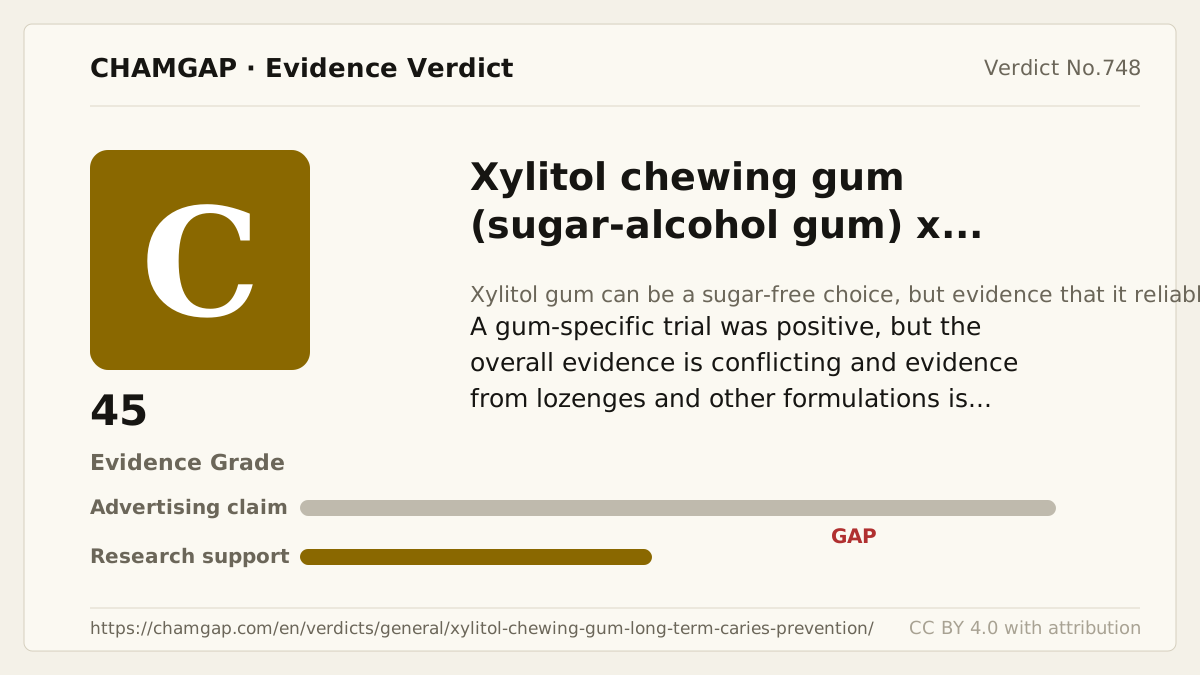
research showsC. Direct evidence for caries prevention with xylitol gum is limited and mixed. The gum-specific Cocco trial randomized 179 adults and evaluated 130 at follow-up, reporting a positive total caries increment of 1.25 versus 1.80 (p=0.01). Pediatric gum studies include both positive and null findings, with positive results concentrated in studies at higher risk of bias or comparisons with no treatment. X-ACT, with 691 participants and 33 months of follow-up, tested lozenges rather than gum, and the 2015 Cochrane review included no eligible randomized gum trial. The appropriate interpretation is formulation indirectness, conflict, and limited evidence rather than a definitive large null gum trial, yielding C with 45 points.
ads claimIncreased saliva, reduced acid production, and changes in mutans streptococci are expanded into certainty that long-term use prevents new cavities. The act of chewing sugar-free gum is also commonly mixed with a xylitol-specific effect.
Useful facts when choosing a product
- Xylitol is a sugar alcohol that oral bacteria do not ferment like sucrose, and it is used as a sweetener in sugar-free gum.
- Commercial gums vary in xylitol dose, other polyols, chewing schedule, and total daily intake, so a study product cannot represent every marketed gum.
- Xylitol gum does not replace fluoride toothpaste, flossing or interdental care, control of sugar frequency, or regular dental assessment.
- Large amounts can have a laxative effect and cause bloating, gas, and osmotic diarrhea. Xylitol can cause rapid hypoglycemia and liver injury in dogs and must be stored away from pets.
Chamgap Semantic Classification Code
Candidate index · review held
UNK.xylitol-chewing-gum.UNK.incident-dental-caries-with-long-term-use.prevent.MULTIUnknown > Xylitol chewing gum > Unknown > incident dental caries with long-term use > Occurrence-prevention claim > Multiple: primary unresolved
An automated migration candidate, not an issued permanent code; exact claim scope remains under review. This machine-generated migration candidate helps retrieval but is not a permanent assignment. The original verdict ID and URL remain authoritative.
What the research actually shows
Cocco 2017 randomized 179 high-caries-risk adults to xylitol gum or another sugar-free polyol gum and evaluated 130 at follow-up, 66 and 64 in the respective groups. Total caries-experience increment was 1.25 plus or minus 1.26 versus 1.80 plus or minus 2.33 (p=0.01). X-ACT compared xylitol and sucralose lozenges in 691 adults for 33 months; its nonsignificant 11% overall reduction is indirect to gum. The ten studies in Cochrane 2015 included no eligible randomized gum trial and assessed toothpaste, lozenges, syrup, candy, wipes, and other formulations with low or very low certainty outside the toothpaste signal. Pediatric gum trials include positive and null findings, while positive studies often had higher risk of bias or no-treatment controls.
Why this is classified as C (45)
C. The gum-specific Cocco trial directly found a positive total caries increment of 1.25 versus 1.80 (p=0.01), while pediatric gum evidence is mixed and positive findings cluster in studies with higher risk of bias or no-treatment comparators. X-ACT tested lozenges, and Cochrane included no eligible randomized gum trial, so neither establishes a definitive large null result for gum. Formulation indirectness, conflict, and limitations yield C with 45 points.
Counterpoint. Chewing sugar-free gum after meals can stimulate saliva and is a less cariogenic choice than sugared gum. That is narrower than proving an independent long-term caries-preventive effect of xylitol.
Rejudgment record. Reassessment (cross-check reflected) — Did not treat X-ACT as direct null gum evidence because it tested lozenges, and noted that Cochrane 2015 included no eligible randomized gum trial; integrated the positive gum-specific Cocco trial with mixed pediatric findings, risk of bias, and comparator limitations to assign C with 45 points
Sub-claim grades by effect
This ingredient is marketed for several effects. A single overall grade blends strong and weak claims together, so each effect is graded separately here. The overall grade reflects the strongest disconfirming or core claim.
| Effect (sub-claim) | Grade | Basis |
|---|---|---|
| Caries prevention with xylitol chewing gum | C | A gum-specific randomized trial was positive, but pediatric evidence is mixed and limitations in bias, comparators, and products remain. |
| Attribution of evidence from lozenges, toothpaste, and other formulations to gum | ? | Results from X-ACT and other formulations in Cochrane cannot be attributed directly to gum because of formulation indirectness. |
| Extension of salivary stimulation and pH mechanisms to clinical outcomes | ? | Changes in saliva, pH, and bacteria provide plausibility but are not the same as reduced incidence of new caries. |
Cross-check — AI research and Codex final gate
Evidence Table
| Study | Design | Sample | Funding | Endpoint | Result | Weight |
|---|---|---|---|---|---|---|
| Bader JD et al. 2013 X-ACT | Multicenter double-blind placebo-controlled 33-month lozenge trial | 691 adults at elevated caries risk | United States NIDCR public funding | Cumulative increment in cavitated carious surfaces | The 11% reduction with 5 g/day xylitol lozenges was neither statistically nor clinically significant and showed no dose response. | Large null lozenge evidence; not used as direct gum evidence |
| Riley P et al. 2015 Cochrane | Systematic review | Ten studies; seven at high risk of bias; zero eligible gum trials | Cochrane Oral Health Group | Incident caries in children and adults | Included toothpaste, lozenges, syrup, candy, wipes, and other formulations but no eligible randomized gum trial. | Low-certainty synthesis of other formulations; indirect to gum |
| Cocco F et al. 2017 | Randomized double-blind polyol-gum-controlled trial in high-caries-risk adults | 179 randomized; 130 evaluated at follow-up | No specific grant reported; gum supplied by Perfetti Van Melle | Total caries-experience increment after one year of gum use | Total caries increment was significantly lower with xylitol, 1.25 plus or minus 1.26 versus 1.80 plus or minus 2.33 (p=0.01). | Direct positive gum trial with size and generalizability limitations |
Receipt — 3 References
All 3 cited sources were verified for existence at the original page (as of 2026-07-20).
Final verification and publication gate: Codex · Evidence date: 2026-07-20 · Corrections: none
Cite this verdict
[Chamgap] Xylitol chewing gum x prevention of incident dental caries with long-term use — Evidence Grade C·45. 3 cited sources checked. Source: https://chamgap.com/en/verdicts/general/xylitol-chewing-gum-long-term-caries-prevention/ · CC BY 4.0CC BY 4.0 — free to use with attribution; do not distort grades, numbers, or verdict meaning.
What this document does and does not do
Chamgap is an information source. It reports what research has and has not confirmed; it does not tell readers what to take or buy. That decision belongs to readers and, when needed, medical or legal professionals. This verdict reflects literature available up to the search date and may change as new research appears. Nothing here is medical advice.