
Tongue cleaner,
does it really help with Reduction of halitosis-related volatile sulfur compounds?
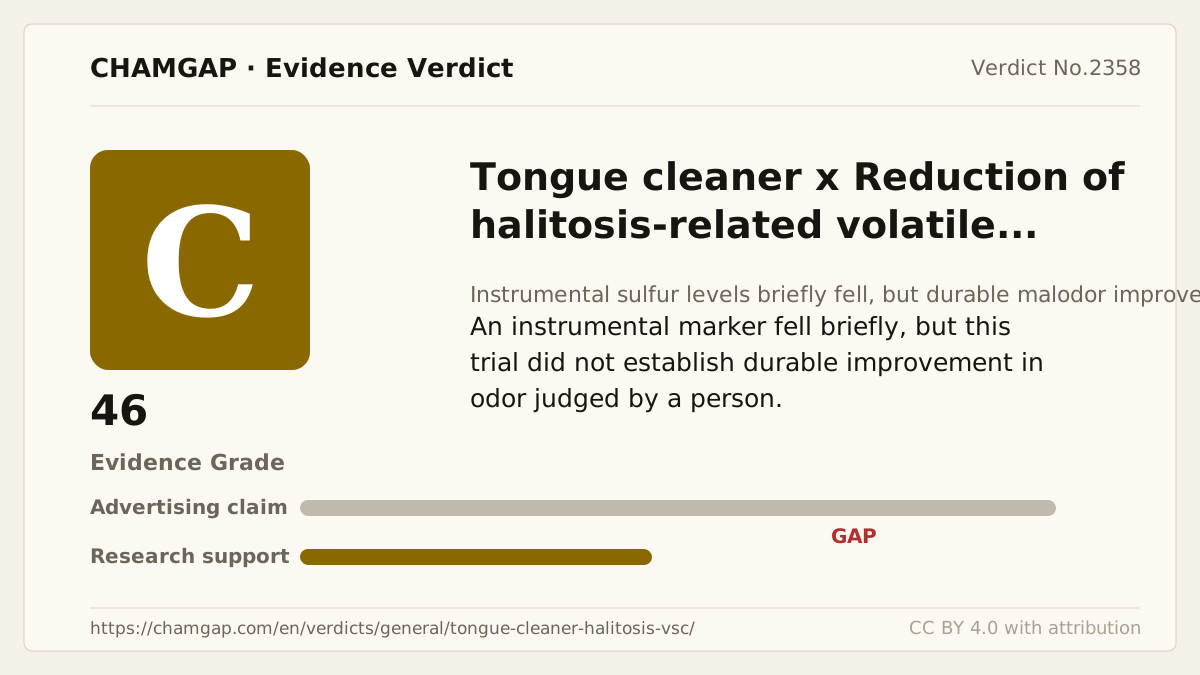
research showsThe grade is C with 46 points. In a balanced crossover study of 30 people, a professional single cleaning reduced volatile sulfur compounds by 42% with a combined brush-scraper cleaner, 40% with a scraper, and 33% with a regular toothbrush. No tool produced a significant reduction beyond 30 minutes.
ads claimAn immediate instrumental reduction is not proof of all-day breath control or treatment of periodontal disease. Persistent malodor warrants evaluation of dental, oral-dryness, tonsillar, nasal, and other causes.
Useful facts when choosing a product
- The tested product was the One Drop Only Tongue Cleaner, combining a brush and scraper.
- Visits were separated by one week; comparators were a scraper and an ordinary toothbrush used on the tongue.
- An initial organoleptic assessment was performed but results were not reported; no follow-up assessment was done.
Chamgap Semantic Classification Code
Candidate index · review held
UNK.tongue-cleaner.UNK.halitosis-related-volatile-sulfur-compounds.reduce.UNKUnknown > Tongue cleaner > Unknown > halitosis-related volatile sulfur compounds > Reduction claim > Unknown
An automated migration candidate, not an issued permanent code; exact claim scope remains under review. This machine-generated migration candidate helps retrieval but is not a permanent assignment. The original verdict ID and URL remain authoritative.
What the research actually shows
Seemann and colleagues used four morning visits separated by one week in a balanced crossover design. A professional performed one standardized cleaning with the combined cleaner, scraper, or regular toothbrush. VSC values were 194, 197, and 195 ppb at baseline; about 113, 118, and 131 immediately; and 125, 132, and 143 at five minutes. An initial organoleptic assessment was performed, but its results were not reported and there was no follow-up organoleptic assessment.
Why this is classified as C (46)
A small single-use crossover study measured a short-lived surrogate and did not permit standardized between-tool effect reconstruction, giving C with 46 points.
Counterpoint. Tongue cleaning may be a low-cost hygiene practice, but superiority of the specialized device and durability remain uncertain.
Rejudgment record. Cross-check applied — Thirty-person balanced crossover study of a single-use VSC surrogate, less than 30-minute duration, and non-reconstructable standardized between-tool effect
| Endpoint | S | Surrogate marker - laboratory or imaging measures |
| Replication | R1 | Single confirmatory trial |
| Independence | I1 | Mixed funding sources |
| Effect size | EX | The clinical size of the effect could not be judged |
Stored derived and displayed grades match; this is not a current recalculation or validity check (C).
Sub-claim grades by effect
This ingredient is marketed for several effects. A single overall grade blends strong and weak claims together, so each effect is graded separately here. The overall grade reflects the strongest disconfirming or core claim.
| Effect (sub-claim) | Grade | Basis |
|---|---|---|
| Immediate VSC reduction | C | The specialized cleaner reduced VSC by 42% versus 33% with a regular toothbrush. |
| Durable organoleptic malodor improvement | ? | An initial organoleptic assessment was performed but results were not reported; no follow-up assessment was done. |
Cross-check — AI research and Codex final gate
Evidence Table
| Study | Design | Sample | Funding | Endpoint | Result | Weight |
|---|---|---|---|---|---|---|
| Seemann R et al., 2001 | Balanced randomized crossover trial | 30 participants | Funding not identified in the accessible report | Oral VSC measured with a portable sulfide monitor | Cleaner, scraper, and toothbrush values were 194, 197, and 195 ppb at baseline; about 113, 118, and 131 immediately; and 125, 132, and 143 at five minutes; no significant reduction lasted beyond 30 minutes. | Pivotal direct trial |
Receipt — 2 References
All 2 cited sources were verified for existence at the original page (as of 2026-08-07).
Final verification and publication gate: Codex · Evidence date: 2026-08-07 · Corrections: none
Cite this verdict
[Chamgap] Tongue cleaner x halitosis and volatile sulfur compounds — Evidence Grade C·46. 2 cited sources checked. Source: https://chamgap.com/en/verdicts/general/tongue-cleaner-halitosis-vsc/ · CC BY 4.0CC BY 4.0 — free to use with attribution; do not distort grades, numbers, or verdict meaning.
What this document does and does not do
Chamgap is an information source. It reports what research has and has not confirmed; it does not tell readers what to take or buy. That decision belongs to readers and, when needed, medical or legal professionals. This verdict reflects literature available up to the search date and may change as new research appears. Nothing here is medical advice.