
Tilting the head back during a nosebleed,
does it really help with Hemostasis and shorter bleeding time?
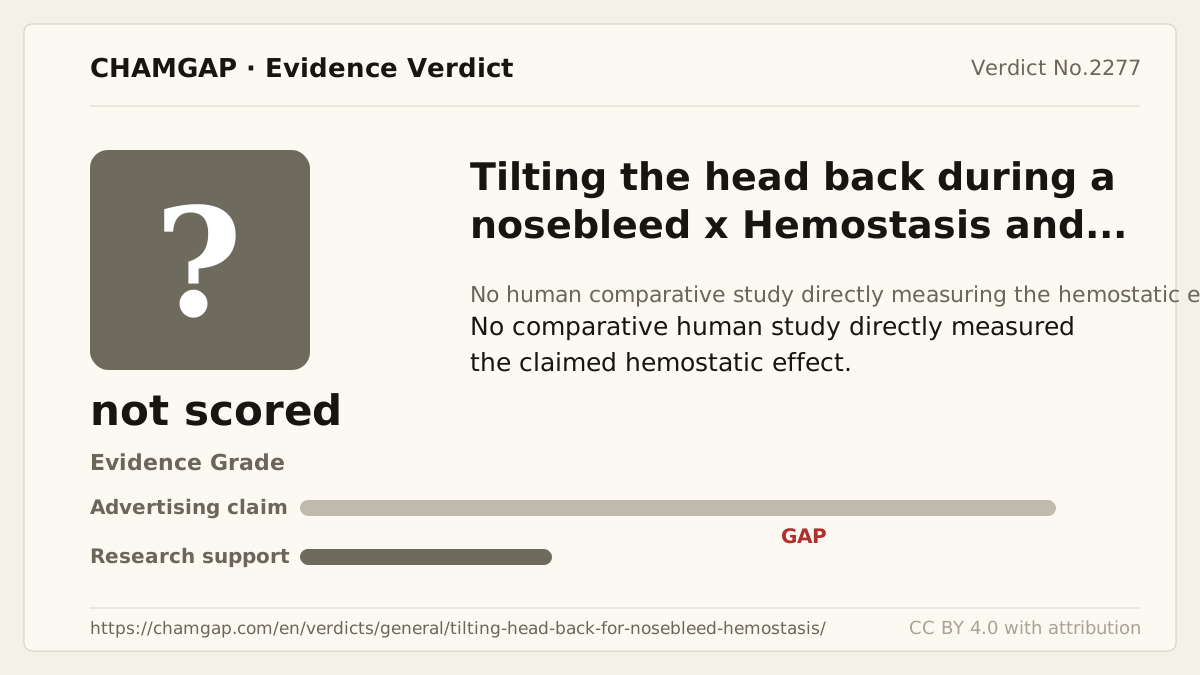
research showsUnresolved, with no score. Searches expanded across epistaxis, nosebleed, head tilt, head position, pinching nostrils, and bleeding time found no human comparative study measuring whether tilting the head back changes hemostasis or bleeding duration. The located literature consisted of guidelines and surveys of first-aid knowledge or practice.
ads claimPublic advice may claim that tilting back stops a nosebleed, or may treat a guideline warning as direct proof of inefficacy. Neither is a comparative efficacy result.
Useful facts when choosing a product
- Search date: 2026-08-05. Separate web searches used 'epistaxis first aid', 'head position nosebleed', 'nosebleed management', 'pinching nostrils', and 'bleeding time epistaxis'. Database-specific result counts, records after deduplication, title-and-abstract screening counts, and full-text review counts were not recorded in the two reports and could not be confirmed.
- Study-level exclusions: the 2020 Tunkel guideline was excluded because it did not compare hemostasis by head position; the 2024 cross-sectional survey by Zephania Saitabau Abraham et al. was excluded because it did not measure actual bleeding time or hemostatic success.
- Source-level exclusions: the 2024 AHA and Red Cross guideline was excluded because its recommendation relied on safety reasoning and indirect evidence. Other guidelines, patient education, surveys, nasal-compression, tranexamic-acid, and packing studies were excluded because they did not directly compare head position; category-specific exclusion counts could not be confirmed from the reports.
Chamgap Semantic Classification Code
Candidate index · review held
UNK.tilting-the-head-back-during-a-nosebleed.UNK.hemostasis-and-shorter-bleeding-time.assess.UNKUnknown > Tilting the head back during a nosebleed > Unknown > Hemostasis and shorter bleeding time > Association or change assessment > Unknown
An automated migration candidate, not an issued permanent code; exact claim scope remains under review. This machine-generated migration candidate helps retrieval but is not a permanent assignment. The original verdict ID and URL remain authoritative.
What the research actually shows
The 2020 clinical practice guideline synthesized literature and expert consensus for initial management but did not report a randomized comparison of head positions. Cross-sectional surveys in Tanzania and other settings measured knowledge and reported practice concerning nostril pinching and head position; they did not measure actual bleeding time or hemostatic success. We did not find a human effect study underlying the positional recommendation.
Why this is classified as ?
No human study directly comparing hemostasis or bleeding duration was identified, so no grade or score was assigned.
Counterpoint. Following standard safety advice to lean forward and apply continuous pressure is reasonable, but that recommendation was not used as efficacy evidence.
Rejudgment record. Cross-check applied — English and Korean synonyms for the condition, position, pressure, and bleeding time were searched, and guidelines and surveys were separated from direct effect studies.
| Endpoint | P | Symptom or function itself is the target - including patient reports and performance tests |
Stored derived and displayed grades match; this is not a current recalculation or validity check (?).
Sub-claim grades by effect
This ingredient is marketed for several effects. A single overall grade blends strong and weak claims together, so each effect is graded separately here. The overall grade reflects the strongest disconfirming or core claim.
| Effect (sub-claim) | Grade | Basis |
|---|---|---|
| Tilting the head back stops a nosebleed faster | ? | No direct comparative human effect study was found. |
Cross-check — AI research and Codex final gate
Evidence Table
| Study | Design | Sample | Funding | Endpoint | Result | Weight |
|---|---|---|---|---|---|---|
| Tunkel et al., 2020 clinical practice guideline | Systematic literature review and multidisciplinary guideline | No direct positional efficacy trial | American Academy of Otolaryngology–Head and Neck Surgery Foundation | Recommendations for initial nosebleed management | Did not provide comparative bleeding-time data by head position | Safety and care guidance, not efficacy evidence used for grading |
| Zephania Saitabau Abraham et al., 2024 cross-sectional survey | Survey of knowledge and practice in nosebleed first aid | Adults surveyed in eastern Tanzania | Not reported | Respondent knowledge and reported behavior | Measured prevalence of knowledge about head position and compression only | Survey that did not measure actual hemostatic efficacy |
Receipt — 2 References
All 2 cited sources were verified for existence at the original page (as of 2026-08-05).
Final verification and publication gate: Codex · Evidence date: 2026-08-05 · Corrections: none
Cite this verdict
[Chamgap] Tilting the head back during a nosebleed × hemostasis — Evidence Grade ?. 2 cited sources checked. Source: https://chamgap.com/en/verdicts/general/tilting-head-back-for-nosebleed-hemostasis/ · CC BY 4.0CC BY 4.0 — free to use with attribution; do not distort grades, numbers, or verdict meaning.
What this document does and does not do
Chamgap is an information source. It reports what research has and has not confirmed; it does not tell readers what to take or buy. That decision belongs to readers and, when needed, medical or legal professionals. This verdict reflects literature available up to the search date and may change as new research appears. Nothing here is medical advice.