
Solifenacin,
does it really help with Improvement of urgency, frequency, and urgency urinary incontinence in overactive bladder?
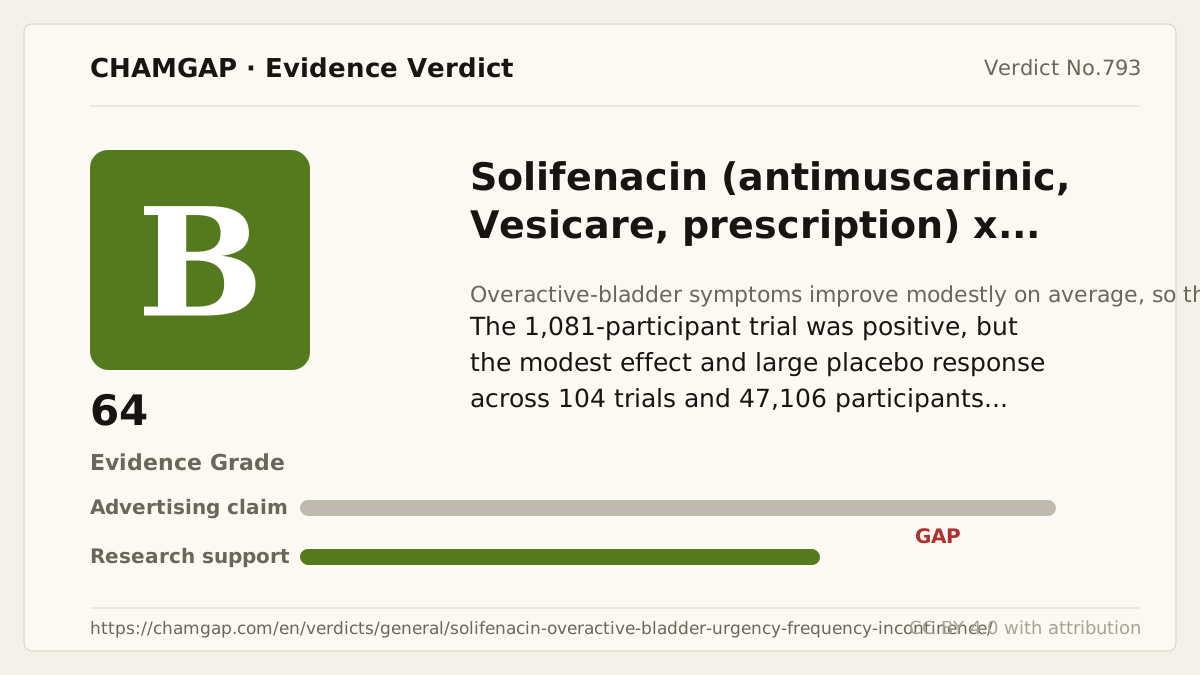
research showsSolifenacin is rated B because it improves urgency, frequency, and urgency urinary incontinence more than placebo. In a 1,081-participant multicenter trial, urgency episodes changed by -1.41 with placebo versus -2.85 with 5 mg and -3.07 with 10 mg. A 2023 Cochrane review of 104 anticholinergic trials and 47,106 participants found a modest average benefit while also reflecting a large placebo response. Direct symptom endpoints and replication are clear, but effect size, subjective diaries, manufacturer-development concentration, and uncertain long-term persistence support B with 64 points. Dry mouth, constipation, urinary retention, anticholinergic burden, and cognitive concern in older adults remain separate safety issues.
ads claimMarketing can imply that solifenacin normalizes the bladder or completely removes daily disruption. The average incremental effect is about one episode per day, response varies widely, and evidence does not establish permanent cure or continued benefit after treatment stops.
Useful facts when choosing a product
- Solifenacin is commonly started at 5 mg once daily in adults and may be increased to 10 mg according to response and tolerability, but renal or hepatic impairment and interacting drugs can lower the maximum dose.
- The tablet is swallowed whole with water, and both benefit and adverse effects are assessed over several weeks. It must not be used with urinary retention, gastric retention, or uncontrolled narrow-angle glaucoma.
- Dry mouth and constipation are common, while blurred vision, somnolence, urinary retention, and impaired heat regulation can occur. Combining other anticholinergic drugs increases the burden.
- Older adults and people at cognitive risk should have cumulative anticholinergic burden and alternatives reviewed regularly. Observational dementia associations are safety signals rather than proof of individual causation.
Chamgap Semantic Classification Code
Candidate index · review held
M.solifenacin.UNK.urgency-frequency-and-urgency-urinary-incontinence-in-overactive-bladder.improve.placeboMedicinal interventions > Solifenacin > Unknown > urgency, frequency, and urgency urinary incontinence in overactive bladder > Improvement claim > Placebo
An automated migration candidate, not an issued permanent code; exact claim scope remains under review. This machine-generated migration candidate helps retrieval but is not a permanent assignment. The original verdict ID and URL remain authoritative.
What the research actually shows
Chapple and colleagues assigned 1,081 participants to placebo, tolterodine, solifenacin 5 mg, or solifenacin 10 mg for 12 weeks. Urgency episodes changed by -1.41 with placebo, -2.85 with 5 mg, and -3.07 with 10 mg; incontinence and micturition frequency also improved. The 739-participant VENUS trial found urgency episodes declined by 3.91 per day with solifenacin and 2.73 with placebo. The 2023 Cochrane review included 104 studies and 47,106 participants, finding moderate-certainty small reductions in urgency and micturitions versus placebo while calling the effect modest and long-term persistence unknown. Cognitive safety data are conflicting observational evidence; recent large nonrandomized studies associate cumulative solifenacin exposure with dementia but do not establish causation.
Why this is classified as B (64)
A 1,081-participant trial found urgency-episode changes of -1.41 with placebo versus -2.85 with 5 mg and -3.07 with 10 mg, and repeated trials improved direct urgency, frequency, and incontinence outcomes. A Cochrane synthesis of 104 trials and 47,106 participants confirmed a modest average anticholinergic benefit. Large placebo response, manufacturer concentration, and a long-term durability gap support B with 64 points. Dry mouth, constipation, urinary retention, and possible long-term cognitive risk are separate safety matters.
Counterpoint. Recording a baseline bladder diary and comparing urgency, leakage, frequency, and adverse effects after several weeks helps determine individual net benefit. If benefit is not meaningful or dry mouth, constipation, or cognitive effects are substantial, bladder training, another drug class, or specialist evaluation can be discussed.
Rejudgment record. New verdict — Applied lower B because several large placebo-controlled trials repeatedly improved direct urgency, frequency, and incontinence symptoms and Cochrane confirmed a small moderate-certainty benefit, while incremental effects were modest and manufacturer concentration and long-term durability gaps remained
Sub-claim grades by effect
This ingredient is marketed for several effects. A single overall grade blends strong and weak claims together, so each effect is graded separately here. The overall grade reflects the strongest disconfirming or core claim.
| Effect (sub-claim) | Grade | Basis |
|---|---|---|
| Improvement of urgency, frequency, and urgency urinary incontinence in overactive bladder | B | Repeated placebo-controlled trials and Cochrane synthesis improved direct symptoms, but the average incremental effect was modest. |
| Large improvement in overactive-bladder quality of life | C | Class-level synthesis found only a small quality-of-life improvement with low-certainty evidence, limiting claims of a large benefit. |
| Durable long-term symptom improvement after treatment stops | ? | Cochrane found durability during long-term treatment or after stopping unknown, and no qualifying direct literature was located. |
Cross-check — AI research and Codex final gate
Evidence Table
| Study | Design | Sample | Funding | Endpoint | Result | Weight |
|---|---|---|---|---|---|---|
| Chapple CR et al. 2004 | Randomized double-blind placebo- and tolterodine-controlled phase 3 trial at 98 centers | 1,081 randomized, 1,077 treated, and 1,033 included in efficacy analysis | Yamanouchi Pharmaceutical development program | Twelve-week urgency, incontinence, urgency incontinence, and micturitions per 24 hours | Solifenacin 5 and 10 mg significantly reduced urgency, incontinence, and micturition frequency versus placebo. | Pivotal large randomized trial with direct symptom outcomes |
| Karram MM et al. 2009 VENUS | Multicenter randomized double-blind placebo-controlled flexible-dose trial | 739 patients with overactive bladder | Astellas development trial with company-affiliated authors | Twelve-week primary urgency episodes plus incontinence, frequency, and warning time | Urgency episodes fell by 3.91 per day with solifenacin and 2.73 with placebo, with greater improvement in other diary symptoms. | Replicated large direct symptom evidence |
| Stoniute A et al. 2023 Cochrane review | Systematic review of randomized and quasi-randomized anticholinergic-versus-placebo trials | 104 studies; 47,106 participants in studies reporting sample size | Cochrane review; authors declared no conflicts | Perceived cure or improvement, urgency, micturition frequency, quality of life, and adverse events | Urgency and micturition frequency each decreased by 0.85 more episodes per day, but effects were modest and long-term persistence was unknown. | Independent synthesis of effect size and certainty |
Receipt — 4 References
All 4 cited sources were verified for existence at the original page (as of 2026-07-20).
Final verification and publication gate: Codex · Evidence date: 2026-07-20 · Corrections: none
Cite this verdict
[Chamgap] Solifenacin x improved overactive-bladder symptoms — Evidence Grade B·64. 4 cited sources checked. Source: https://chamgap.com/en/verdicts/general/solifenacin-overactive-bladder-urgency-frequency-incontinence/ · CC BY 4.0CC BY 4.0 — free to use with attribution; do not distort grades, numbers, or verdict meaning.
What this document does and does not do
Chamgap is an information source. It reports what research has and has not confirmed; it does not tell readers what to take or buy. That decision belongs to readers and, when needed, medical or legal professionals. This verdict reflects literature available up to the search date and may change as new research appears. Nothing here is medical advice.