
Prophylactic oxygen,
does it really help with Reduction of death and disability after acute stroke?
research showsRoutine low-dose oxygen for acute stroke patients with normal oxygen saturation is rated F for preventing death or disability. SO2S randomized 8,003 participants and included 7,677 in the actual primary analysis, but the primary 90-day modified Rankin Scale endpoint failed for oxygen versus control, OR 0.97 (95% CI 0.89 to 1.05; P=.47). Continuous versus nocturnal oxygen also failed, OR 1.03 with P=.61. A synthesis of 11 randomized trials and 6,366 participants likewise found no repeated benefit for mortality, functional independence, or neurological recovery. A large trial and a multi-trial synthesis repeatedly refuted direct clinical benefit in the same indication, yielding F with 8 points. This does not apply to treatment of hypoxia.
ads claimThe intuition that more oxygen must protect ischemic brain tissue is expanded into routine treatment despite unchanged clinical outcomes.
Useful facts when choosing a product
- SO2S tested hospital low-flow oxygen by nasal cannula continuously or at night for 72 hours.
- Oxygen may be required if saturation falls, respiratory failure develops, or another clear indication arises; those circumstances are outside this verdict.
- Acute stroke care prioritizes reperfusion eligibility, vital-sign and saturation monitoring, and specialist stroke treatment.
Chamgap Semantic Classification Code
Candidate index · review held
UNK.prophylactic-low-dose-normobaric-oxygen.UNK.death-and-disability-after-acute-stroke.reduce.UNKUnknown > Prophylactic low-dose normobaric oxygen > Unknown > death and disability after acute stroke > Reduction claim > Unknown
An automated migration candidate, not an issued permanent code; exact claim scope remains under review. This machine-generated migration candidate helps retrieval but is not a permanent assignment. The original verdict ID and URL remain authoritative.
What the research actually shows
Roffe and colleagues randomized 8,003 adults with acute stroke and no definite indication or contraindication to oxygen to continuous oxygen, nocturnal oxygen, or control oxygen only when needed for 72 hours. The primary 90-day modified Rankin Scale analysis included 7,677 participants; both oxygen versus control and continuous versus nocturnal comparisons failed, and no subgroup reversed the null overall result. Ding 2018 synthesized 11 prospective randomized trials with 6,366 participants and found no benefit for three-month mortality, functional independence, or neurological improvement. verdict 1249, which is D with 20 points, concerns hyperbaric oxygen; verdict 1303, which is B with 78 points, concerns long-term home oxygen for severe hypoxemic COPD; verdict 1367, which is D with 27 points, concerns canned oxygen. Their purposes, pressure, and settings differ and their evidence was not used here.
Why this is classified as F (8)
SO2S randomized 8,003 and analyzed 7,677; its primary 90-day modified Rankin Scale result, OR 0.97 (0.89 to 1.05), P=.47, limits possible benefit to within 5% and excludes clinically meaningful benefit. Repeated null mortality and function results across multiple trials yield F with 8 points.
Counterpoint. Correction of actual hypoxia remains standard care and must not be confused with null routine prophylaxis.
Rejudgment record. Cross-check applied — Applied repeated-refutation F because the primary 90-day disability endpoint failed in 7,677 analyzed participants from an 8,003-person randomized trial and a multi-trial synthesis in the same indication repeatedly found no mortality or functional benefit
Sub-claim grades by effect
This ingredient is marketed for several effects. A single overall grade blends strong and weak claims together, so each effect is graded separately here. The overall grade reflects the strongest disconfirming or core claim.
| Effect (sub-claim) | Grade | Basis |
|---|---|---|
| Reduction in disability at 90 days | F | The primary analysis of 7,677 participants failed with OR 0.97 and P=.47. |
| Reduction in three-month mortality | F | The large trial and 11-trial synthesis repeatedly found no benefit. |
| Improvement in functional independence | F | Randomized evidence in the same indication found no significant improvement. |
Cross-check — AI research and Codex final gate
Evidence Table
| Study | Design | Sample | Funding | Endpoint | Result | Weight |
|---|---|---|---|---|---|---|
| Roffe C et al. 2017 SO2S | Multicenter three-group randomized single-blind clinical trial | 8,003 randomized; 7,677 in the primary analysis | Public funding from the United Kingdom NIHR Health Technology Assessment and Research for Patient Benefit programs | Primary endpoint of the modified Rankin Scale at 90 days | Primary endpoint failed: oxygen versus control OR 0.97 (95% CI 0.89 to 1.05), P=.47; continuous versus nocturnal OR 1.03, P=.61. | Very large direct confirmatory death-and-disability trial |
| Ding J et al. 2018 | Systematic review and meta-analysis of normobaric-oxygen randomized trials | Eleven prospective randomized trials with 6,366 participants | Academic meta-analysis; limited funding reporting and no evidence of manufacturer leadership | Three-month mortality, functional independence, and neurological improvement | No benefit was confirmed for mortality, functional independence, or neurological recovery. | Same-indication synthesis of repeated refutation |
Receipt — 2 References
All 2 cited sources were verified for existence at the original page (as of 2026-07-24).
Final verification and publication gate: Codex · Evidence date: 2026-07-24 · Corrections: none
Cite this verdict
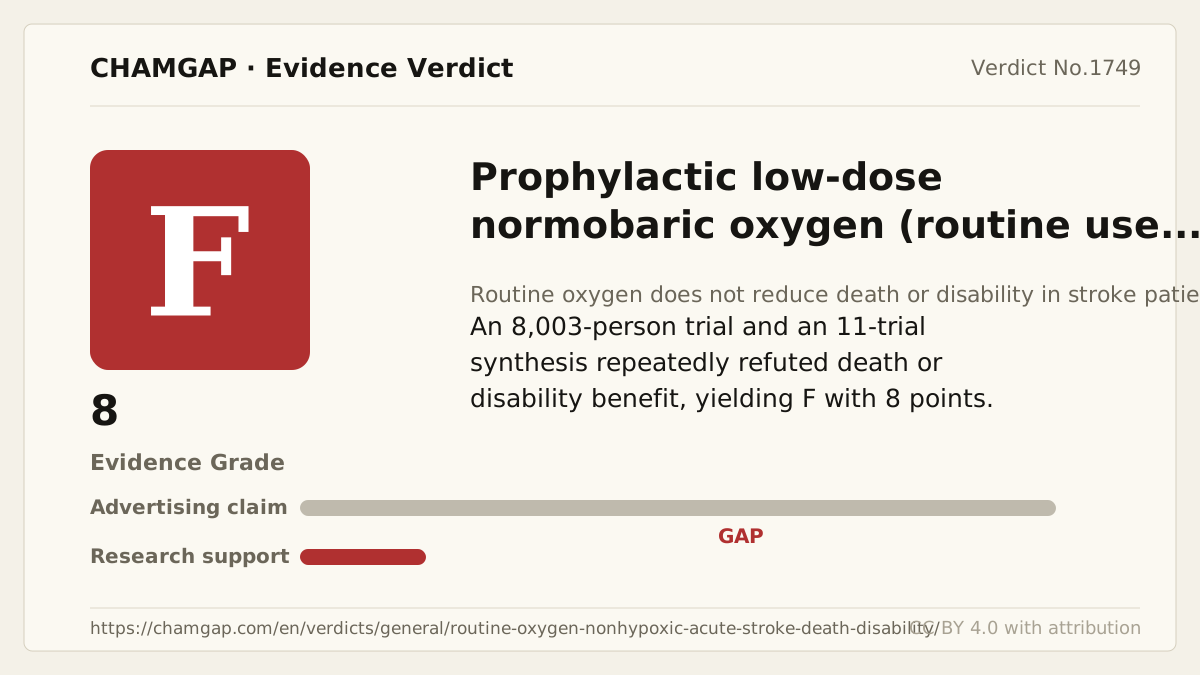
[Chamgap] Prophylactic oxygen x death and disability after nonhypoxic acute stroke — Evidence Grade F·8. 2 cited sources checked. Source: https://chamgap.com/en/verdicts/general/routine-oxygen-nonhypoxic-acute-stroke-death-disability/ · CC BY 4.0CC BY 4.0 — free to use with attribution; do not distort grades, numbers, or verdict meaning.
What this document does and does not do
Chamgap is an information source. It reports what research has and has not confirmed; it does not tell readers what to take or buy. That decision belongs to readers and, when needed, medical or legal professionals. This verdict reflects literature available up to the search date and may change as new research appears. Nothing here is medical advice.