
Rivaroxaban,
does it really help with Treatment of acute deep-vein thrombosis and pulmonary embolism and prevention of recurrent symptomatic venous thromboembolism?
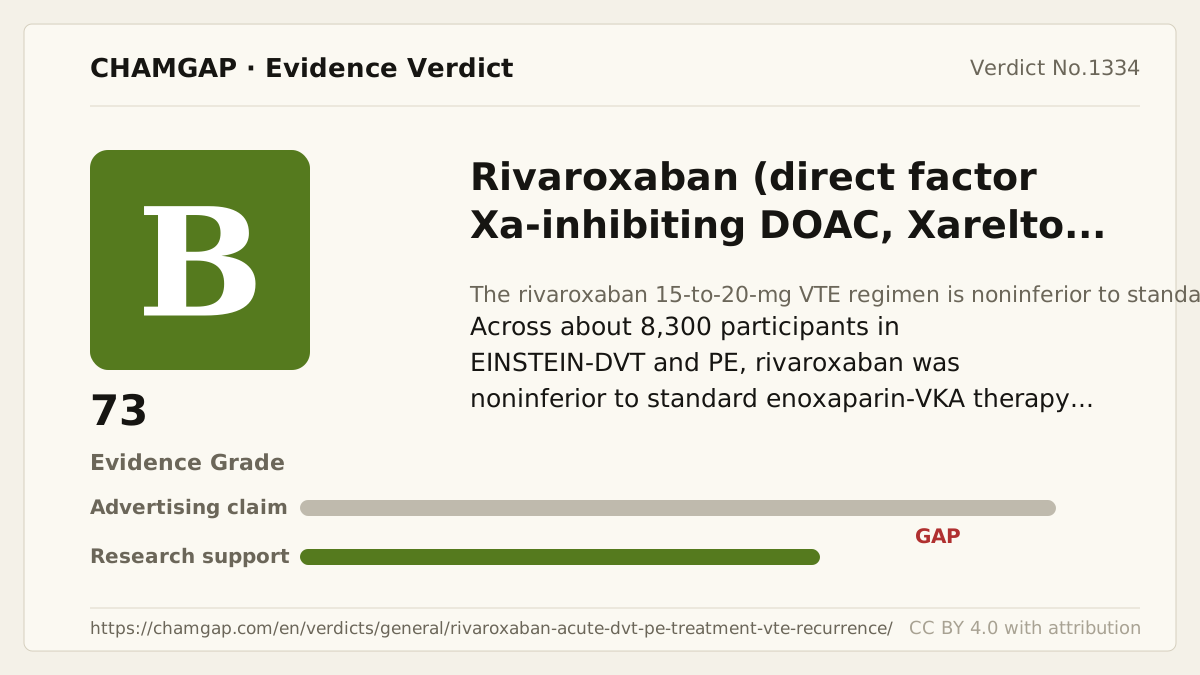
research showsAcross about 8,300 participants in EINSTEIN-DVT and PE, rivaroxaban was noninferior to standard enoxaparin-VKA therapy and pooled major bleeding was lower, but active-controlled noninferiority evidence supports B with 73 points. A fixed-dose oral single-drug regimen without initial injections provides substantial practical benefit while matching standard therapy for recurrence prevention. Unlike verdict 724 on low-dose rivaroxaban 2.5 mg plus aspirin for CAD or PAD, this verdict concerns VTE treatment transitioning from 15 mg twice daily to 20 mg once daily.
ads claimMarketing can turn convenience without injections or routine coagulation monitoring into a claim of no bleeding or universal safety. Efficacy is noninferior to standard therapy, and suitability varies with renal function, liver disease, interactions, and adherence.
Useful facts when choosing a product
- Acute DVT or PE treatment generally uses 15 mg twice daily for the first 21 days followed by 20 mg once daily, with both doses taken with food.
- Bleeding can be serious or fatal; hematuria, black stools, persistent bleeding, or severe headache requires prompt assessment.
- Unsupervised discontinuation can increase thrombosis risk, so surgery, procedures, and treatment interruption should be coordinated with the prescriber.
- Renal and hepatic function and interactions with strong CYP3A4 or P-gp inhibitors or inducers require review.
Chamgap Semantic Classification Code
Candidate index · review held
M.rivaroxaban.intravenous.treatment-of-acute-deep-vein-thrombosis-and-pulmonary-embolism-and-prevention-of-recurrent-symptomatic-venous-thromboembolism.prevent.activeMedicinal interventions > Rivaroxaban > Intravenous > Treatment of acute deep-vein thrombosis and pulmonary embolism and prevention of recurrent symptomatic venous thromboembolism > Occurrence-prevention claim > Active comparator
An automated migration candidate, not an issued permanent code; exact claim scope remains under review. This machine-generated migration candidate helps retrieval but is not a permanent assignment. The original verdict ID and URL remain authoritative.
What the research actually shows
EINSTEIN-DVT compared rivaroxaban 15 mg twice daily for 21 days followed by 20 mg once daily with enoxaparin followed by a vitamin K antagonist in 3,449 patients with acute symptomatic DVT. Recurrent VTE was 2.1% versus 3.0%, meeting noninferiority, and major or clinically relevant nonmajor bleeding was 8.1% in each group. In 4,832 EINSTEIN-PE patients, recurrent VTE was 2.1% versus 1.8%, also noninferior, while major bleeding was 1.1% versus 2.2%. A pooled analysis of about 8,281 patients supported similar efficacy and less major bleeding with rivaroxaban as a single-drug oral strategy.
Why this is classified as B (73)
Large active-controlled EINSTEIN-DVT and PE trials established noninferiority to standard therapy and consistent recurrence prevention. Convenience and some reduction in major bleeding are strengths, but the noninferiority rather than superiority design yields B with 73 points.
Counterpoint. A fixed-dose oral single-drug regimen without initial injections provides substantial practical benefit while matching standard therapy for recurrence prevention. Unlike verdict 724 on low-dose rivaroxaban 2.5 mg plus aspirin for CAD or PAD, this verdict concerns VTE treatment transitioning from 15 mg twice daily to 20 mg once daily.
Rejudgment record. Cross-check applied — Rated B by accepting large active-controlled noninferiority trials in EINSTEIN-DVT and PE and pooled reduction in major bleeding while recognizing that efficacy superiority was not established
Sub-claim grades by effect
This ingredient is marketed for several effects. A single overall grade blends strong and weak claims together, so each effect is graded separately here. The overall grade reflects the strongest disconfirming or core claim.
| Effect (sub-claim) | Grade | Basis |
|---|---|---|
| Prevention of recurrent symptomatic VTE | B | Recurrent VTE was similar to standard therapy in both DVT and PE trials. |
| Noninferiority to enoxaparin-VKA standard therapy | B | Both EINSTEIN trials met their prespecified noninferiority criteria. |
| Single-drug acute treatment without heparin lead-in | B | DVT and PE were treated orally with 15 mg twice daily for 21 days followed by 20 mg once daily. |
Cross-check — AI research and Codex final gate
Evidence Table
| Study | Design | Sample | Funding | Endpoint | Result | Weight |
|---|---|---|---|---|---|---|
| EINSTEIN Investigators. 2010 | Randomized open-label active-controlled noninferiority DVT trial | 3,449 patients | Bayer Schering Pharma and Ortho-McNeil | Recurrent VTE and major or clinically relevant nonmajor bleeding | Recurrence 2.1% versus 3.0%, noninferior; bleeding 8.1% versus 8.1%. | Key DVT active-controlled trial |
| EINSTEIN-PE Investigators. 2012 | Randomized open-label active-controlled noninferiority PE trial | 4,832 patients | Bayer HealthCare and Janssen | Recurrent VTE and major or clinically relevant nonmajor bleeding | Recurrence 2.1% versus 1.8%, noninferior; major bleeding 1.1% versus 2.2%. | Key PE active-controlled trial |
Receipt — 3 References
All 3 cited sources were verified for existence at the original page (as of 2026-07-23).
Final verification and publication gate: Codex · Evidence date: 2026-07-23 · Corrections: none
Cite this verdict
[Chamgap] Rivaroxaban x treatment of acute deep-vein thrombosis and pulmonary embolism and prevention of recurrent symptomatic venous thromboembolism — Evidence Grade B·73. 3 cited sources checked. Source: https://chamgap.com/en/verdicts/general/rivaroxaban-acute-dvt-pe-treatment-vte-recurrence/ · CC BY 4.0CC BY 4.0 — free to use with attribution; do not distort grades, numbers, or verdict meaning.
What this document does and does not do
Chamgap is an information source. It reports what research has and has not confirmed; it does not tell readers what to take or buy. That decision belongs to readers and, when needed, medical or legal professionals. This verdict reflects literature available up to the search date and may change as new research appears. Nothing here is medical advice.