
Professional fluoride varnish,
does it really help with Prevention of caries in primary and permanent teeth of children and adolescents?
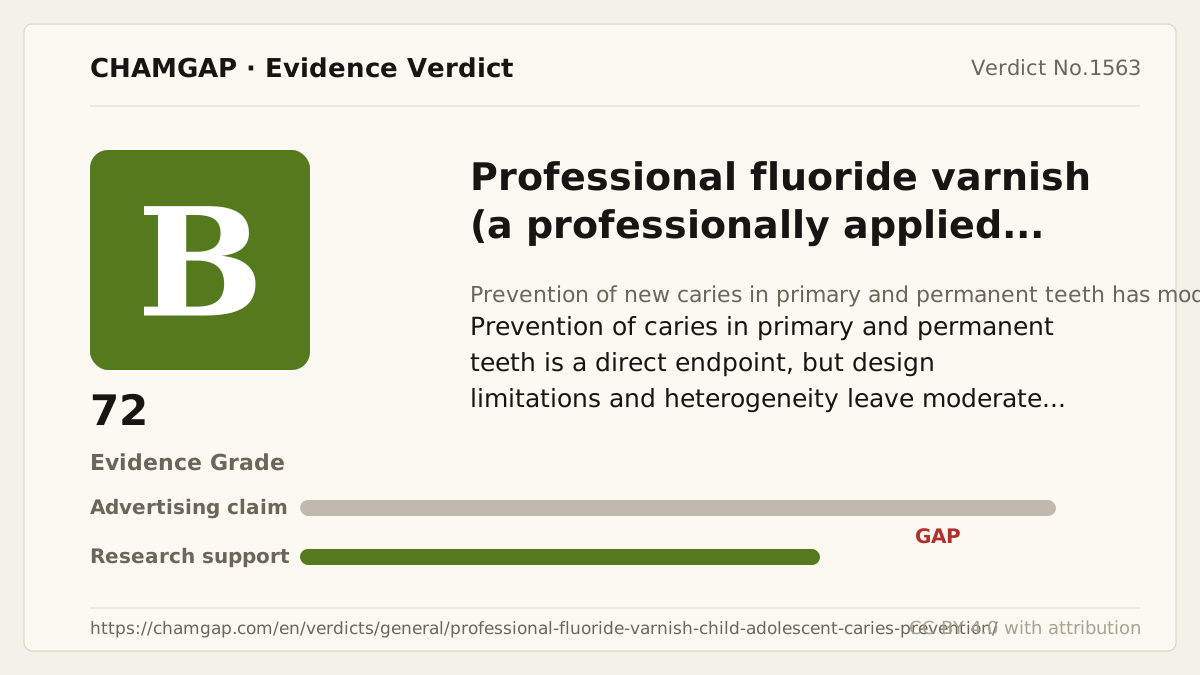
research showsProfessionally applied fluoride varnish is rated B because prevention of carious-surface increments in primary and permanent teeth has moderate GRADE certainty. The 2013 Cochrane review included 22 trials and 12,455 randomized participants and estimated a 43% prevented fraction (95% CI 30% to 57%) for permanent-tooth surfaces and 37% (95% CI 24% to 51%) for primary-tooth surfaces. Certainty was moderate because many trials had high risk of bias and substantial heterogeneity.
ads claimMarketing can merge professional varnish with daily fluoride toothpaste or extend prevention evidence into complete arrest of established deep caries and avoidance of pulpal treatment. This verdict is limited to prevention of new caries by a high-concentration topical fluoride treatment applied to tooth surfaces by a dental professional.
Useful facts when choosing a product
- Fluoride varnish is a high-concentration topical fluoride treatment applied in a small amount to tooth surfaces by a trained dental professional.
- Cochrane trials commonly used two to four applications per year, but product concentration, interval, and background fluoride exposure varied.
- The varnish film can temporarily make teeth look yellowish or dull and can cause an unpleasant taste or texture; this resolves when the film is removed.
- Small-volume application and minimizing swallowing are important. Repeated excessive fluoride ingestion during tooth development is linked to fluorosis, but trials provide inadequate quantification of fluorosis risk from professional varnish itself.
Chamgap Semantic Classification Code
Candidate index · review held
UNK.professional-fluoride-varnish.topical-skin.caries-in-primary-and-permanent-teeth-of-children-and-adolescents.prevent.UNKUnknown > Professional fluoride varnish > Topical skin > caries in primary and permanent teeth of children and adolescents > Occurrence-prevention claim > Unknown
An automated migration candidate, not an issued permanent code; exact claim scope remains under review. This machine-generated migration candidate helps retrieval but is not a permanent assignment. The original verdict ID and URL remain authoritative.
What the research actually shows
The 2013 Marinho Cochrane review included 22 trials published from 1975 through 2012, with 12,455 participants randomized and 9,595 included in analyses. Across 13 permanent-dentition trials, the D(M)FS prevented fraction was 43% (95% CI 30% to 57%); across 10 primary-dentition trials, the d(e/m)fs prevented fraction was 37% (95% CI 24% to 51%). Evidence was moderate certainty because many trials had high risk of bias and substantial heterogeneity. Adverse-event reporting was too sparse for dependable conclusions. A separate 2016 review of professionally applied fluoride found a signal that 5% sodium-fluoride varnish can remineralize early enamel lesions, but evidence is insufficient to establish arrest of advanced dentinal caries or reduced pulpal treatment for ordinary fluoride varnish.
Why this is classified as B (72)
In Cochrane analyses, permanent-tooth carious-surface increment fell by 43% (95% CI 30% to 57%) and primary-tooth increment by 37% (95% CI 24% to 51%), but risk of bias and heterogeneity limited GRADE certainty to moderate, giving B with 72 points.
Counterpoint. There is a remineralization signal for early enamel lesions, but reduced pulpal treatment and arrest of advanced caries are not established by this prevention evidence.
Rejudgment record. New verdict — Professional fluoride varnish has positive direct prevention effects on carious-surface increments in primary and permanent teeth, but the key Cochrane review rates certainty as moderate, setting a B ceiling
Sub-claim grades by effect
This ingredient is marketed for several effects. A single overall grade blends strong and weak claims together, so each effect is graded separately here. The overall grade reflects the strongest disconfirming or core claim.
| Effect (sub-claim) | Grade | Basis |
|---|---|---|
| Prevention of caries in permanent teeth | B | Across 13 trials, the D(M)FS prevented fraction was 43% (95% CI 30% to 57%) with moderate GRADE certainty. |
| Prevention of caries in primary teeth | B | Across 10 trials, the d(e/m)fs prevented fraction was 37% (95% CI 24% to 51%) with moderate GRADE certainty. |
| Arrest of caries progression and reduced pulpal treatment | C | There is a signal for remineralization of early enamel lesions, but direct evidence is insufficient to establish arrest of advanced dentinal caries or reduced pulpal treatment with ordinary fluoride varnish. |
Cross-check — AI research and Codex final gate
Evidence Table
| Study | Design | Sample | Funding | Endpoint | Result | Weight |
|---|---|---|---|---|---|---|
| Marinho VCC et al. 2013 | Cochrane systematic review and meta-analysis of randomized and quasi-randomized trials | 22 trials, 12,455 randomized and 9,595 analyzed; 13 permanent-dentition and 10 primary-dentition trials | Cochrane Oral Health academic review; funding varied across individual trials | Prevented fractions for permanent-tooth D(M)FS and primary-tooth d(e/m)fs increments | Prevented fraction was 43% (95% CI 30% to 57%) for permanent teeth and 37% (24% to 51%) for primary teeth; certainty was moderate because of risk of bias and heterogeneity. | Key preventive-efficacy and GRADE evidence |
| Gao SS et al. 2016 | Systematic review of clinical trials of professionally applied topical fluoride | 17 randomized clinical trials; 4 trials in the 5% sodium-fluoride varnish remineralization meta-analysis | Inadequately reported in the article | Remineralization of early enamel caries and arrest of dentinal caries | The pooled remineralization proportion for early enamel lesions with 5% sodium-fluoride varnish was 63.6% (95% CI 36.0% to 91.2%), while evidence for arresting advanced caries mainly involved other fluoride agents. | Scope limitation for caries progression |
Receipt — 2 References
All 2 cited sources were verified for existence at the original page (as of 2026-07-23).
Final verification and publication gate: Codex · Evidence date: 2026-07-23 · Corrections: none
Cite this verdict
[Chamgap] Professional fluoride varnish x prevention of caries in children's and adolescents' primary and permanent teeth — Evidence Grade B·72. 2 cited sources checked. Source: https://chamgap.com/en/verdicts/general/professional-fluoride-varnish-child-adolescent-caries-prevention/ · CC BY 4.0CC BY 4.0 — free to use with attribution; do not distort grades, numbers, or verdict meaning.
What this document does and does not do
Chamgap is an information source. It reports what research has and has not confirmed; it does not tell readers what to take or buy. That decision belongs to readers and, when needed, medical or legal professionals. This verdict reflects literature available up to the search date and may change as new research appears. Nothing here is medical advice.