
Preoperative red-cell transfusion,
does it really help with Reduced clinically important complications in low- and medium-risk surgery in sickle cell disease?
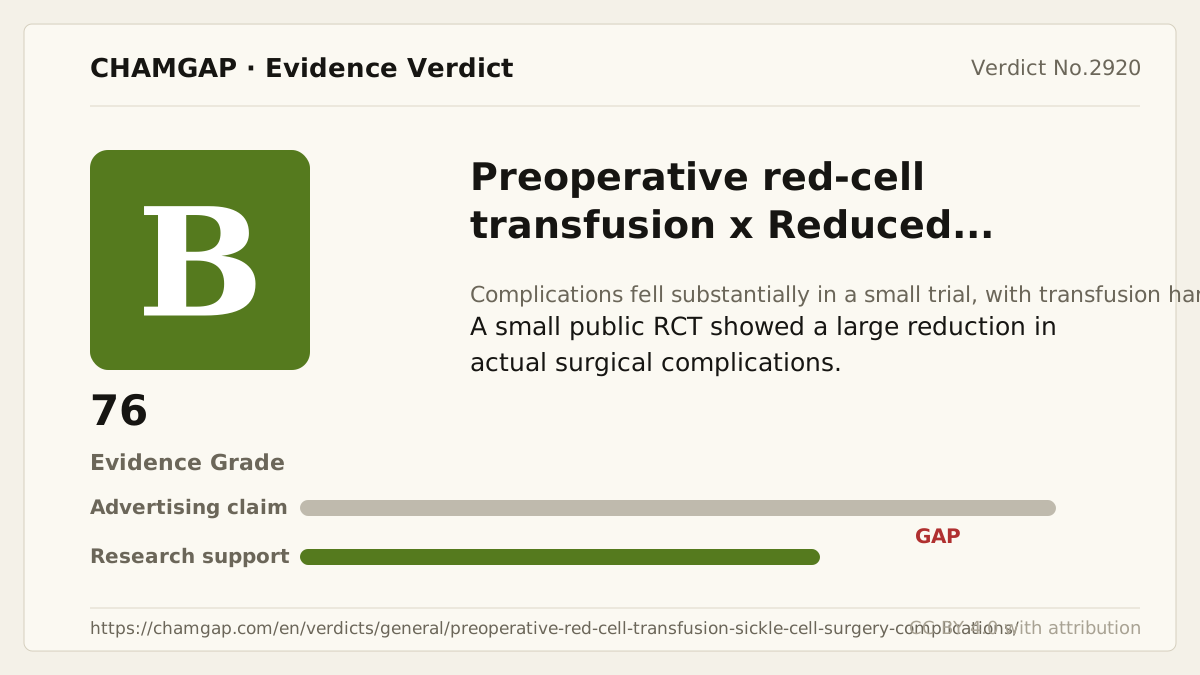
research showsGrade B, 76 points. Clinically important complications occurred in 13/33 (39%) without transfusion versus 5/34 (15%) with transfusion, an absolute difference of -24 points. The reported no-transfusion versus transfusion OR was 3.8 (95% CI 1.2 to 12.2). The trial planned 405 participants, enrolled 70 before safety closure, and analyzed 67 by ITT.
ads claimVerdict 1485, hydroxyurea × vaso-occlusive complications in adult sickle-cell anemia (B 77, /verdicts/general/hydroxyurea-vaso-occlusive-complications-in-adult-sickle-cell-anemia/), concerns routine disease control to prevent vaso-occlusive complications. This verdict concerns preparation immediately before low- or medium-risk surgery. Their populations and purposes differ.
Useful facts when choosing a product
- Clinically important transfusion-related complications were zero in both arms.
- One transfused patient developed anti-S alloantibody.
Chamgap Semantic Classification Code
Candidate index · review held
P.preoperative-red-cell-transfusion.procedural.clinically-important-complications-in-low-and-medium-risk-surgery-in-sickle-cell-disease.reduce.UNKProcedures, devices and tests > Preoperative red-cell transfusion > Procedural > clinically important complications in low- and medium-risk surgery in sickle cell disease > Reduction claim > Unknown
An automated migration candidate, not an issued permanent code; exact claim scope remains under review. This machine-generated migration candidate helps retrieval but is not a permanent assignment. The original verdict ID and URL remain authoritative.
What the research actually shows
Axis 6 is B0. At the first planned interim analysis, no stopping boundaries had been crossed and the trial continued. Later, an unexpected SAE imbalance led the DSMC to request an unscheduled interim analysis and recommend stopping for safety. This was not stopping at a prespecified primary-endpoint boundary, so early stopping is not counted as a defect. Enrollment of 70 rather than the planned 405 resulted from an unavoidable safety stop, so fewer than 200 participants is also not counted. The facts remain: 70 enrolled and 67 analyzed by ITT. Five authors were employed by the public sponsor, NHS Blood and Transplant, and NHSBT with the MRC Clinical Studies Unit performed the design, data collection, analysis, and interpretation.
Why this is classified as B (76)
This single hard-outcome trial had public-institution sponsorship and a large absolute effect. Its 70-person enrollment and unscheduled safety analysis are not counted as defects, giving B, 76.
Counterpoint. Small size and early closure can inflate the estimate.
Rejudgment record. Primary-source cross-check — Large clinical-event reduction in a small publicly funded randomized trial
| Endpoint | H | Hard endpoint - actual events such as death |
| Replication | R1 | Single confirmatory trial |
| Independence | I2 | Decisive evidence is publicly or non-profit funded |
| Effect size | E+ | Meets the clinically important threshold |
Stored derived and displayed grades match; this is not a current recalculation or validity check (B).
Cross-check — AI research and Codex final gate
Evidence Table
| Study | Design | Sample | Funding | Endpoint | Result | Weight |
|---|---|---|---|---|---|---|
| TAPS | Multicenter randomized group-sequential superiority trial | 70 enrolled, 67 in ITT | NHS Blood and Transplant; five authors were employed by sponsor NHSBT, and NHSBT with the MRC Clinical Studies Unit performed design, collection, analysis, and interpretation | Clinically important complications from randomization through 30 days after surgery | 13/33 (39%) vs 5/34 (15%); absolute difference -24 points; no-transfusion vs transfusion OR 3.8 (95% CI 1.2 to 12.2) | Only small confirmatory trial |
Receipt — 2 References
All 2 cited sources were verified for existence at the original page (as of 2026-08-26).
Final verification and publication gate: Codex · Evidence date: 2026-08-26 · Corrections: none
Cite this verdict
[Chamgap] Benefit of Preoperative Red-Cell Transfusion for Clinically Important Complications in Sickle Cell Disease Surgery — Evidence Grade B·76. 2 cited sources checked. Source: https://chamgap.com/en/verdicts/general/preoperative-red-cell-transfusion-sickle-cell-surgery-complications/ · CC BY 4.0CC BY 4.0 — free to use with attribution; do not distort grades, numbers, or verdict meaning.
What this document does and does not do
Chamgap is an information source. It reports what research has and has not confirmed; it does not tell readers what to take or buy. That decision belongs to readers and, when needed, medical or legal professionals. This verdict reflects literature available up to the search date and may change as new research appears. Nothing here is medical advice.