
Pregabalin,
does it really help with Improved leg pain and function in acute and chronic sciatica?
research showsPRECISE found a difference of 0.5 points at eight weeks (95% CI -0.2 to 1.2) and 0.3 points at 52 weeks (-0.5 to 1.0), but the Baron trial HR was 0.874 (0.520 to 1.470), leaving room for substantial benefit, and no pregabalin-only pooled interval was verified. Because clinically meaningful benefit is not excluded, the grade is D with 25 points, not F.
ads claimThe broad label of a nerve-pain medicine implies automatic efficacy for sciatica. Direct sciatica evidence refutes that inference, so approvals for other neuropathic pain conditions cannot support this claim.
Useful facts when choosing a product
- Pregabalin is prescription-only, its use for sciatica may be outside approved indications depending on jurisdiction, and efficacy in other neuropathic pain conditions must be distinguished from sciatica.
- Dizziness, somnolence, blurred vision, peripheral edema, and weight gain can occur, requiring attention to driving, falls, and fluid retention.
- Combining pregabalin with opioids, benzodiazepines, alcohol, or other central nervous system depressants can increase sedation and respiratory-depression risk, and dose adjustment is needed in renal impairment.
- Misuse, dependence, and withdrawal can occur, so a current user should not stop abruptly because this verdict finds no sciatica efficacy and should instead discuss gradual tapering with the prescriber.
Chamgap Semantic Classification Code
Candidate index · review held
M.pregabalin.UNK.leg-pain-and-function-in-acute-and-chronic-sciatica.improve.placeboMedicinal interventions > Pregabalin > Unknown > leg pain and function in acute and chronic sciatica > Improvement claim > Placebo
An automated migration candidate, not an issued permanent code; exact claim scope remains under review. This machine-generated migration candidate helps retrieval but is not a permanent assignment. The original verdict ID and URL remain authoritative.
What the research actually shows
Mathieson 2017 randomized 209 people with acute or chronic sciatica to pregabalin up to 600 mg daily or placebo for eight weeks and followed them through 52 weeks. The adjusted eight-week leg-pain difference was 0.5 points in the unfavorable direction, other outcomes did not differ, and adverse events numbered 227 versus 124. Enke 2018 synthesized nine randomized trials and found moderate- to high-quality evidence that anticonvulsants were ineffective for low back and lumbar radicular pain with increased harm. Gimenez-Campos 2022 reviewed eight trials involving 747 participants and concluded that pregabalin did not improve pain or disability through up to 52 weeks.
Why this is classified as D (25)
PRECISE found a difference of 0.5 points at eight weeks (95% CI -0.2 to 1.2) and 0.3 points at 52 weeks (-0.5 to 1.0), but the Baron trial HR was 0.874 (0.520 to 1.470), leaving room for substantial benefit, and no pregabalin-only pooled interval was verified. Because clinically meaningful benefit is not excluded, the grade is D with 25 points, not F.
Counterpoint. Progressive weakness, bowel or bladder dysfunction, or saddle numbness needs urgent assessment. Ordinary sciatica requires diagnosis of cause, severity, and duration, followed by discussion of activity, exercise or physical therapy, and selectively procedures or surgery. Grade-independent note: NICE recommends against this use, and increased adverse events have been reported. Guidance and safety are not used to determine the efficacy grade.
Rejudgment record. New verdict — PRECISE found a difference of 0.5 points at eight weeks (95% CI -0.2 to 1.2) and 0.3 points at 52 weeks (-0.5 to 1.0), but the Baron trial HR was 0.874 (0.520 to 1.470), leaving room for substantial benefit, and no pregabalin-only pooled interval was verified. Because clinically meaningful benefit is not excluded, the grade is D with 25 points, not F.
Sub-claim grades by effect
This ingredient is marketed for several effects. A single overall grade blends strong and weak claims together, so each effect is graded separately here. The overall grade reflects the strongest disconfirming or core claim.
| Effect (sub-claim) | Grade | Basis |
|---|---|---|
| Improved leg pain and function in acute sciatica | D | A large direct trial including acute sciatica and syntheses found no benefit, and guidance recommends against use. |
| Improved leg pain and function in chronic sciatica | D | Evidence including chronic cases, 52-week follow-up, and other radicular-pain trials repeatedly found no efficacy. |
| Other neuropathic pain indications | ? | Diabetic neuropathy, postherpetic neuralgia, and other indications are separate efficacy domains not graded in this sciatica verdict. |
Cross-check — AI research and Codex final gate
Evidence Table
| Study | Design | Sample | Funding | Endpoint | Result | Weight |
|---|---|---|---|---|---|---|
| Mathieson S et al. 2017 PRECISE | Multicenter double-blind randomized placebo-controlled trial | 209 participants with acute or chronic sciatica | Public funding from the Australian NHMRC with in-kind support from Pfizer | Eight-week primary leg-pain endpoint and 52-week pain, disability, quality of life, and adverse events | The adjusted eight-week difference was null at 0.5 points (95% CI -0.2 to 1.2), other outcomes did not differ, and adverse events numbered 227 versus 124. | Pivotal large direct null evidence |
| Enke O et al. 2018 | Systematic review and meta-analysis | Nine randomized trials of anticonvulsants | Academic and public research; included PRECISE investigators | Pain, disability, and adverse events in low back and lumbar radicular pain | Concluded with moderate- to high-quality evidence that treatment was ineffective and caused harm. | Independent repeated synthesis |
| Gimenez-Campos MS et al. 2022 | Systematic review of gabapentin and pregabalin | Eight randomized trials and 747 participants; four pregabalin comparisons included | Spanish hospital and public academic research | Sciatica pain, disability, and adverse events | Pregabalin was no better than placebo for pain relief or disability through up to 52 weeks. | Disease-specific repeated refutation |
Receipt — 3 References
All 3 cited sources were verified for existence at the original page (as of 2026-07-19).
Final verification and publication gate: Codex · Evidence date: 2026-07-19 · Corrections: none
Cite this verdict
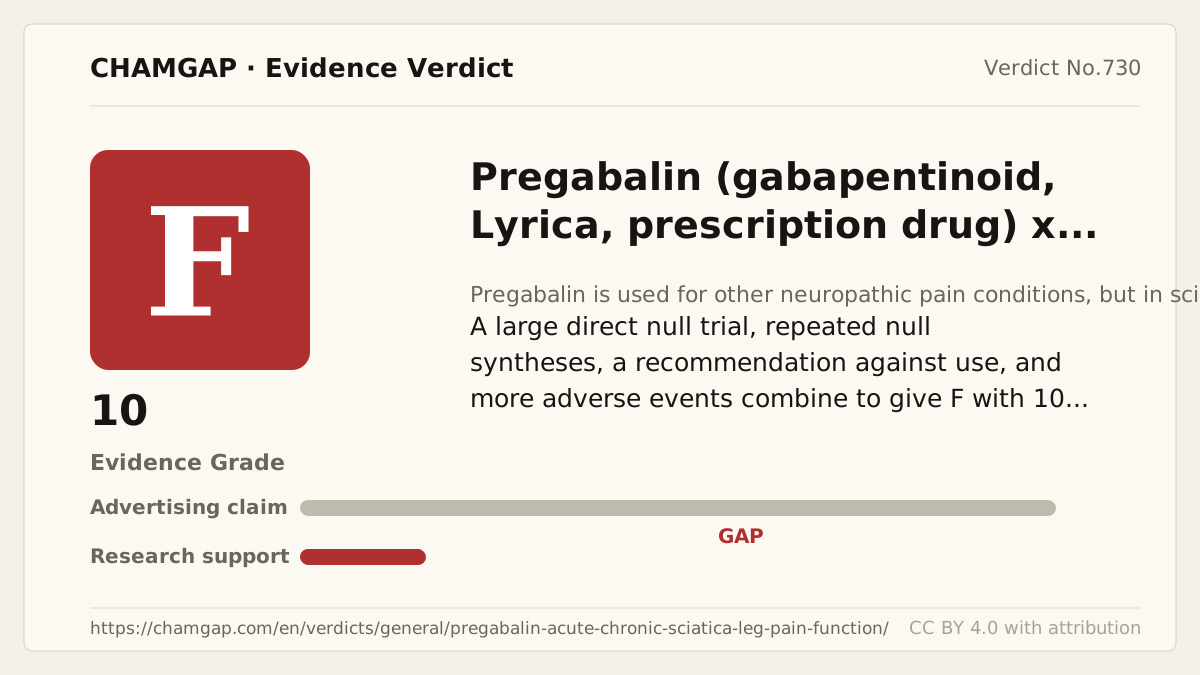
[Chamgap] Pregabalin x pain and function in acute and chronic sciatica — Evidence Grade D·25. 3 cited sources checked. Source: https://chamgap.com/en/verdicts/general/pregabalin-acute-chronic-sciatica-leg-pain-function/ · CC BY 4.0CC BY 4.0 — free to use with attribution; do not distort grades, numbers, or verdict meaning.
What this document does and does not do
Chamgap is an information source. It reports what research has and has not confirmed; it does not tell readers what to take or buy. That decision belongs to readers and, when needed, medical or legal professionals. This verdict reflects literature available up to the search date and may change as new research appears. Nothing here is medical advice.