
Potassium nitrate toothpaste,
does it really help with Pain relief for dentin hypersensitivity?
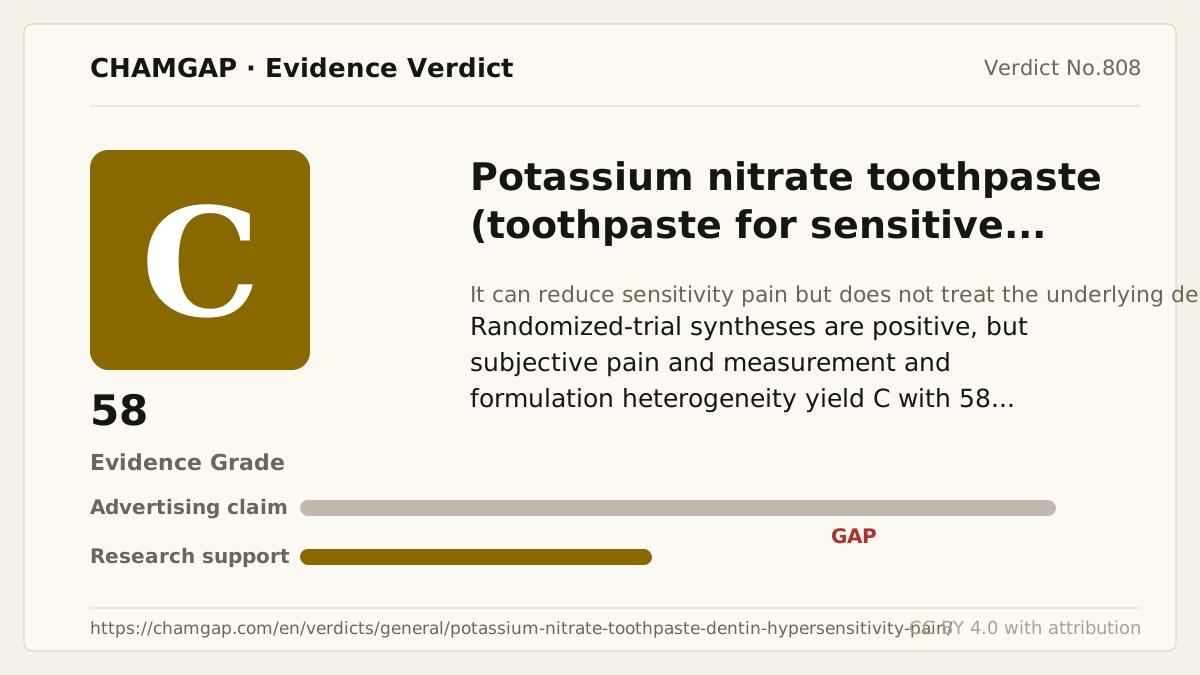
research showsPotassium nitrate toothpaste is rated C because randomized-trial syntheses support pain relief in dentin hypersensitivity. A 2015 placebo-controlled meta-analysis and a 2020 network meta-analysis of 125 randomized trials supported potassium formulations. The 2006 Cochrane review, however, found positive air-blast and tactile results but no significant everyday subjective effect and withheld a clear conclusion because studies were small and results depended on measurement method. Pain is inherently subjective and formulations, stimuli, and follow-up are heterogeneous, so rule ① caps the grade at C with 58 points.
ads claimMarketing can promise instant treatment, removal of the cause, or permanent blocking. Evidence concerns reduced stimulus-evoked pain after repeated use, not treatment of caries, cracks, recession, or pulp disease.
Useful facts when choosing a product
- Sensitive-tooth formulations commonly contain 5% potassium nitrate, but active ingredients, fluoride, and abrasives differ by country and product.
- Regular use according to the label is required, and neither immediate nor permanent benefit is guaranteed.
- Potassium nitrate toothpaste is generally well tolerated, but it should not be swallowed and should be stopped if oral irritation or allergy occurs.
- Severe pain in one tooth, spontaneous pain, biting pain, or worsening symptoms require dental assessment for caries, fracture, or pulp disease.
Chamgap Semantic Classification Code
Candidate index · review held
M.potassium-nitrate-toothpaste.UNK.pain-relief-for-dentin-hypersensitivity.relieve.placeboMedicinal interventions > Potassium nitrate toothpaste > Unknown > Pain relief for dentin hypersensitivity > Symptom-relief claim > Placebo
An automated migration candidate, not an issued permanent code; exact claim scope remains under review. This machine-generated migration candidate helps retrieval but is not a permanent assignment. The original verdict ID and URL remain authoritative.
What the research actually shows
Poulsen and colleagues synthesized six trials and reported an air-blast SMD of -1.25 at six to eight weeks, but everyday subjective assessment was not significant and the review did not consider the evidence clear. Bae and colleagues in 2015 supported potassium toothpaste in a placebo-controlled meta-analysis. Martins and colleagues in 2020 synthesized 125 trials and 12,541 participants and found a tactile benefit for potassium versus fluoride control, although results differed by stimulus and formulation.
Why this is classified as C (58)
Positive placebo-controlled trials and meta-analyses are accepted. Subjective pain, study, formulation, and stimulus heterogeneity, plus the older inconclusive Cochrane judgment, invoke the rule ① ceiling and yield C with 58 points. Generally favorable safety and diagnostic evaluation of causes are separate.
Counterpoint. It is a reasonable low-cost first self-care option when exposed-dentin hypersensitivity is established. Persistent or focal pain needs diagnosis rather than repeated toothpaste switching.
Rejudgment record. New verdict — Accepted positive placebo-controlled randomized trials and meta-analyses, while applying the rule ① ceiling of C for subjective pain, formulation, stimulus, and measurement heterogeneity and conflicting synthesis conclusions
Sub-claim grades by effect
This ingredient is marketed for several effects. A single overall grade blends strong and weak claims together, so each effect is graded separately here. The overall grade reflects the strongest disconfirming or core claim.
| Effect (sub-claim) | Grade | Basis |
|---|---|---|
| Pain relief for dentin hypersensitivity | C | Randomized syntheses are positive, with subjective pain and formulation and measurement heterogeneity. |
| Consistent effect across all stimuli and products | D | Results are inconsistent across air, tactile, and cold stimuli and single or combination formulations. |
| Removal of the cause or permanent cure | F | It relieves symptoms through nerve desensitization and does not treat causes such as caries, fracture, or recession. |
Cross-check — AI research and Codex final gate
Evidence Table
| Study | Design | Sample | Funding | Endpoint | Result | Weight |
|---|---|---|---|---|---|---|
| Poulsen S et al. 2006 Cochrane review | Systematic review and meta-analysis of potassium-toothpaste trials | Six trials | Cochrane academic review | Air, tactile, thermal, and subjective pain | Air and tactile measures were positive, but subjective assessment was nonsignificant and the conclusion was inconclusive. | Key evidence on conflict and heterogeneity |
| Bae JH et al. 2015 | Systematic review and meta-analysis of placebo-controlled trials | Randomized trials across multiple toothpaste formulations | Academic research | Dentin-hypersensitivity pain | Supported several desensitizing toothpastes, including potassium formulations. | Positive placebo-controlled synthesis |
| Martins CC et al. 2020 | Systematic review and Bayesian network meta-analysis of randomized trials | 125 randomized trials and 12,541 participants | Academic research | Tactile, cold, and air-stimulus pain | Potassium was superior to fluoride control for tactile pain, with substantial stimulus and combination differences. | Large contemporary synthesis |
Receipt — 3 References
All 3 cited sources were verified for existence at the original page (as of 2026-07-20).
Final verification and publication gate: Codex · Evidence date: 2026-07-20 · Corrections: none
Cite this verdict
[Chamgap] Potassium nitrate toothpaste x pain relief for dentin hypersensitivity — Evidence Grade C·58. 3 cited sources checked. Source: https://chamgap.com/en/verdicts/general/potassium-nitrate-toothpaste-dentin-hypersensitivity-pain/ · CC BY 4.0CC BY 4.0 — free to use with attribution; do not distort grades, numbers, or verdict meaning.
What this document does and does not do
Chamgap is an information source. It reports what research has and has not confirmed; it does not tell readers what to take or buy. That decision belongs to readers and, when needed, medical or legal professionals. This verdict reflects literature available up to the search date and may change as new research appears. Nothing here is medical advice.