
Organic germanium Ge-132, carboxyethylgermanium sesquioxide,
does it really help with Immune enhancement, anticancer effects, fatigue relief, and general vitality?
research showsThe fatigue RCT NCT00651417 was registered but has no public results. The n=18 NK study used an uncontrolled surrogate, while the n=130 RCT tested a different yeast-bound Bio-Germanium material and cannot be transferred, so the verdict is ?.
ads claimClaims such as organic means safe, oxygen delivery, interferon or immune enhancement, cancer-cell inhibition, and chronic-fatigue recovery have not been confirmed in clinical outcomes. Foods, minerals, jewelry, and other goods marketed as containing germanium are also not chemically interchangeable with defined Ge-132.
Useful facts when choosing a product
- NCT00651417 registered a Ge-132 trial for cancer-related fatigue during radiation therapy, but no public results are available (ClinicalTrials.gov NCT00651417).
- The immune study measured an NK-activity surrogate in 18 participants without a control group, while the n=130 RCT tested yeast-bound Bio-Germanium rather than Ge-132 (formulation and design in the cited clinical literature).
Chamgap Semantic Classification Code
Candidate index · review held
UNK.organic-germanium-ge-132.UNK.immune-enhancement-anticancer-effects-fatigue-relief-and-general-vitality.relieve.UNKUnknown > Organic germanium Ge-132 > Unknown > Immune enhancement, anticancer effects, fatigue relief, and general vitality > Symptom-relief claim > Unknown
An automated migration candidate, not an issued permanent code; exact claim scope remains under review. This machine-generated migration candidate helps retrieval but is not a permanent assignment. The original verdict ID and URL remain authoritative.
What the research actually shows
The Ge-132 radiation-related fatigue RCT NCT00651417 was registered but has no public results. The n=18 immune study measured an NK-activity surrogate without a control group, while the positive n=130 RCT used yeast-bound Bio-Germanium rather than Ge-132 and was not transferred. Renal-failure and neurotoxicity cases and the FDA hazard assessment were retained only under safety.
Why this is classified as ?
The Ge-132 fatigue RCT has no public results, the n=18 study is an uncontrolled surrogate, and the n=130 RCT used another material, so the grade is ?. Kidney-toxicity warnings remain in safety only.
Counterpoint. The official cancer-center review is retained only as a clinical note and not used for grading. Warnings about kidney toxicity, neurotoxicity, and deaths from germanium supplements are safety information and were not used to determine efficacy grade.
Rejudgment record. New verdict — Applied ? because the fatigue RCT has no public results, the n=18 study is an uncontrolled surrogate, and the n=130 RCT used another material; kidney toxicity remains in safety only
Sub-claim grades by effect
This ingredient is marketed for several effects. A single overall grade blends strong and weak claims together, so each effect is graded separately here. The overall grade reflects the strongest disconfirming or core claim.
| Effect (sub-claim) | Grade | Basis |
|---|---|---|
| Immune enhancement | ? | Only uncontrolled surrogates such as n=18 NK activity; the positive n=130 RCT used chemically distinct yeast-bound Bio-Germanium and cannot be attributed to Ge-132 |
| Anticancer treatment or adjunctive cancer therapy | ? | An official cancer-center review states that clinical research does not support cancer treatment benefit, and there is no basis for treatment substitution. |
| Fatigue relief and improved general vitality | ? | No public result was verified for the registered radiation-fatigue study, and no confirmatory human trial establishes general fatigue or vitality benefits. |
Cross-check — AI research and Codex final gate
Evidence Table
| Study | Design | Sample | Funding | Endpoint | Result | Weight |
|---|---|---|---|---|---|---|
| Study 1 | Official oncology evidence and safety monograph | Official clinical information from a nonprofit cancer center | Human efficacy and toxicity related to cancer treatment, fatigue, and immunity | The review found no conclusive evidence for anticancer efficacy and stated that clinical research does not support treatment benefit. | Moderate to high | |
| Study 2 | Review of human case reports | 2 | Literature review with limited funding information | Renal dysfunction, renal failure, and neurologic or muscular symptoms | The review summarized serious renal and neurologic toxicity associated with GeO2 or Ge-132 ingestion and noted that recovery could be incomplete. | Moderate |
| Study 3 | Human hazard assessment and synthesis of germanium-supplement cases | 31 | US FDA Center for Food Safety and Applied Nutrition | Kidney toxicity, death, chemical form, and contamination risk | The assessment concluded that several forms, including germanium dioxide and carboxyethyl germanium sesquioxide, presented a potential human hazard. | High |
| Study 4 | Good Laboratory Practice genotoxicity and repeated-dose rodent toxicology studies | Testing was contracted by a company associated with Ge-132 manufacturing | Genotoxicity, acute and 90-day toxicity, and no-observed-adverse-effect level | The high-purity test article was negative in genotoxicity testing and had an animal no-observed-adverse-effect level of 2,000 mg/kg per day, but this was not a human efficacy study. | Very low for efficacy; moderate for toxicology of the defined test article |
Receipt — 6 References
All 6 cited sources were verified for existence at the original page (as of 2026-07-17).
Final verification and publication gate: Codex · Evidence date: 2026-07-17 · Corrections: none
Cite this verdict
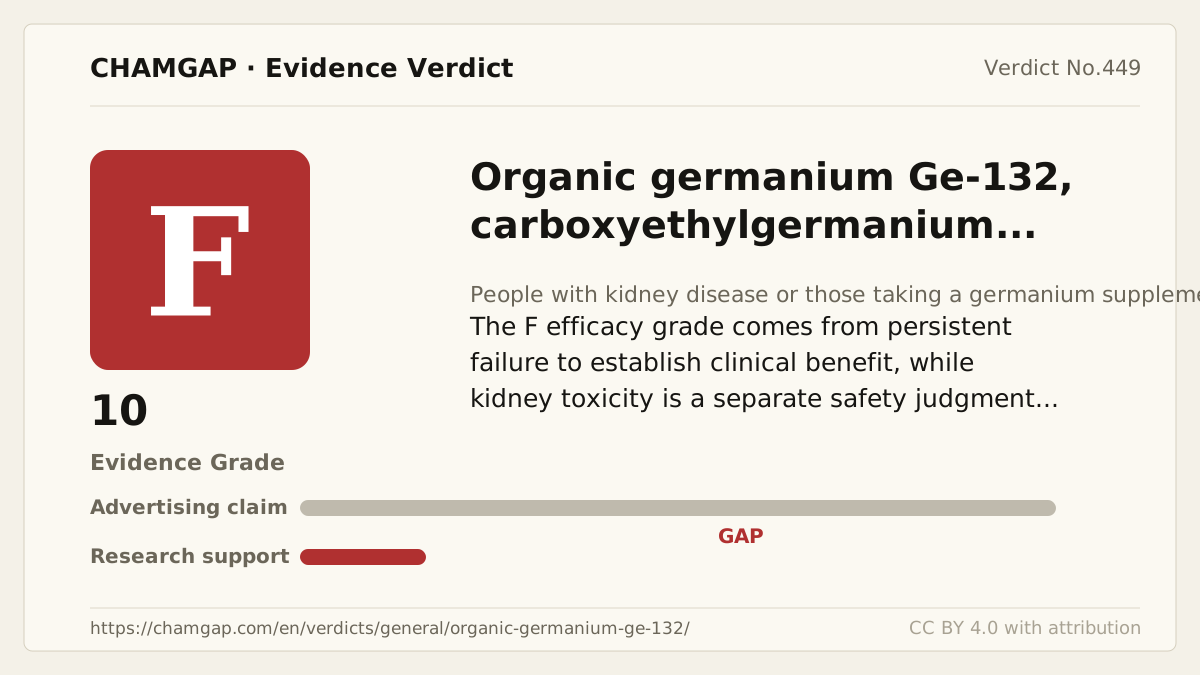
[Chamgap] Ge-132: longstanding broad efficacy claims remain unverified while product safety warnings are serious — Evidence Grade ?. 6 cited sources checked. Source: https://chamgap.com/en/verdicts/general/organic-germanium-ge-132/ · CC BY 4.0CC BY 4.0 — free to use with attribution; do not distort grades, numbers, or verdict meaning.
What this document does and does not do
Chamgap is an information source. It reports what research has and has not confirmed; it does not tell readers what to take or buy. That decision belongs to readers and, when needed, medical or legal professionals. This verdict reflects literature available up to the search date and may change as new research appears. Nothing here is medical advice.