
Naltrexone 50 mg,
does it really help with Reduced heavy drinking and return to drinking in alcohol use disorder when combined with counseling?
research showsOral naltrexone 50 mg is rated B because it modestly reduces return to heavy drinking and return to any drinking in alcohol use disorder when combined with counseling or medical management. A 2014 meta-analysis estimated a number needed to treat of 12 to prevent one return to heavy drinking and 20 for return to any drinking; an updated 2023 review estimated about 11 and 18, respectively. The large COMBINE trial also improved drinking outcomes with naltrexone plus medical management, although effects were clearest during treatment and were no longer significant at one year. This verdict is distinct from verdict 709 on naltrexone/bupropion for obesity.
ads claimClaims that it eliminates thoughts of alcohol, guarantees abstinence without personal engagement, or blocks relapse with one pill inflate an average reduction in heavy drinking into certain abstinence. Naltrexone can reduce craving and reward response as an aid within a treatment plan, but counseling, medical management, and adherence still matter.
Useful facts when choosing a product
- A representative oral dose in alcohol use disorder trials is 50 mg once daily, with prescribing and follow-up that consider liver status and ability to adhere.
- Naltrexone blocks opioid effects and must not be given to a person currently using opioid analgesics, cough medicines, or opioid treatment; an adequate opioid-free interval and clinical assessment are required before initiation.
- Nausea, headache, dizziness, and fatigue are common, while high exposure or pre-existing liver disease warrants attention to symptoms and liver tests because of potential hepatic injury.
- Medication does not replace counseling, motivational work, medical management, or recovery support; benefit depends on adherence and the agreed drinking goal.
Chamgap Semantic Classification Code
Candidate index · review held
M.naltrexone.UNK.heavy-drinking-and-return-to-drinking-in-alcohol-use-disorder-when-combined-with-counseling.reduce.factorialMedicinal interventions > Naltrexone > Unknown > heavy drinking and return to drinking in alcohol use disorder when combined with counseling > Reduction claim > Defined factorial contrast
An automated migration candidate, not an issued permanent code; exact claim scope remains under review. This machine-generated migration candidate helps retrieval but is not a permanent assignment. The original verdict ID and URL remain authoritative.
What the research actually shows
Anton 2006 COMBINE assigned 1,383 recently abstinent participants with alcohol dependence to nine combinations of medication, medical management, and behavioral intervention for 16 weeks. Naltrexone with medical management improved drinking outcomes, but adding the combined behavioral intervention did not outperform naltrexone or behavioral intervention alone, and between-group effects were no longer significant at one year. Jonas 2014 reviewed 122 randomized trials involving 22,803 participants and estimated numbers needed to treat of 20 for return to any drinking and 12 for return to heavy drinking with oral naltrexone 50 mg/day. McPheeters 2023 updated the evidence with 118 trials and 20,976 participants, reporting numbers needed to treat of 18 and 11; most trials provided a nonmedication treatment such as counseling to both groups.
Why this is classified as B (74)
Independent meta-analyses repeatedly estimate a number needed to treat near 11 to 12 for preventing return to heavy drinking with oral naltrexone 50 mg/day, and the 1,383-participant COMBINE trial confirms improvement in direct drinking behavior, supporting B with 74 points. Numbers needed to treat of 18 to 20 for any drinking, weaker complete-abstinence and post-treatment persistence, and dependence on counseling context and adherence prevent an A grade. Opioid contraindication, nausea, and hepatic injury are separate safety issues.
Counterpoint. Suitability depends on whether the goal is complete abstinence or reduced heavy drinking, whether opioid analgesia is needed, and whether liver disease is present. Opioid use and liver status should be disclosed before treatment, and lack of benefit should prompt review of adherence, counseling intensity, and alternatives.
Rejudgment record. New verdict — Repeated reductions in direct heavy-drinking relapse and return-to-drinking outcomes with oral naltrexone plus counseling or medical management across the large publicly supported COMBINE trial and independent meta-analyses, while accounting for modest effect size, weaker complete abstinence, adherence, and post-treatment durability
Sub-claim grades by effect
This ingredient is marketed for several effects. A single overall grade blends strong and weak claims together, so each effect is graded separately here. The overall grade reflects the strongest disconfirming or core claim.
| Effect (sub-claim) | Grade | Basis |
|---|---|---|
| Reduced return to heavy drinking in alcohol use disorder with counseling | B | Independent meta-analyses repeatedly estimated a number needed to treat of about 11 to 12 with 50 mg/day, making this the clearest efficacy domain. |
| Reduced return to any drinking in alcohol use disorder with counseling | B | The result is positive with a number needed to treat near 18 to 20, but weaker than the heavy-drinking effect and does not guarantee abstinence. |
| Reduced heavy-drinking days and alcohol consumption in alcohol use disorder with counseling | B | COMBINE and many randomized trials improved direct drinking behavior during treatment, but adherence and post-treatment durability affect the result. |
Cross-check — AI research and Codex final gate
Evidence Table
| Study | Design | Sample | Funding | Endpoint | Result | Weight |
|---|---|---|---|---|---|---|
| Anton RF et al.; COMBINE Study Research Group. 2006 | Multicenter randomized controlled 2-by-2-by-2 factorial trial | 1,383 participants with alcohol dependence, 16 weeks of treatment and one-year follow-up | Public support from the United States National Institute on Alcohol Abuse and Alcoholism | Percent days abstinent, good clinical outcome without heavy drinking, and post-treatment persistence | Naltrexone with medical management improved drinking outcomes during treatment, but between-group effects were not significant at one year. | Key large independent randomized trial |
| Jonas DE et al. 2014 | Systematic review and meta-analysis of outpatient pharmacotherapy for alcohol use disorder | 122 randomized trials and 22,803 participants; 53 naltrexone trials and 9,140 participants | Public support from the United States Agency for Healthcare Research and Quality | Return to any drinking, return to heavy drinking, drinking days, and adverse events | For 50 mg/day, the number needed to treat was 20 for any drinking and 12 for heavy drinking; the number needed to harm for withdrawal due to adverse events was 48. | Key independent synthesis |
| McPheeters M et al. 2023 | Updated systematic review and meta-analysis of pharmacotherapy for alcohol use disorder | 118 clinical trials and 20,976 participants | Public support from the United States Agency for Healthcare Research and Quality | Return to any drinking, return to heavy drinking, drinking days, and harms | For 50 mg/day, the number needed to treat was 18 for any drinking and 11 for heavy drinking; the risk ratio for nausea was 1.73. | Current independent replication |
Receipt — 3 References
All 3 cited sources were verified for existence at the original page (as of 2026-07-21).
Final verification and publication gate: Codex · Evidence date: 2026-07-21 · Corrections: none
Cite this verdict
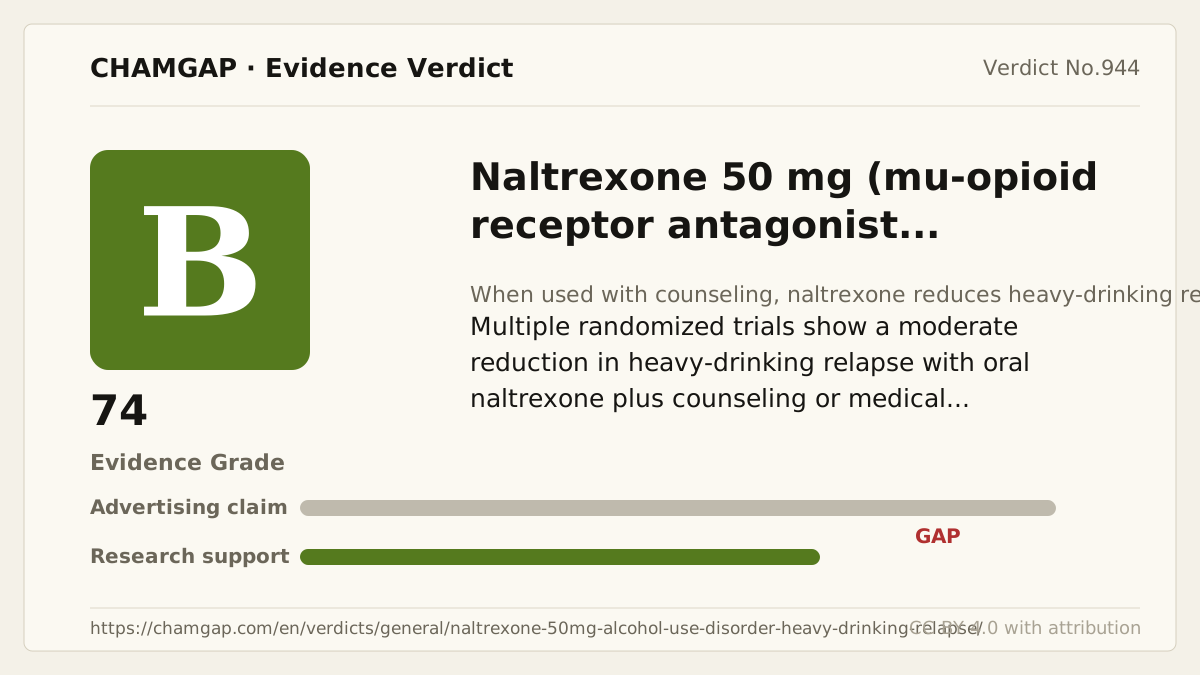
[Chamgap] Naltrexone 50 mg x reduced heavy drinking and return to drinking in alcohol use disorder with counseling — Evidence Grade B·74. 3 cited sources checked. Source: https://chamgap.com/en/verdicts/general/naltrexone-50mg-alcohol-use-disorder-heavy-drinking-relapse/ · CC BY 4.0CC BY 4.0 — free to use with attribution; do not distort grades, numbers, or verdict meaning.
What this document does and does not do
Chamgap is an information source. It reports what research has and has not confirmed; it does not tell readers what to take or buy. That decision belongs to readers and, when needed, medical or legal professionals. This verdict reflects literature available up to the search date and may change as new research appears. Nothing here is medical advice.