
Mixed-meat diet,
does it really help with Maintenance of serum ferritin and hemoglobin in nonanemic women of childbearing age with low iron stores?
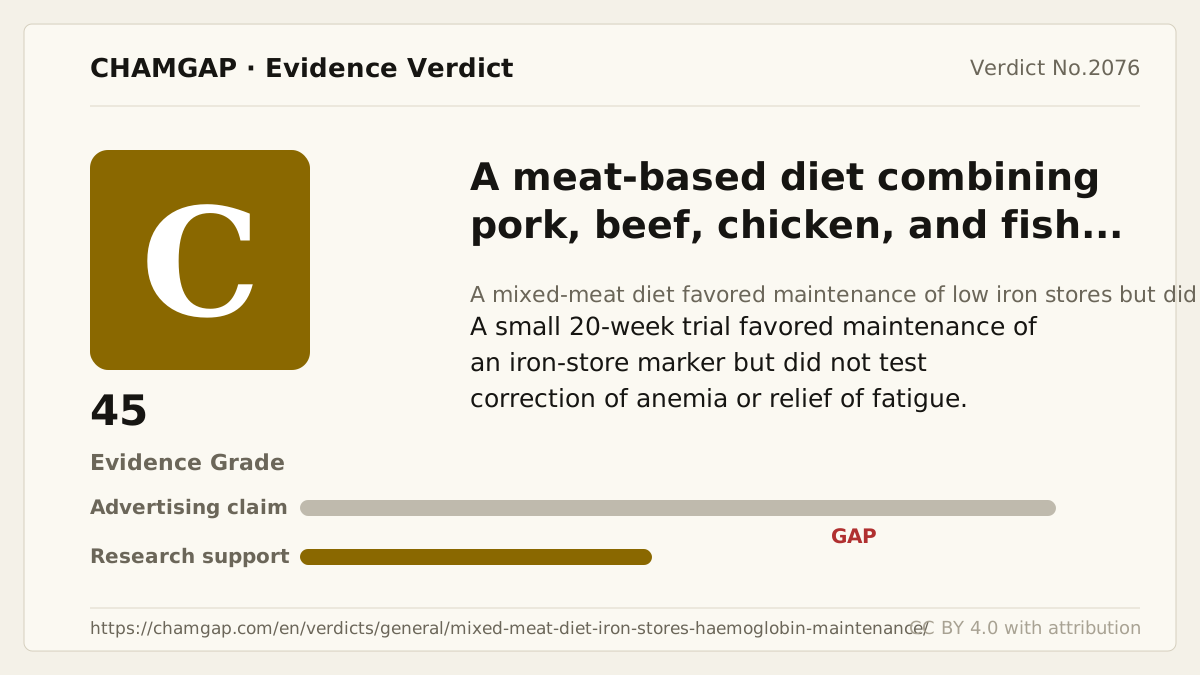
research showsThe grade is C with 46 points. In the 57 participants analyzed after a 20-week randomized trial, median meat and fish intake was 152 versus 31 g/day. Ferritin was maintained from 16.3 to 16.5 micrograms/L with the meat-based diet but declined from 17.3 to 11.2 micrograms/L with the vegetable-based diet. The participants were not anemic, however, and this small biomarker trial did not provide a recoverable adjusted between-group effect and confidence interval in the publicly checked material.
ads claimHigher iron absorption from meat-containing meals is not the same claim as treating anemia. Verdict 1958 has an unknown grade and no score for whole chard and correction of iron-deficiency anemia; the present question instead concerns mixed-meat feeding and biomarker maintenance in nonanemic women with low stores.
Useful facts when choosing a product
- A separate 19-woman crossover study measured nonheme-iron absorption of 7.9% and 6.8% with two 180-g/day pork diets versus 5.3% with a vegetarian diet; this is an absorption measurement, not a 20-week anemia outcome.
- Actual median meat-plus-fish intake in the 20-week trial was 152 versus 31 g/day, with similar total iron intake of about 11.0 versus 12.3 mg/day.
- Participants had low ferritin but hemoglobin at or above 120 g/L and did not have anemia; fatigue and functioning were not measured.
- The trial did not separate meat type or grilling, frying, smoking, and doneness in its efficacy analysis.
Chamgap Semantic Classification Code
Candidate index · review held
D.meat-based-diet-combining-pork.dietary.serum-ferritin-and-hemoglobin-in-nonanemic-women-of-childbearing-age-with-low-iron-stores.maintain.UNKDietary patterns and eating practices > meat-based diet combining pork > Dietary regimen > serum ferritin and hemoglobin in nonanemic women of childbearing age with low iron stores > Maintenance claim > Unknown
An automated migration candidate, not an issued permanent code; exact claim scope remains under review. This machine-generated migration candidate helps retrieval but is not a permanent assignment. The original verdict ID and URL remain authoritative.
What the research actually shows
Tetens and colleagues assigned 57 women to meat- or vegetable-based diets for 20 weeks and analyzed 29 and 28. The meat diet combined pork, beef, chicken, and fish and did not separate cooking methods. No public trial registration or prespecified primary endpoint was identified for this 2007 study. The original funding and conflict disclosures could not be inspected directly, so public or nonprofit independence was not asserted.
Why this is classified as C (46)
The randomized trial directly favored maintenance of iron-store biomarkers, but it was a single 57-person study of surrogate measurements. Medians and quartiles plus the unavailable formal between-group estimate prevented effect-size recovery, giving C with 46 points.
Counterpoint. Confirmed iron-deficiency anemia requires evaluation of its cause and appropriate treatment. This trial did not compare the diet with iron medication or address menstrual loss, malabsorption, or occult bleeding.
Rejudgment record. Cross-check applied — Checked the analyzed population, intake, and ferritin distributions against the source, separated biomarker maintenance from anemia treatment, and reflected that the formal between-group effect size could not be recovered from public material
| Endpoint | S | Surrogate marker - laboratory or imaging measures |
| Replication | R1 | Single confirmatory trial |
| Independence | I1 | Mixed funding sources |
| Effect size | EX | The clinical size of the effect could not be judged |
Stored derived and displayed grades match; this is not a current recalculation or validity check (C).
Sub-claim grades by effect
This ingredient is marketed for several effects. A single overall grade blends strong and weak claims together, so each effect is graded separately here. The overall grade reflects the strongest disconfirming or core claim.
| Effect (sub-claim) | Grade | Basis |
|---|---|---|
| Maintenance of iron stores and hemoglobin | C | A small 20-week trial favored biomarker maintenance, but the formal effect size could not be recovered. |
| Correction of iron-deficiency anemia or fatigue recovery | ? | Participants were not anemic, and fatigue or functioning was not measured. |
Cross-check — AI research and Codex final gate
Evidence Table
| Study | Design | Sample | Funding | Endpoint | Result | Weight |
|---|---|---|---|---|---|---|
| Tetens et al. 2007 | Twenty-week randomized dietary intervention | 57 analyzed: 29 meat-based and 28 vegetable-based | Original funding and conflict disclosures could not be inspected directly | Serum ferritin and hemoglobin | Median ferritin 16.3 to 16.5 versus 17.3 to 11.2 micrograms/L; hemoglobin 126 to 125 versus 124 to 121 g/L. The formal between-group effect and CI could not be recovered from public material. | Direct small biomarker trial |
Receipt — 2 References
All 2 cited sources were verified for existence at the original page (as of 2026-08-03).
Final verification and publication gate: Codex · Evidence date: 2026-08-03 · Corrections: none
Cite this verdict
[Chamgap] Mixed-meat diet x maintenance of iron stores and hemoglobin — Evidence Grade C·46. 2 cited sources checked. Source: https://chamgap.com/en/verdicts/general/mixed-meat-diet-iron-stores-haemoglobin-maintenance/ · CC BY 4.0CC BY 4.0 — free to use with attribution; do not distort grades, numbers, or verdict meaning.
What this document does and does not do
Chamgap is an information source. It reports what research has and has not confirmed; it does not tell readers what to take or buy. That decision belongs to readers and, when needed, medical or legal professionals. This verdict reflects literature available up to the search date and may change as new research appears. Nothing here is medical advice.