
Kinesiology tape,
does it really help with Reduction of chronic nonspecific low-back pain and disability?
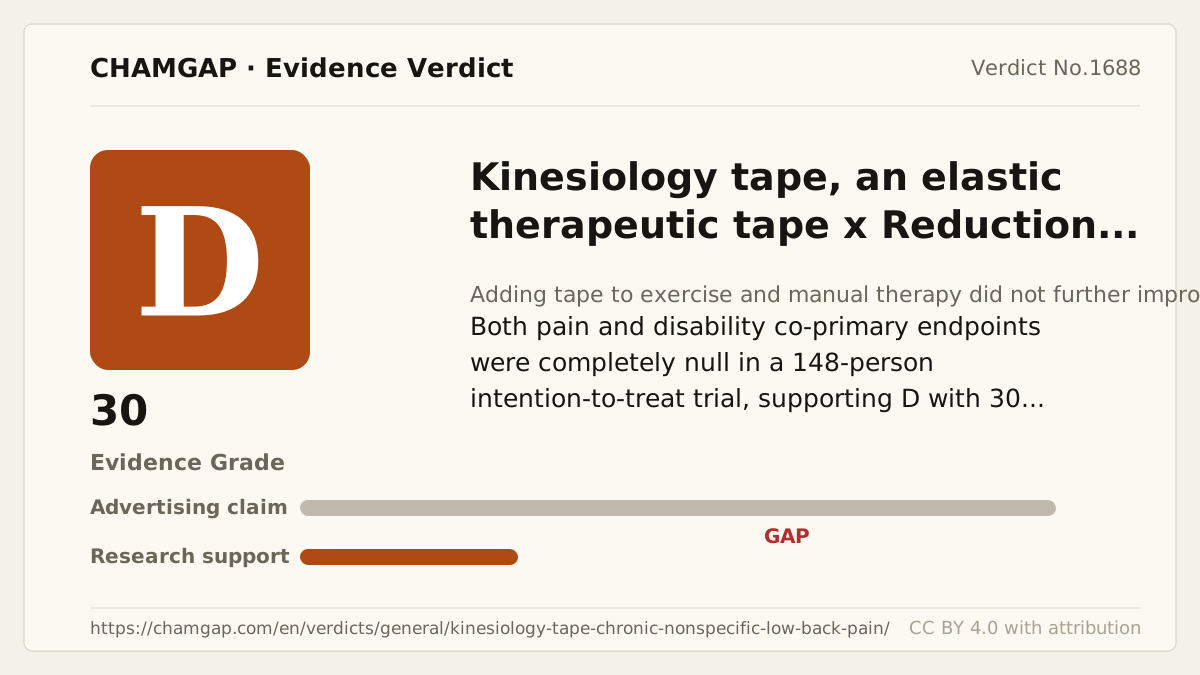
research showsKinesiology tape is rated D as an adjunct for chronic nonspecific low-back pain. Added 2016 randomized 148 participants and included all in intention-to-treat analyses. Both five-week co-primary endpoints failed when tape was added to exercise and manual therapy: pain difference -0.01 points (95% CI -0.88 to 0.85) and disability difference +1.14 points (-0.85 to 3.13). These direct treatment targets showed no clinically meaningful added benefit. Small short-term signals in meta-analyses are undermined by failure to reach important thresholds, heterogeneity, and bias, supporting D with 30 points.
ads claimClaims about lifting skin or altering circulation must not be converted into proven correction of pain causes, spinal alignment, or durable functional recovery.
Useful facts when choosing a product
- The pivotal trial tested added benefit on top of exercise and manual therapy rather than tape as a stand-alone treatment.
- Skin irritation, itching, or adhesive allergy warrants removal.
- Progressive weakness, bowel or bladder dysfunction, saddle numbness, fever, trauma, or other red flags require prompt medical assessment.
Chamgap Semantic Classification Code
Candidate index · review held
UNK.kinesiology-tape.UNK.chronic-nonspecific-low-back-pain-and-disability.reduce.shamUnknown > Kinesiology tape > Unknown > chronic nonspecific low-back pain and disability > Reduction claim > Sham procedure or device
An automated migration candidate, not an issued permanent code; exact claim scope remains under review. This machine-generated migration candidate helps retrieval but is not a permanent assignment. The original verdict ID and URL remain authoritative.
What the research actually shows
Added 2016 randomized 148 participants to ten sessions of exercise and manual therapy or the same care plus lumbar taping. The actual primary analysis used multiply imputed intention-to-treat data for all 148, and both five-week co-primary outcomes failed. A 2019 systematic review by Luz Júnior found no clinically important or significant superiority over sham for pain or disability and did not support clinical use. Positive short-term estimates from lower-quality reviews mixing comparators have high heterogeneity and are not confirmatory.
Why this is classified as D (30)
Both direct pain and disability co-primary endpoints failed in an intention-to-treat analysis of all 148 participants, with estimates far below important thresholds. Conflicting small positive trials prevent F, supporting D with 30 points.
Counterpoint. It may provide inexpensive short-term subjective comfort, but it should not replace exercise and activity-based care with established benefit.
Rejudgment record. Cross-check applied — An appropriately designed adjunctive-effect trial included all 148 randomized participants in intention-to-treat analysis and failed on both direct five-week pain and disability co-primary endpoints by margins far below clinically important thresholds; conflicting small trials prevent an F rating
Sub-claim grades by effect
This ingredient is marketed for several effects. A single overall grade blends strong and weak claims together, so each effect is graded separately here. The overall grade reflects the strongest disconfirming or core claim.
| Effect (sub-claim) | Grade | Basis |
|---|---|---|
| Reduction of chronic nonspecific low-back pain at five weeks | D | The co-primary between-group difference was null at -0.01 points in the 148-person intention-to-treat analysis. |
| Reduction of low-back-pain disability at five weeks | D | The co-primary difference was +1.14 points, showing no added benefit from tape. |
| Sustained functional improvement at six months | D | The disability difference favored control, and other long-term outcomes showed no added benefit. |
Cross-check — AI research and Codex final gate
Evidence Table
| Study | Design | Sample | Funding | Endpoint | Result | Weight |
|---|---|---|---|---|---|---|
| Added MAN et al. 2016 | Randomized assessor-blinded parallel-group adjunctive-effect trial | 148 randomized; all 148 included in the actual intention-to-treat primary analysis | Public funding from the São Paulo Research Foundation, FAPESP 13/02075-8; not tape-manufacturer led | Five-week pain intensity and disability co-primary endpoints | Both primary endpoints failed: pain -0.01 points (95% CI -0.88 to 0.85), disability +1.14 points (-0.85 to 3.13). | Pivotal independent direct counterevidence |
| Luz Júnior MA et al. 2019 | Systematic review and meta-analysis in chronic nonspecific low-back pain | 11 randomized trials | University-based academic research; no commercial manufacturer funding reported | Pain and disability | Found no significant or clinically important benefit over sham for pain or disability and did not support clinical use. | Synthesis showing limited effect size |
Receipt — 2 References
All 2 cited sources were verified for existence at the original page (as of 2026-07-24).
Final verification and publication gate: Codex · Evidence date: 2026-07-24 · Corrections: none
Cite this verdict
[Chamgap] Kinesiology tape x reduced chronic nonspecific low-back pain and disability — Evidence Grade D·30. 2 cited sources checked. Source: https://chamgap.com/en/verdicts/general/kinesiology-tape-chronic-nonspecific-low-back-pain/ · CC BY 4.0CC BY 4.0 — free to use with attribution; do not distort grades, numbers, or verdict meaning.
What this document does and does not do
Chamgap is an information source. It reports what research has and has not confirmed; it does not tell readers what to take or buy. That decision belongs to readers and, when needed, medical or legal professionals. This verdict reflects literature available up to the search date and may change as new research appears. Nothing here is medical advice.