
Ivy leaf dry extract from Hedera helix,
does it really help with Reduced cough frequency and severity in acute bronchitis?
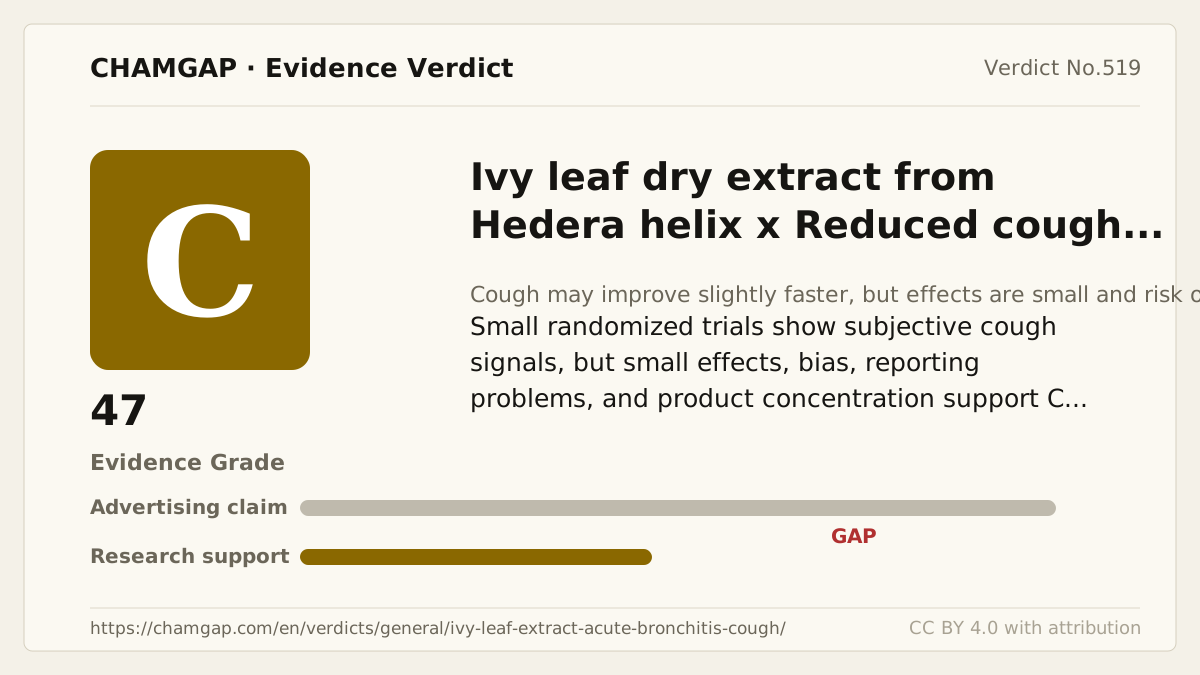
research showsPlacebo-controlled trials of ivy-leaf monotherapy exist for acute cough and bronchitis, and some report faster reductions in cough frequency or severity. An independent systematic review, however, judged the effects minimal at best and of uncertain clinical importance, with heterogeneity, poor reporting, high risk of bias, and possible publication bias. Outcomes are mainly subjective symptom scales in a rapidly self-limiting illness, supporting C.
ads claimMarketing may describe the product as proven treatment of bronchitis or a reliable cough stopper. The evidence largely covers symptom scales over about seven days and does not establish prevention of pneumonia, replacement of antibiotics when indicated, or other major clinical outcomes.
Useful facts when choosing a product
- Ivy-leaf monotherapies and combinations with other herbal ingredients may be available in South Korea; the exact product should be checked for single versus combination status and authorized labeling.
- EA 575 research products used a dry ivy-leaf extract with a 5 to 7.5:1 drug-extract ratio and 30% ethanol extraction; one syrup provides 35 mg per 5 mL.
- Milliliters cannot be compared directly across products with different extraction ratios, solvents, and dry-extract concentrations. Age-specific package directions take priority.
- Nausea, vomiting, diarrhea, and allergic reactions have been reported. The European Medicines Agency advises against use as a cough medicine in children younger than two years.
Chamgap Semantic Classification Code
Candidate index · review held
S.ivy-leaf-dry-extract-from-hedera-helix.UNK.cough-frequency-and-severity-in-acute-bronchitis.reduce.placeboSupplements and nutraceuticals > Ivy leaf dry extract from Hedera helix > Unknown > cough frequency and severity in acute bronchitis > Reduction claim > Placebo
An automated migration candidate, not an issued permanent code; exact claim scope remains under review. This machine-generated migration candidate helps retrieval but is not a permanent assignment. The original verdict ID and URL remain authoritative.
What the research actually shows
The 2021 Sierocinski review included six randomized trials, one controlled clinical trial, and four observational studies. Three randomized trials reported faster reductions in cough frequency or severity, but clinical importance appeared minimal, heterogeneity prevented meta-analysis, and reporting quality and risk of bias were problematic. A pooled analysis of two placebo-controlled EA 575 monotherapy trials in 390 participants reported improvement in seven-day cough scales and cough-free proportions, but it was a post hoc synthesis of proprietary-extract data with manufacturer links and does not provide independent confirmation.
Why this is classified as C (47)
Placebo-controlled trials rule out unknown or a preclinical-only D grade. Small effects, subjective symptom endpoints, spontaneous recovery, heterogeneity, poor reporting, high risk of bias, and product concentration require C with 47 points under boundary rule 1.
Counterpoint. A possibility of short-term adjunctive relief remains in mild acute cough, but the effect may be too small for an individual to notice and does not replace treatment of serious respiratory disease.
Rejudgment record. New verdict — Placebo-controlled acute-cough trials exist, but effects are small and evidence is limited by subjective outcomes, spontaneous recovery, heterogeneity, poor reporting, high risk of bias, and product concentration
Cross-check — AI research and Codex final gate
Evidence Table
| Study | Design | Sample | Funding | Endpoint | Result | Weight |
|---|---|---|---|---|---|---|
| Schaefer A et al. 2016 | Multicenter randomized double-blind placebo-controlled trial | 200 | Proprietary extract with manufacturer links | Cough frequency and severity scales over seven days | Reported faster improvement in selected cough scales with EA 575. | Key; concentrated |
| Sierocinski E et al. 2021 | Independent systematic review | 4 | Academic investigators; no manufacturer support reported | Cough frequency and severity in acute respiratory infection or bronchitis | Acknowledged faster improvement in three trials but judged effects minimal at best and clinically uncertain, with poor reporting and high risk of bias. | Key |
| Völp A et al. 2022 | Post hoc pooled analysis of two placebo-controlled trials | 162 | Supported by Engelhard Arzneimittel; multiple authors disclosed financial relationships | Cough scales and cough-free proportions | Reported superiority of EA 575 at seven days and follow-up, but the analysis pooled two proprietary-product trials post hoc. | Supportive; concentrated |
| EMA HMPC monograph. 2017/2018 | Regulatory herbal assessment | European Medicines Agency | Expectorant use, dosing, and safety | Accepted use as an expectorant for productive cough while specifying contraindication under age two and gastrointestinal or allergic risks. | Context; safety |
Receipt — 4 References
All 4 cited sources were verified for existence at the original page (as of 2026-07-18).
Final verification and publication gate: Codex · Evidence date: 2026-07-18 · Corrections: none
Cite this verdict
[Chamgap] Ivy leaf dry extract from Hedera helix x cough in acute bronchitis — Evidence Grade C·47. 4 cited sources checked. Source: https://chamgap.com/en/verdicts/general/ivy-leaf-extract-acute-bronchitis-cough/ · CC BY 4.0CC BY 4.0 — free to use with attribution; do not distort grades, numbers, or verdict meaning.
What this document does and does not do
Chamgap is an information source. It reports what research has and has not confirmed; it does not tell readers what to take or buy. That decision belongs to readers and, when needed, medical or legal professionals. This verdict reflects literature available up to the search date and may change as new research appears. Nothing here is medical advice.