
Micronized purified flavonoid fraction,
does it really help with Relief of bleeding, itching, swelling, and other symptoms of acute hemorrhoids?
research showsMicronized purified flavonoid fraction and phlebotonics may reduce bleeding, itching, and overall symptoms during acute hemorrhoidal episodes, supporting a low B rating. In a 100-person placebo-controlled trial, bleeding had stopped by day three in 80% versus 38%, and a Cochrane review supported improvement in bleeding and itching. A 2018 review limited to this formulation found no significant benefit for outcomes other than bleeding, however, pain was not significant in the Cochrane review, and formulations, study products, and methods were heterogeneous.
ads claimMarketing may combine the evidence into a claim that the product treats hemorrhoid pain, bleeding, and swelling all at once. Evidence is strongest for short-term symptom relief, especially bleeding, and does not establish structural correction of prolapse or treatment of other causes of rectal bleeding.
Useful facts when choosing a product
- Prescription tablets containing 500 mg of micronized purified flavonoid fraction are distributed in Korea and typically correspond to 450 mg of diosmin plus 50 mg of hesperidin and related flavonoids.
- A representative acute-hemorrhoid regimen for 500-mg tablets is six tablets daily for four days followed by four tablets daily for three days. The specific product label and prescription take priority.
- The micronized combination is not equivalent to nonmicronized diosmin alone or to ordinary citrus-flavonoid supplements.
- Gastrointestinal discomfort, diarrhea, headache, and skin reactions can occur; persistent bleeding, black stool, anemia, or weight loss requires medical evaluation.
Chamgap Semantic Classification Code
Candidate index · review held
UNK.micronized-purified-flavonoid-fraction-containing-diosmin-and-hesperidin.UNK.bleeding-itching-swelling-and-other-symptoms-of-acute-hemorrhoids.relieve.placeboUnknown > Micronized purified flavonoid fraction containing diosmin and hesperidin > Unknown > bleeding, itching, swelling, and other symptoms of acute hemorrhoids > Symptom-relief claim > Placebo
An automated migration candidate, not an issued permanent code; exact claim scope remains under review. This machine-generated migration candidate helps retrieval but is not a permanent assignment. The original verdict ID and URL remain authoritative.
What the research actually shows
The Misra 2000 trial compared the micronized combination with placebo in 100 people with acute bleeding internal hemorrhoids; bleeding had stopped by day three in 80% versus 38%. The Perera Cochrane review pooled heterogeneous phlebotonics and reported improvement in itching, bleeding, and overall symptoms, but pain was not statistically significant and methodological limitations and possible publication bias were noted. The 2018 Aziz systematic review restricted to the micronized combination found improvement in bleeding but no significant effects on the other outcomes examined versus placebo. Evidence from chronic venous insufficiency or nonmicronized diosmin alone was not transferred to this acute hemorrhoid judgment.
Why this is classified as B (60)
A placebo-controlled trial and systematic reviews are positive for the direct clinical outcome of bleeding, supporting a rating above C. Lack of significant pain benefit, null nonbleeding outcomes in the formulation-specific review, older small studies, subjective endpoints, and formulation and funding concentration prevent A and support B with 60 points.
Counterpoint. Adjunctive short-term relief of bleeding and some symptoms remains plausible, and this judgment does not transfer evidence from venous insufficiency to hemorrhoids.
Rejudgment record. New verdict — Direct signals for bleeding and itching in acute hemorrhoids, tempered by null pain results, inconsistency in the formulation-specific review, and formulation, methodological, and funding concentration
Sub-claim grades by effect
This ingredient is marketed for several effects. A single overall grade blends strong and weak claims together, so each effect is graded separately here. The overall grade reflects the strongest disconfirming or core claim.
| Effect (sub-claim) | Grade | Basis |
|---|---|---|
| Reduced bleeding in acute hemorrhoids | B | Across Cochrane's 20 controlled trials (2,344 patients) bleeding OR was 0.12, a direct clinical endpoint reproduced in multiple MPFF RCTs. |
| Relief of itching and swelling in acute hemorrhoids | C | Itching improved (OR 0.23) but is a subjective endpoint with substantial formulation and methodological heterogeneity. |
| Relief of pain during acute hemorrhoidal episodes | D | Pain was not statistically significant versus control in the Cochrane synthesis. |
Cross-check — AI research and Codex final gate
Evidence Table
| Study | Design | Sample | Funding | Endpoint | Result | Weight |
|---|---|---|---|---|---|---|
| Misra MC, Parshad R. 2000 | Randomized double-blind placebo-controlled trial | n=100 | Unknown; branded micronized formulation used | Cessation of bleeding by day three and recurrent bleeding | Bleeding had stopped by day three in 80% with the micronized formulation versus 38% with placebo, and bleeding duration was shorter. | Key |
| Perera N et al. 2012 | Cochrane systematic review and meta-analysis | Independent review with mixed funding among included trials | Itching, bleeding, pain, and overall symptoms | Itching, bleeding, and overall symptoms improved, but pain was not significant and methodological limitations and possible publication bias remained. | Key | |
| Aziz Z et al. 2018 | Systematic review and meta-analysis of randomized trials of the micronized combination | Academic review; many included trials used a branded product | Bleeding and other hemorrhoid symptoms | Bleeding improved, but no significant effect was found for the other examined outcomes versus placebo. | Key limitation |
Receipt — 3 References
All 3 cited sources were verified for existence at the original page (as of 2026-07-18).
Final verification and publication gate: Codex · Evidence date: 2026-07-18 · Corrections: none
Cite this verdict
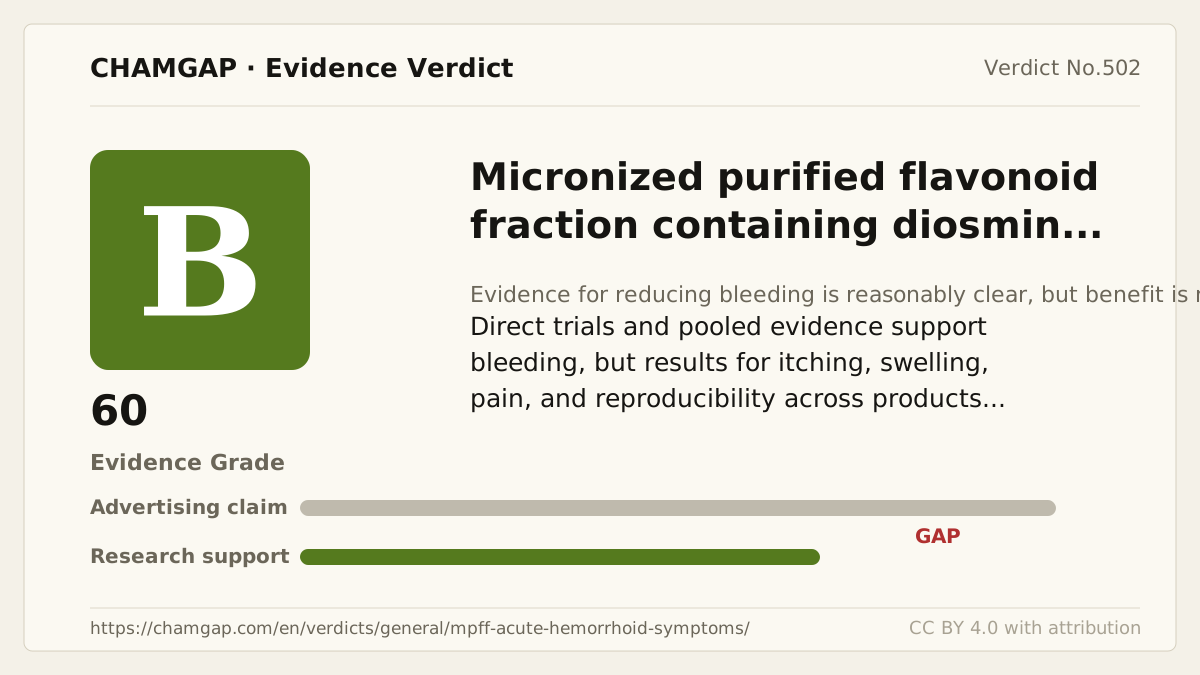
[Chamgap] Micronized purified flavonoid fraction x acute hemorrhoid symptoms — Evidence Grade B·60. 3 cited sources checked. Source: https://chamgap.com/en/verdicts/general/mpff-acute-hemorrhoid-symptoms/ · CC BY 4.0CC BY 4.0 — free to use with attribution; do not distort grades, numbers, or verdict meaning.
What this document does and does not do
Chamgap is an information source. It reports what research has and has not confirmed; it does not tell readers what to take or buy. That decision belongs to readers and, when needed, medical or legal professionals. This verdict reflects literature available up to the search date and may change as new research appears. Nothing here is medical advice.