
Intravenous artesunate,
does it really help with Reduced in-hospital mortality in severe falciparum malaria?
research showsThe grade is B. AQUAMAT analyzed mortality in all 5,425 randomized participants: 230 of 2,712 (8.5%) versus 297 of 2,713 (10.9%), a 22.5% relative reduction (95% CI 8.1 to 36.9). SEAQUAMAT also found 107 of 730 deaths (14.7%) versus 164 of 731 (22.4%), an approximately 34.7% reduction (18.5 to 47.6). The mortality benefit is large and real, but both trials came from the same research network without confirmation by an independent team, giving B with 76 points.
ads claimDescriptions are evidence-aligned when limited to emergency treatment of severe malaria with better survival than quinine. Extending this to self-treatment of ordinary fever or prevention of mild malaria is outside this verdict.
Useful facts when choosing a product
- The graded claim is whether treatment reduces in-hospital mortality in people.
- AQUAMAT compared parenteral artesunate with parenteral quinine in hospitalized severe malaria.
- Artesunate requires use in a professional medical setting, including follow-up for possible delayed hemolysis.
Chamgap Semantic Classification Code
Candidate index · review held
M.artesunate.intravenous.in-hospital-mortality-in-severe-falciparum-malaria.reduce.UNKMedicinal interventions > artesunate > Intravenous > in-hospital mortality in severe falciparum malaria > Reduction claim > Unknown
An automated migration candidate, not an issued permanent code; exact claim scope remains under review. This machine-generated migration candidate helps retrieval but is not a permanent assignment. The original verdict ID and URL remain authoritative.
What the research actually shows
AQUAMAT randomized 5,425 participants, 2,712 versus 2,713, and analyzed mortality in everyone. Death occurred in 230 of 2,712 (8.5%) versus 297 of 2,713 (10.9%), a 22.5% relative reduction (95% CI 8.1 to 36.9), without early stopping. SEAQUAMAT analyzed all 1,461 randomized participants and found 107 of 730 deaths (14.7%) versus 164 of 731 (22.4%), an approximately 34.7% reduction (18.5 to 47.6), stopping for efficacy at about two-thirds of the planned sample. The trials were large and concordant but shared the Mahidol-Oxford network and Wellcome Trust funding. The external 66-participant Sudan trial by Eltahir in 2010 found 1 of 33 versus 2 of 33 deaths and did not confirm the reduction, so independent-team confirmation remains absent.
Why this is classified as B (76)
The mortality reduction is large and credible, but both major trials shared a research network and funder and there is no external confirmatory trial, giving B with 76 points. The grade measures independent replication of evidence, not merely effect size.
Counterpoint. The evidence concerns treatment of severe malaria versus quinine and cannot be transferred directly to prevention or other stages of malaria.
Rejudgment record. Cross-check applied — Mortality fell substantially, but both major randomized trials shared the Mahidol-Oxford network and Wellcome Trust funding and no external independent trial confirmed the benefit
| Endpoint | H | Hard endpoint - actual events such as death |
| Replication | R1 | Single confirmatory trial |
| Independence | I2 | Decisive evidence is publicly or non-profit funded |
| Effect size | E+ | Meets the clinically important threshold |
Stored derived and displayed grades match; this is not a current recalculation or validity check (B).
Sub-claim grades by effect
This ingredient is marketed for several effects. A single overall grade blends strong and weak claims together, so each effect is graded separately here. The overall grade reflects the strongest disconfirming or core claim.
| Effect (sub-claim) | Grade | Basis |
|---|---|---|
| Reduced in-hospital mortality in severe malaria | B | Two large trials from the same research network found a substantial reduction. |
| Reduced mortality in African children with severe malaria | B | The mortality analysis of all 5,425 randomized children in AQUAMAT succeeded. |
| Reduced mortality in Asian adults and children with severe malaria | B | SEAQUAMAT found the same direction in 1,461 participants. |
Cross-check — AI research and Codex final gate
Evidence Table
| Study | Design | Sample | Funding | Endpoint | Result | Weight |
|---|---|---|---|---|---|---|
| Dondorp AM et al. 2010 AQUAMAT | Open-label randomized multicenter quinine-controlled trial | 5,425 randomized (2,712/2,713); actual primary ITT analysis included all 5,425 | Funded entirely by the Wellcome Trust; no pharmaceutical-industry funding | Primary endpoint: in-hospital mortality | 230/2,712 (8.5%) versus 297/2,713 (10.9%), relative reduction 22.5% (95% CI 8.1 to 36.9); not stopped early. | Pivotal large hard-endpoint randomized trial |
| Dondorp A et al. 2005 SEAQUAMAT | Open-label randomized multicenter quinine-controlled trial | 1,461 randomized (730/731); all 1,461 analyzed | Charitable funding from the Wellcome Trust | In-hospital mortality | 107/730 (14.7%) versus 164/731 (22.4%), approximately 34.7% relative reduction (18.5 to 47.6); stopped for efficacy at about two-thirds of the planned sample. | Regional repetition within the same research network |
Receipt — 2 References
All 2 cited sources were verified for existence at the original page (as of 2026-07-24).
Final verification and publication gate: Codex · Evidence date: 2026-07-24 · Corrections: none
Cite this verdict
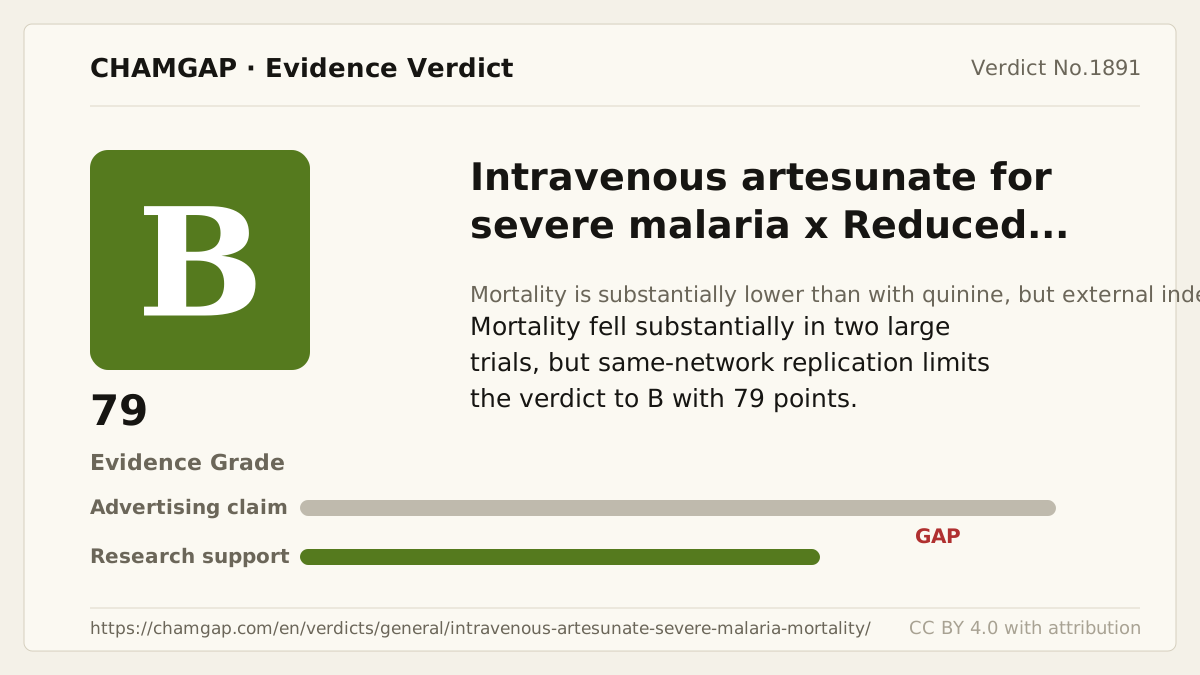
[Chamgap] Intravenous artesunate x reduced mortality in severe malaria — Evidence Grade B·76. 2 cited sources checked. Source: https://chamgap.com/en/verdicts/general/intravenous-artesunate-severe-malaria-mortality/ · CC BY 4.0CC BY 4.0 — free to use with attribution; do not distort grades, numbers, or verdict meaning.
What this document does and does not do
Chamgap is an information source. It reports what research has and has not confirmed; it does not tell readers what to take or buy. That decision belongs to readers and, when needed, medical or legal professionals. This verdict reflects literature available up to the search date and may change as new research appears. Nothing here is medical advice.