
Imatinib,
does it really help with Prevention of progression to accelerated phase or blast crisis in newly diagnosed chronic-phase chronic myeloid leukemia?
research showsImatinib is rated B because it reduces progression to accelerated phase or blast crisis in newly diagnosed chronic-phase chronic myeloid leukemia. IRIS randomized 1,106 patients to imatinib or interferon alfa plus low-dose cytarabine; freedom from accelerated-phase or blast-crisis progression at 18 months was 96.7% versus 91.5%. Major cytogenetic response was also 87.1% versus 34.7%. The open active comparison and extensive crossover obscured randomized overall-survival comparison, and the claim is progression prevention, supporting B with 79 points.
ads claimA high response rate should not be reframed as immediate cure or permanent remission without treatment. Molecular monitoring and long-term adherence are required, and treatment-free remission is considered only under strict response criteria and specialist surveillance.
Useful facts when choosing a product
- Imatinib is a prescription oral BCR-ABL1 tyrosine kinase inhibitor used with regular hematologic, cytogenetic, and molecular monitoring in CML.
- Edema, nausea, muscle cramps, rash, fatigue, and cytopenias can occur, and laboratory monitoring addresses liver toxicity and uncommon cardiac or renal problems.
- CYP3A4 inducers, inhibitors, grapefruit, and other medicines can alter imatinib exposure, so all medicines and supplements should be disclosed.
- Dose reduction or discontinuation without supervision risks molecular relapse; treatment-free remission is attempted only in selected patients with sustained deep molecular response and very frequent monitoring.
Chamgap Semantic Classification Code
Candidate index · review held
M.imatinib.UNK.progression-to-accelerated-phase-or-blast-crisis-in-newly-diagnosed-chronic-phase-chronic-myeloid-leukemia.prevent.activeMedicinal interventions > Imatinib > Unknown > progression to accelerated phase or blast crisis in newly diagnosed chronic-phase chronic myeloid leukemia > Occurrence-prevention claim > Active comparator
An automated migration candidate, not an issued permanent code; exact claim scope remains under review. This machine-generated migration candidate helps retrieval but is not a permanent assignment. The original verdict ID and URL remain authoritative.
What the research actually shows
The 2003 IRIS trial randomized 1,106 newly diagnosed patients with Philadelphia-chromosome-positive chronic-phase CML to imatinib 400 mg daily or interferon alfa plus low-dose cytarabine. At 18 months, major cytogenetic response was 87.1% versus 34.7%, complete cytogenetic response 76.2% versus 14.5%, and freedom from accelerated-phase or blast-crisis progression 96.7% versus 91.5%. After 10.9 years, estimated overall survival in the original imatinib group was 83.3%, but 65.6% of controls crossed over early, limiting long-term randomized survival comparison.
Why this is classified as B (79)
The 1,106-participant randomized IRIS trial clearly improved accelerated-phase or blast-crisis progression and cytogenetic response. An open active comparison, extensive crossover, and a progression-prevention endpoint support B with 79 points rather than A. Edema, cytopenias, and liver toxicity remain separate safety issues.
Counterpoint. Contemporary first-line selection also considers disease risk, comorbidity, pregnancy plans, interactions, cost, and the need for faster molecular response.
Rejudgment record. Cross-check applied — The large randomized active-comparator IRIS trial significantly reduced accelerated-phase or blast-crisis progression with imatinib, but its open design and extensive crossover limit randomized overall-survival attribution, supporting comparative progression-prevention grade B
Sub-claim grades by effect
This ingredient is marketed for several effects. A single overall grade blends strong and weak claims together, so each effect is graded separately here. The overall grade reflects the strongest disconfirming or core claim.
| Effect (sub-claim) | Grade | Basis |
|---|---|---|
| Prevention of progression to accelerated phase or blast crisis | B | IRIS found 18-month freedom from progression of 96.7% versus 91.5%. |
| Increased cytogenetic and molecular response | B | Major and complete cytogenetic responses increased markedly, but response is a surrogate endpoint. |
| Improved long-term survival | B | Ten-year survival was high, but control crossover prevents a definitive randomized estimate of survival superiority. |
Cross-check — AI research and Codex final gate
Evidence Table
| Study | Design | Sample | Funding | Endpoint | Result | Weight |
|---|---|---|---|---|---|---|
| O'Brien SG et al. 2003 IRIS | Multicenter open-label randomized active-comparator trial | 1,106 patients with newly diagnosed chronic-phase CML | Novartis | Cytogenetic response and progression to accelerated phase or blast crisis | At 18 months, freedom from accelerated-phase or blast-crisis progression was 96.7% versus 91.5% and major cytogenetic response 87.1% versus 34.7%. | Pivotal large randomized comparative-superiority evidence |
| Hochhaus A et al. 2017 IRIS long-term follow-up | Follow-up beyond ten years of the original randomized trial | Primarily the 553 patients originally assigned imatinib | Novartis | Overall survival, response, and serious adverse events | Estimated ten-year overall survival in the imatinib group was 83.3%, but 65.6% control crossover limited long-term randomized comparison. | Long-term outcome and comparison limitation |
Receipt — 2 References
All 2 cited sources were verified for existence at the original page (as of 2026-07-23).
Final verification and publication gate: Codex · Evidence date: 2026-07-23 · Corrections: none
Cite this verdict
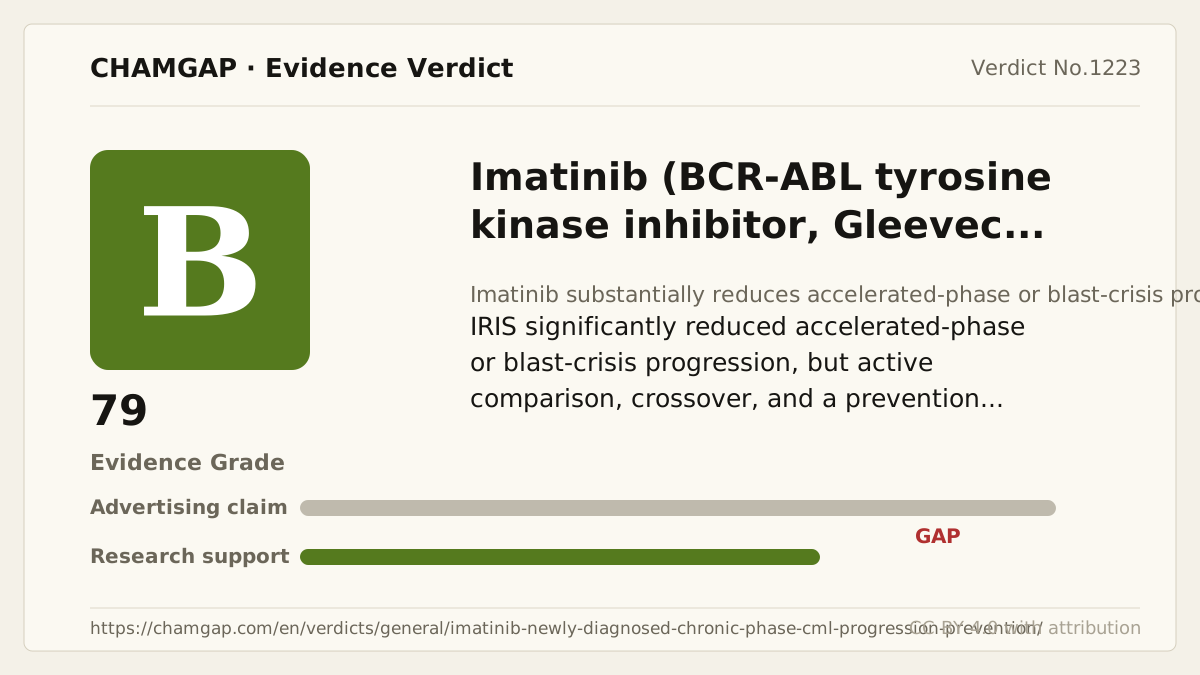
[Chamgap] Imatinib x prevention of accelerated-phase or blast-crisis progression in newly diagnosed chronic-phase CML — Evidence Grade B·79. 2 cited sources checked. Source: https://chamgap.com/en/verdicts/general/imatinib-newly-diagnosed-chronic-phase-cml-progression-prevention/ · CC BY 4.0CC BY 4.0 — free to use with attribution; do not distort grades, numbers, or verdict meaning.
What this document does and does not do
Chamgap is an information source. It reports what research has and has not confirmed; it does not tell readers what to take or buy. That decision belongs to readers and, when needed, medical or legal professionals. This verdict reflects literature available up to the search date and may change as new research appears. Nothing here is medical advice.