
Hydroxyurea,
does it really help with Reduction of vaso-occlusive pain crises, acute chest syndrome, and transfusion in sickle cell anemia?
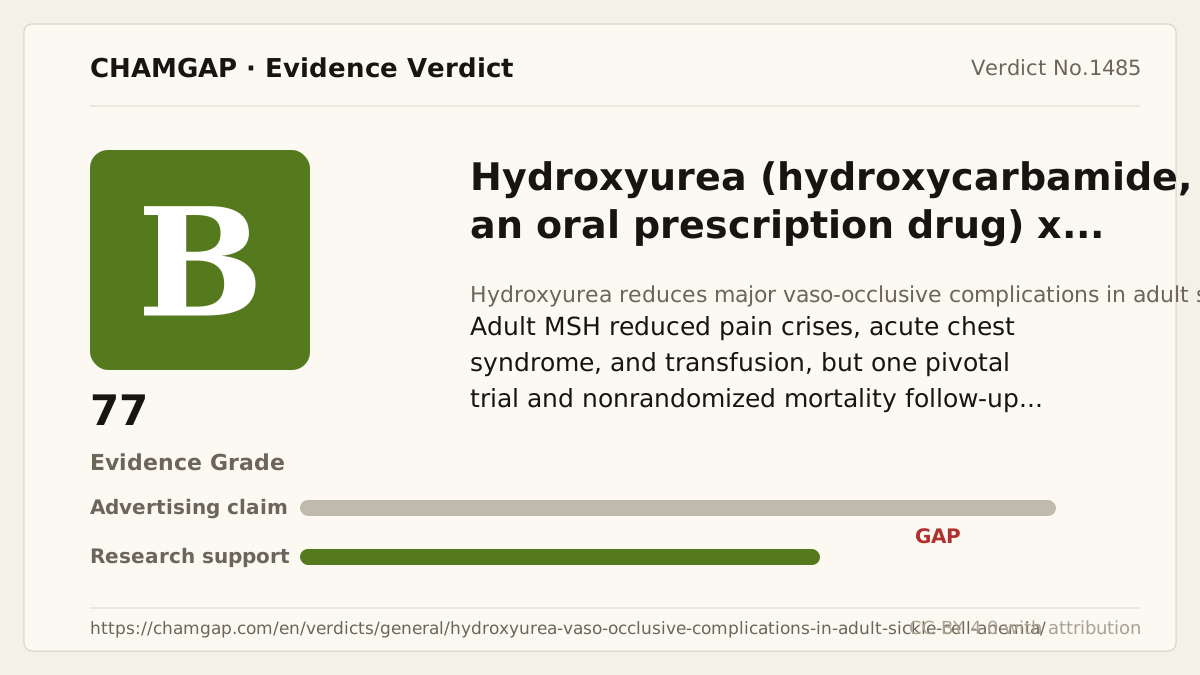
research showsHydroxyurea is rated B because the ingredient-specific placebo-controlled MSH trial reduced pain crises, acute chest syndrome, and transfusion in adults with sickle cell anemia and frequent painful episodes. Among 299 participants, the median annual crisis rate fell from 4.5 to 2.5, and the trial stopped early for benefit. It remains a single pivotal adult trial, while lower mortality came from observational follow-up with self-selected treatment rather than a randomized primary mortality endpoint.
ads claimPromotion may expand the evidence into proven life extension or prevention of every sickle-cell complication. The strongest direct evidence is reduction of pain crises, acute chest syndrome, and transfusion in adults with frequent painful episodes.
Useful facts when choosing a product
- Hydroxyurea is an oral prescription drug that raises fetal hemoglobin and reduces vaso-occlusive complications in sickle cell disease, with dose titration and regular blood-count monitoring.
- Myelosuppression can lower neutrophils, platelets, and reticulocytes, requiring clinician-directed interruption or dose reduction for severe cytopenias.
- Potential teratogenicity and reduced sperm counts require counseling about pregnancy, contraception, and fertility; long-term carcinogenic concern is monitored, although a clear increase has not been established in long-term sickle-cell data.
Chamgap Semantic Classification Code
Candidate index · review held
M.hydroxyurea.oral.vaso-occlusive-pain-crises-acute-chest-syndrome-and-transfusion-in-sickle-cell-anemia.reduce.placeboMedicinal interventions > Hydroxyurea > Oral > vaso-occlusive pain crises, acute chest syndrome, and transfusion in sickle cell anemia > Reduction claim > Placebo
An automated migration candidate, not an issued permanent code; exact claim scope remains under review. This machine-generated migration candidate helps retrieval but is not a permanent assignment. The original verdict ID and URL remain authoritative.
What the research actually shows
Charache and colleagues double-blind randomized 299 adults with sickle cell anemia and at least three pain crises yearly to maximum-tolerated-dose hydroxyurea or placebo. Median crisis rates were 2.5 versus 4.5 per year, time to the first and second crises lengthened, and acute chest syndrome and transfusions fell, prompting early termination. In the nine-year follow-up by Steinberg and colleagues, hydroxyurea use was associated with 40% lower mortality, but treatment was self-selected during follow-up and the original trial was not designed for mortality.
Why this is classified as B (77)
An ingredient-specific placebo-controlled trial substantially reduced the direct clinical outcomes of pain crises, acute chest syndrome, and transfusion, but one pivotal adult trial and nonrandomized observational mortality follow-up yield B with 77 points.
Counterpoint. Contemporary guidance supports use in broader adult and pediatric populations, but this score follows the evidence structure directly supporting the requested claim, centered on adult MSH.
Rejudgment record. New verdict — Accepted the ingredient-specific placebo-controlled reductions in pain crises, acute chest syndrome, and transfusion in adult MSH, while assigning B because this was one pivotal trial and mortality reduction came from observational follow-up rather than a randomized primary endpoint
Sub-claim grades by effect
This ingredient is marketed for several effects. A single overall grade blends strong and weak claims together, so each effect is graded separately here. The overall grade reflects the strongest disconfirming or core claim.
| Effect (sub-claim) | Grade | Basis |
|---|---|---|
| Reduction in vaso-occlusive pain crises | B | Median annual frequency fell from 4.5 to 2.5 in adult MSH. |
| Reduction in acute chest syndrome | B | It was clinically reduced in the ingredient-specific placebo-controlled trial. |
| Reduction in transfusion requirement | B | Transfusions were less frequent in the hydroxyurea group in MSH. |
Cross-check — AI research and Codex final gate
Evidence Table
| Study | Design | Sample | Funding | Endpoint | Result | Weight |
|---|---|---|---|---|---|---|
| Charache S et al. 1995 MSH | Multicenter randomized double-blind placebo-controlled trial | 299 adults with frequent painful crises | Supported by the US National Heart, Lung, and Blood Institute | Pain-crisis rate, time to first crisis, acute chest syndrome, and transfusion | Median pain-crisis rates were 2.5 versus 4.5 per year; acute chest syndrome and transfusions also fell, prompting early stopping. | Pivotal ingredient-specific direct randomized trial |
| Steinberg MH et al. 2003 MSH follow-up | Long-term observational follow-up of the original randomized cohort | 299 original MSH participants; complete follow-up for 233 | Supported by the US National Heart, Lung, and Blood Institute | Mortality, pain, and acute chest syndrome through nine years | Self-selected hydroxyurea use was associated with 40% lower mortality, but the comparison was not randomized. | Long-term signal, not causal mortality evidence |
Receipt — 2 References
All 2 cited sources were verified for existence at the original page (as of 2026-07-23).
Final verification and publication gate: Codex · Evidence date: 2026-07-23 · Corrections: none
Cite this verdict
[Chamgap] Hydroxyurea x reduction of vaso-occlusive complications in sickle cell anemia — Evidence Grade B·77. 2 cited sources checked. Source: https://chamgap.com/en/verdicts/general/hydroxyurea-vaso-occlusive-complications-in-adult-sickle-cell-anemia/ · CC BY 4.0CC BY 4.0 — free to use with attribution; do not distort grades, numbers, or verdict meaning.
What this document does and does not do
Chamgap is an information source. It reports what research has and has not confirmed; it does not tell readers what to take or buy. That decision belongs to readers and, when needed, medical or legal professionals. This verdict reflects literature available up to the search date and may change as new research appears. Nothing here is medical advice.