
Hydrochlorothiazide,
does it really help with Prevention of clinical and radiologic recurrence of calcium kidney stones?
research showsIn NOSTONE, recurrence with 50 mg had RR 0.92 (95% CI 0.63 to 1.36), allowing a 37% benefit. A 2025 network meta-analysis instead reported significant benefit with 50 mg, OR 0.52 (0.29 to 0.93), so the evidence is not repeated refutation. Because clinically meaningful benefit is not excluded, the grade is D with 35 points, not F.
ads claimPractice and promotion equate reduced urinary calcium with actual prevention of recurrent stones. The largest direct trial showed that this surrogate did not translate into a lower primary clinical-radiologic recurrence endpoint.
Useful facts when choosing a product
- Hydrochlorothiazide is a prescription diuretic used for hypertension and edema; blood-pressure efficacy is separate from this stone-prevention verdict.
- It can cause hypokalemia, hyponatremia, dehydration, hyperuricemia and gout, higher glucose, and kidney-function changes, requiring laboratory and clinical monitoring.
- It interacts with other antihypertensives, lithium, and nonsteroidal anti-inflammatory drugs, and should not be started or stopped without the prescriber.
Chamgap Semantic Classification Code
Candidate index · review held
M.hydrochlorothiazide.UNK.clinical-and-radiologic-recurrence-of-calcium-kidney-stones.prevent.placeboMedicinal interventions > Hydrochlorothiazide > Unknown > clinical and radiologic recurrence of calcium kidney stones > Occurrence-prevention claim > Placebo
An automated migration candidate, not an issued permanent code; exact claim scope remains under review. This machine-generated migration candidate helps retrieval but is not a permanent assignment. The original verdict ID and URL remain authoritative.
What the research actually shows
Dhayat and colleagues randomized 416 recurrent calcium-stone formers in NOSTONE to placebo or hydrochlorothiazide 12.5, 25, or 50 mg and followed them for a median 2.9 years. Primary composite recurrence occurred in 59%, 59%, 56%, and 49%, without a dose response. Symptomatic recurrence was not significantly reduced at any dose. Binary radiologic recurrence was lower at 25 and 50 mg, but new-stone counts and the overall primary endpoint did not establish benefit. Urinary calcium fell, but supersaturation did not consistently decline and adverse effects increased.
Why this is classified as D (35)
In NOSTONE, recurrence with 50 mg had RR 0.92 (95% CI 0.63 to 1.36), allowing a 37% benefit. A 2025 network meta-analysis instead reported significant benefit with 50 mg, OR 0.52 (0.29 to 0.93), so the evidence is not repeated refutation. Because clinically meaningful benefit is not excluded, the grade is D with 35 points, not F.
Counterpoint. Patients already taking it for another indication should not stop solely because of this verdict and should review the treatment purpose and risks with the prescriber. Grade-independent note: hypokalemia, gout, new-onset diabetes, and creatinine elevations are separate safety concerns and are not used to determine the efficacy grade.
Rejudgment record. New verdict — In NOSTONE, recurrence with 50 mg had RR 0.92 (95% CI 0.63 to 1.36), allowing a 37% benefit. A 2025 network meta-analysis instead reported significant benefit with 50 mg, OR 0.52 (0.29 to 0.93), so the evidence is not repeated refutation. Because clinically meaningful benefit is not excluded, the grade is D with 35 points, not F.
Sub-claim grades by effect
This ingredient is marketed for several effects. A single overall grade blends strong and weak claims together, so each effect is graded separately here. The overall grade reflects the strongest disconfirming or core claim.
| Effect (sub-claim) | Grade | Basis |
|---|---|---|
| Prevention of composite clinical and radiologic stone recurrence | D | No NOSTONE dose significantly reduced the primary endpoint versus placebo. |
| Prevention of symptomatic stone recurrence | D | No dose from 12.5 to 50 mg significantly reduced symptomatic recurrence. |
| Actual recurrence prevention through reduced urinary calcium | D | Urinary calcium fell, but the surrogate effect did not translate into improvement in the primary recurrence endpoint. |
Cross-check — AI research and Codex final gate
Evidence Table
| Study | Design | Sample | Funding | Endpoint | Result | Weight |
|---|---|---|---|---|---|---|
| NOSTONE trial (Dhayat NA et al.). 2023 | Multicenter double-blind randomized placebo-controlled dose-response trial | 416 participants, median 2.9 years | Swiss National Science Foundation and Inselspital | Composite symptomatic or radiologic kidney-stone recurrence | Placebo 59%, 12.5 mg 59%, 25 mg 56%, 50 mg 49%; dose response p=0.66; adverse effects increased | Largest key direct null-plus-harm evidence |
| Bargagli M et al. 2024 review | Review of randomized thiazide stone-prevention trials | NOSTONE and earlier small trials | Academic review | Clinical and radiologic recurrence and adverse effects | NOSTONE was the largest and null, while earlier trials had substantial methodological limitations | Assessment of reproducibility and limitations of earlier evidence |
Receipt — 2 References
All 2 cited sources were verified for existence at the original page (as of 2026-07-23).
Final verification and publication gate: Codex · Evidence date: 2026-07-23 · Corrections: none
Cite this verdict
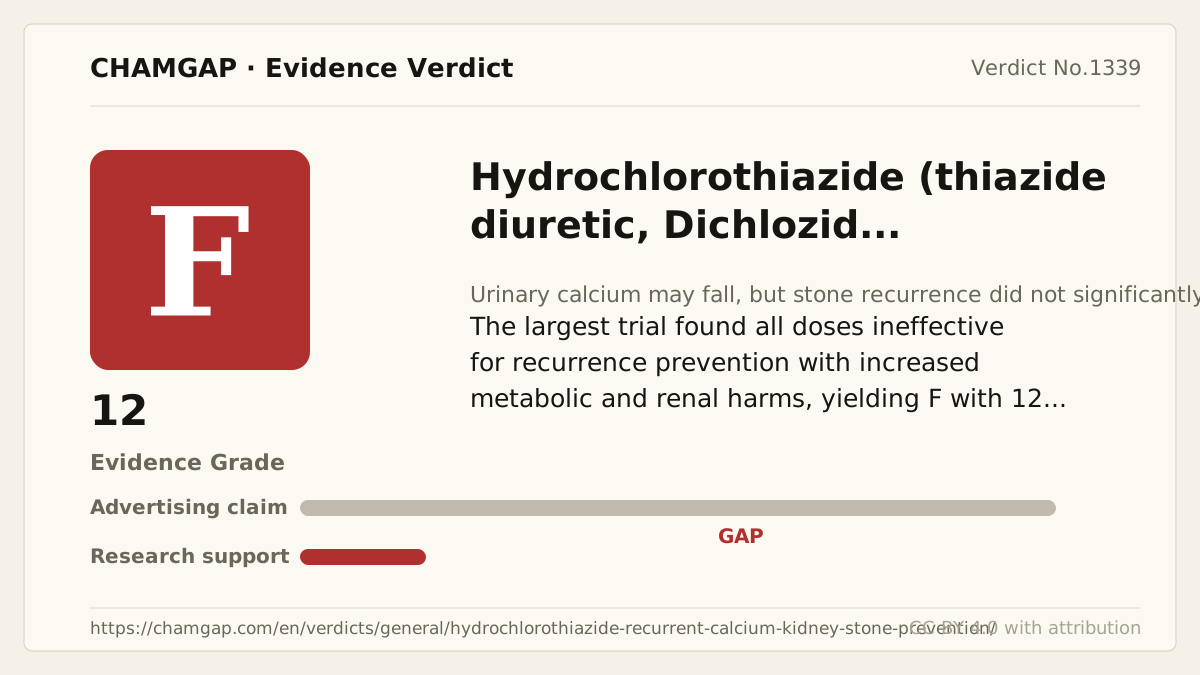
[Chamgap] Hydrochlorothiazide x prevention of recurrent calcium kidney stones — Evidence Grade D·35. 2 cited sources checked. Source: https://chamgap.com/en/verdicts/general/hydrochlorothiazide-recurrent-calcium-kidney-stone-prevention/ · CC BY 4.0CC BY 4.0 — free to use with attribution; do not distort grades, numbers, or verdict meaning.
What this document does and does not do
Chamgap is an information source. It reports what research has and has not confirmed; it does not tell readers what to take or buy. That decision belongs to readers and, when needed, medical or legal professionals. This verdict reflects literature available up to the search date and may change as new research appears. Nothing here is medical advice.