
High-protein diet,
does it really help with Kidney damage in adults without kidney disease?
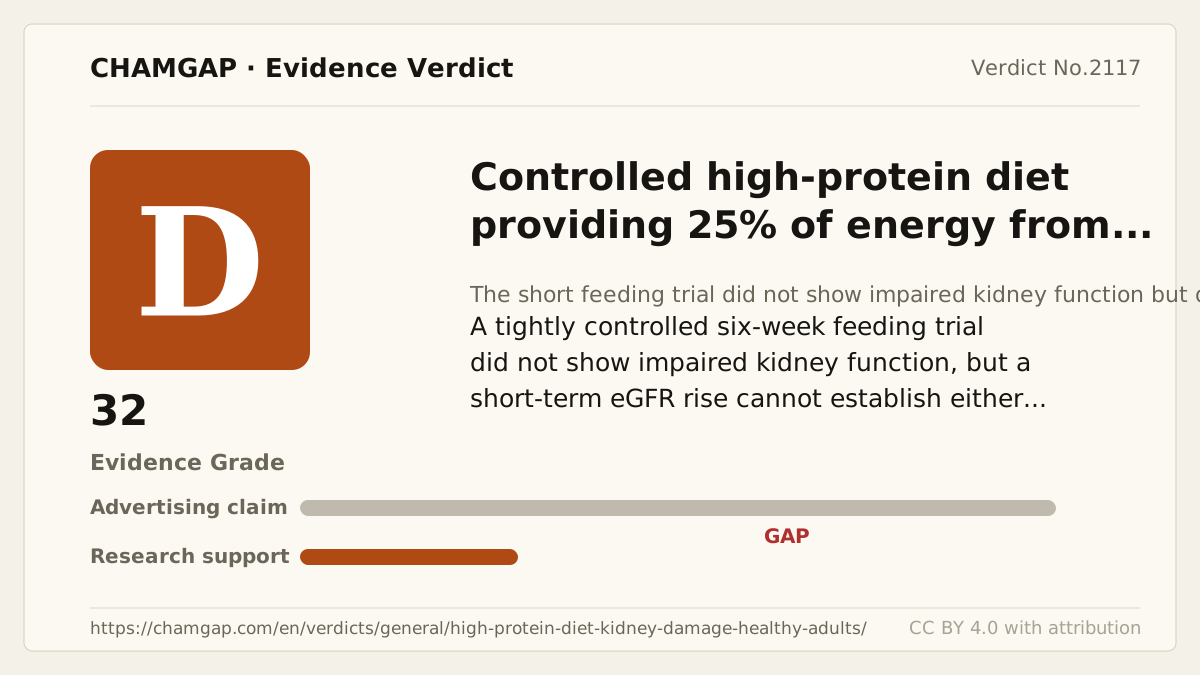
research showsThe grade is D with 30 points. In OmniHeart, 214 entered run-in, 191 were randomized, 164 completed at least two periods, and 156 entered the kidney analysis. Compared with the 15%-protein diet, six weeks of the 25%-protein diet increased cystatin-C eGFR by 3.81 mL/min/1.73 m² (95% CI 2.54 to 5.09). This may be protein-induced hyperfiltration and cannot be interpreted as kidney protection, functional loss, or clinical kidney damage.
ads claimThe roughly four-unit eGFR rise after the protein diet is a real finding. It should not be converted into 'the kidneys were damaged,' nor into proof of long-term safety.
Useful facts when choosing a product
- The protein diet supplied 25% of energy from protein versus 15% in the carbohydrate diet.
- All meals were provided, body weight was maintained within 2%, and study foods alone were consumed on more than 95% of feeding days.
- Cystatin-C eGFR increased by 3.81 mL/min/1.73 m² rather than declining during the protein period.
- Verdict 2077 is D with 30 points for a beef-containing weight-loss diet; it addresses weight loss rather than kidney damage in healthy adults.
Chamgap Semantic Classification Code
Candidate index · review held
D.controlled-high-protein-diet-providing-25-percent-of-energy-from-protein.dietary.kidney-damage-without-kidney-disease.assess.UNKDietary patterns and eating practices > Controlled high-protein diet providing 25% of energy from protein > Dietary regimen > Kidney damage without kidney disease > Association or change assessment > Unknown
An automated migration candidate, not an issued permanent code; exact claim scope remains under review. This machine-generated migration candidate helps retrieval but is not a permanent assignment. The original verdict ID and URL remain authoritative.
What the research actually shows
In OmniHeart, 214 entered run-in and 191 were randomized to one of six diet sequences. A total of 160 completed all three periods, four completed two, and 156 were included in the kidney-marker analysis. Each diet lasted six weeks. Calories were adjusted to keep body weight within 2% of baseline, and participants consumed only study foods on more than 95% of feeding days. The protein diet supplied 25% protein, 48% carbohydrate, and 27% fat, with 48% of protein from plant sources. NHLBI funded the trial, but kidney markers were not registered key outcomes; they were ancillary to the blood-pressure and lipid primary outcomes.
Why this is classified as D (30)
Randomized controlled feeding did not show short-term functional decline, but the small six-week ancillary analysis cannot exclude long-term injury, giving D with 30 points.
Counterpoint. High adherence and isocaloric feeding are strengths. The trial did not test lifetime high-protein intake or clinical kidney events.
Rejudgment record. Cross-check applied — No kidney-function decline during controlled feeding, with long-term uncertainty from a small six-week ancillary analysis
| Endpoint | S | Surrogate marker - laboratory or imaging measures |
| Replication | R1 | Single confirmatory trial |
| Independence | I2 | Decisive evidence is publicly or non-profit funded |
| Effect size | E0 | Null |
| Precision | C0 | The confidence interval leaves room for benefit |
Stored derived and displayed grades match; this is not a current recalculation or validity check (D).
Sub-claim grades by effect
This ingredient is marketed for several effects. A single overall grade blends strong and weak claims together, so each effect is graded separately here. The overall grade reflects the strongest disconfirming or core claim.
| Effect (sub-claim) | Grade | Basis |
|---|---|---|
| Six weeks of a high-protein diet reduces kidney function | D | Cystatin-C eGFR increased rather than declined. |
| Long-term clinical kidney damage in healthy adults | D | This six-week ancillary analysis did not measure long-term clinical events and did not establish long-term harm. |
Cross-check — AI research and Codex final gate
Evidence Table
| Study | Design | Sample | Funding | Endpoint | Result | Weight |
|---|---|---|---|---|---|---|
| Juraschek SP et al. 2013 OmniHeart kidney ancillary analysis | Ancillary analysis of a randomized three-period crossover controlled-feeding trial | 214 entered run-in; 191 randomized; 164 completed at least two periods; 156 in the kidney analysis | US National Heart, Lung, and Blood Institute | Six-week cystatin-C-based eGFR, not a registered key outcome | Protein versus carbohydrate diet change difference +3.81 mL/min/1.73 m² (95% CI 2.54 to 5.09); possible hyperfiltration precludes a kidney-protection interpretation | Directly controlled short-term surrogate evidence |
Receipt — 2 References
All 2 cited sources were verified for existence at the original page (as of 2026-08-04).
Final verification and publication gate: Codex · Evidence date: 2026-08-04 · Corrections: none
Cite this verdict
[Chamgap] High-protein diet x kidney damage in healthy adults — Evidence Grade D·30. 2 cited sources checked. Source: https://chamgap.com/en/verdicts/general/high-protein-diet-kidney-damage-healthy-adults/ · CC BY 4.0CC BY 4.0 — free to use with attribution; do not distort grades, numbers, or verdict meaning.
What this document does and does not do
Chamgap is an information source. It reports what research has and has not confirmed; it does not tell readers what to take or buy. That decision belongs to readers and, when needed, medical or legal professionals. This verdict reflects literature available up to the search date and may change as new research appears. Nothing here is medical advice.