
Gabapentin,
does it really help with Reduction of persistent pain from postherpetic neuralgia?
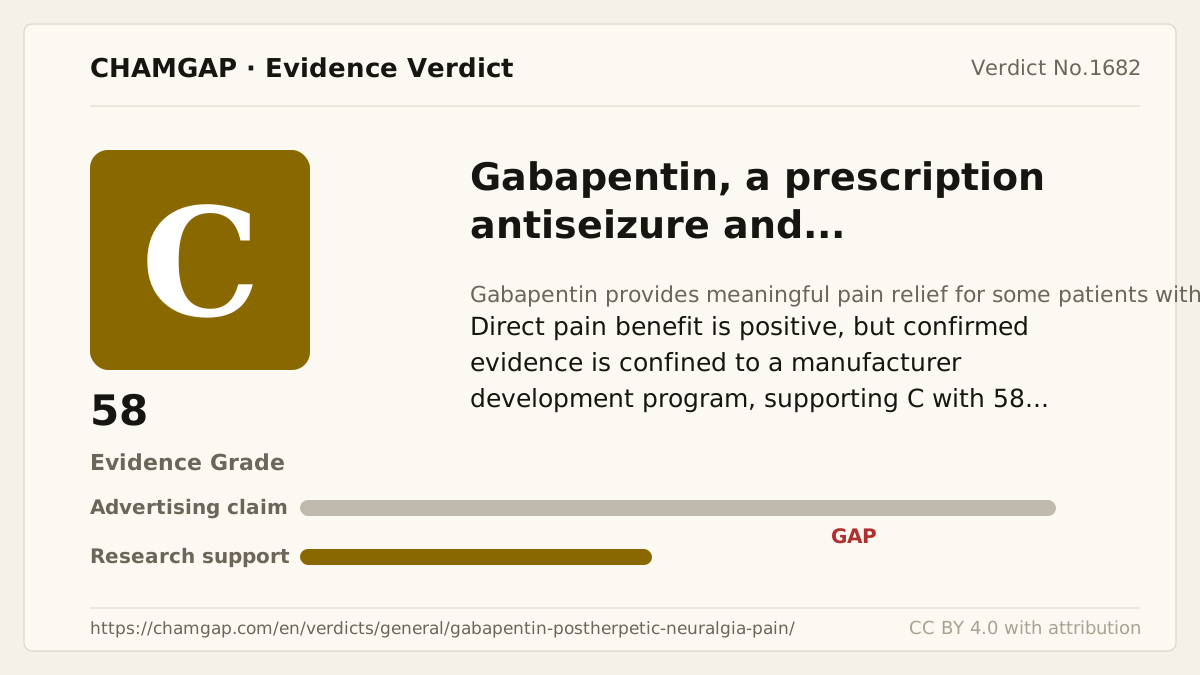
research showsGabapentin is rated C despite reducing patient-reported postherpetic-neuralgia pain. The pivotal Parke-Davis-led and sponsored trial randomized 229 participants, and its average-daily-pain primary endpoint succeeded in the 225-person efficacy analysis (P<0.001). Pure pain reduction of at least 50% occurred in 33% versus 19% across seven trials and 2,031 participants, NNT 6.9, while the composite of at least 50% reduction or PGIC 'very much improved' occurred in 32% versus 17% across eight trials and 2,260 participants, NNT 6.7. Seven of the eight PHN trials were sponsored within the Parke-Davis/Pfizer development program and one did not report funding, leaving zero trials with confirmed nonmanufacturer funding.
ads claimClaims that it erases every neuropathic pain syndrome or repairs nerve damage exceed the response rate and evidence.
Useful facts when choosing a product
- Gabapentin is prescription-only and requires renal dose adjustment.
- It is titrated gradually and generally tapered when stopped.
- Individual response should be reassessed rather than assuming indefinite benefit.
Chamgap Semantic Classification Code
Candidate index · review held
M.gabapentin.UNK.persistent-pain-from-postherpetic-neuralgia.reduce.placeboMedicinal interventions > Gabapentin > Unknown > persistent pain from postherpetic neuralgia > Reduction claim > Placebo
An automated migration candidate, not an issued permanent code; exact claim scope remains under review. This machine-generated migration candidate helps retrieval but is not a permanent assignment. The original verdict ID and URL remain authoritative.
What the research actually shows
The 1998 Parke-Davis-led and sponsored trial assigned 229 participants at 16 centers to eight weeks of gabapentin or placebo. The primary efficacy analysis included 225, and its average-daily-pain endpoint succeeded. Cochrane found pure pain reduction of at least 50% in 33% versus 19% across seven trials and 2,031 participants, NNT 6.9 (5.5 to 9.4). Its broader composite of at least 50% reduction or PGIC 'very much improved' was 32% versus 17% across eight trials and 2,260 participants, NNT 6.7 (5.4 to 8.7). Seven PHN trials were Parke-Davis/Pfizer-sponsored and one did not report funding.
Why this is classified as C (58)
Direct pain effects are positive, but seven of eight PHN trials were sponsored within the Parke-Davis/Pfizer development program and one did not report funding, leaving zero trials with confirmed nonmanufacturer funding. The rule ②-b ceiling for wholly positive manufacturer-only evidence supports C with 58 points.
Counterpoint. It is useful for some patients with postherpetic neuralgia, but continued treatment should be reconsidered when there is no meaningful response.
Rejudgment record. Cross-check applied — Patient-reported pain is a direct treatment target and the results are positive, but seven of eight Cochrane PHN trials were sponsored within the Parke-Davis/Pfizer development program and one did not report funding, leaving zero trials with confirmed nonmanufacturer funding. Rule ②-b directly caps wholly positive manufacturer-only evidence at C
Sub-claim grades by effect
This ingredient is marketed for several effects. A single overall grade blends strong and weak claims together, so each effect is graded separately here. The overall grade reflects the strongest disconfirming or core claim.
| Effect (sub-claim) | Grade | Basis |
|---|---|---|
| Reduction in mean postherpetic-neuralgia pain | C | The pivotal randomized-trial primary endpoint succeeded in a manufacturer-led and sponsored trial. |
| At least 50% major pain relief | C | The pure endpoint was 33% versus 19% across seven trials and 2,031 participants but was concentrated in a manufacturer program. |
| Improvement in pain-related sleep interference | C | The result is positive, but no trial had confirmed nonmanufacturer funding. |
Cross-check — AI research and Codex final gate
Evidence Table
| Study | Design | Sample | Funding | Endpoint | Result | Weight |
|---|---|---|---|---|---|---|
| Rowbotham M et al. 1998 | Multicenter randomized double-blind placebo-controlled eight-week trial | 229 randomized; 225 in the actual primary efficacy analysis; 184 completers | Led and sponsored by manufacturer Parke-Davis | Primary change in average daily pain | 6.3 to 4.2 versus 6.5 to 6.0; primary endpoint succeeded (P<0.001). | Pivotal direct efficacy evidence |
| Wiffen PJ et al. 2017 Cochrane review | Systematic review and meta-analysis of randomized trials | Seven trials and 2,031 participants for pure 50% reduction; eight trials and 2,260 participants for the composite | Seven of eight PHN trials sponsored within the Parke-Davis/Pfizer development program and one with unreported funding; zero trials with confirmed nonmanufacturer funding | Pure pain reduction of at least 50% and the composite of at least 50% reduction or PGIC 'very much improved' | Pure endpoint 33% versus 19%, NNT 6.9 (5.5 to 9.4); composite 32% versus 17%, NNT 6.7 (5.4 to 8.7). | Replication and absolute-response assessment |
Receipt — 2 References
All 2 cited sources were verified for existence at the original page (as of 2026-07-24).
Final verification and publication gate: Codex · Evidence date: 2026-07-24 · Corrections: none
Cite this verdict
[Chamgap] Gabapentin x reduced postherpetic-neuralgia pain — Evidence Grade C·58. 2 cited sources checked. Source: https://chamgap.com/en/verdicts/general/gabapentin-postherpetic-neuralgia-pain/ · CC BY 4.0CC BY 4.0 — free to use with attribution; do not distort grades, numbers, or verdict meaning.
What this document does and does not do
Chamgap is an information source. It reports what research has and has not confirmed; it does not tell readers what to take or buy. That decision belongs to readers and, when needed, medical or legal professionals. This verdict reflects literature available up to the search date and may change as new research appears. Nothing here is medical advice.