
Gabapentin,
does it really help with Improved pain and function in chronic sciatica or lumbar radicular pain?
research showsThe claim that gabapentin improves pain and function in chronic sciatica or lumbar radicular pain is rated F. In a 12-week trial titrated to 3,600 mg per day, pain fell by about 30% in both groups, but the between-group comparison was negative at P=0.423 and disability did not improve. A sciatica-specific review of eight randomized trials and 747 participants likewise found no pain or functional benefit apart from isolated time points and did not support routine use. The National Institute for Health and Care Excellence recommends against gabapentinoids for sciatica because benefit is absent and harm is present. Dizziness, somnolence, edema, misuse, and respiratory depression are recorded separately under safety. Repeated refutation supports F with 13 points.
ads claimBecause sciatica is described as nerve pain, efficacy in other peripheral neuropathies can be assumed to apply automatically. Nerve-root compression or inflammation in sciatica differs from postherpetic neuralgia and diabetic neuropathy, and each condition requires its own direct trial evidence.
Useful facts when choosing a product
- Gabapentin is a prescription medicine used for seizures and selected neuropathic pain conditions, but use for sciatica or lumbar radicular pain requires separate review of labeling and direct evidence.
- Gabapentin is eliminated by the kidneys, so dose and dosing interval must be adjusted to kidney function. Abrupt discontinuation can cause withdrawal symptoms or seizures, and tapering should be planned with the prescriber.
- Dizziness, somnolence, gait instability, blurred vision, and peripheral edema are common and can increase driving and fall risk. Alcohol and other sedatives can intensify these effects.
- Respiratory depression risk increases with opioids or other central nervous system depressants and in older adults or people with respiratory disease. Misuse, dependence, and withdrawal have been reported, so an ineffective long-term prescription should not continue automatically.
Chamgap Semantic Classification Code
Candidate index · review held
M.gabapentin.UNK.pain-and-function-in-chronic-sciatica-or-lumbar-radicular-pain.improve.placeboMedicinal interventions > Gabapentin > Unknown > pain and function in chronic sciatica or lumbar radicular pain > Improvement claim > Placebo
An automated migration candidate, not an issued permanent code; exact claim scope remains under review. This machine-generated migration candidate helps retrieval but is not a permanent assignment. The original verdict ID and URL remain authoritative.
What the research actually shows
Atkinson and colleagues in 2016 randomized 108 people with chronic low back pain lasting at least six months to gabapentin titrated to 3,600 mg per day or placebo for 12 weeks. Pain fell by about 30% in both groups but did not differ between them; disability and responder analyses were also negative, including among the 43% with radiating leg pain. Enke and colleagues in 2018 synthesized nine placebo-controlled trials and 859 participants and found 14 of 15 pain or disability comparisons negative; the immediate pain mean difference in lumbar radicular pain was -0.1 on a 10-point scale. Adverse effects occurred in 53.0% with gabapentinoids and 36.7% with placebo, for a risk ratio of 1.4. Giménez-Campos and colleagues in 2021 reviewed eight sciatica trials and 747 participants and found no difference in leg pain, low back pain, or disability at most time points apart from isolated signals. The 2020 National Institute for Health and Care Excellence recommendation says not to offer gabapentinoids for sciatica because benefit is absent and harm is present.
Why this is classified as F (13)
In a 12-week trial up to 3,600 mg per day, pain fell by about 30% in both groups, with P=0.423 between groups, and disability was negative. A review of eight sciatica trials and 747 participants did not support routine use, and the National Institute for Health and Care Excellence recommends against treatment. Repeated refutation supports F with 13 points. Dizziness, edema, misuse, and respiratory depression remain separate safety issues.
Counterpoint. This verdict does not deny evidence for gabapentin in separately studied pain conditions such as postherpetic neuralgia or diabetic neuropathy. The diagnosis of sciatica should be checked, along with emergency features such as progressive weakness or bladder and bowel dysfunction.
Rejudgment record. New verdict — Assigned F based on a negative 12-week placebo-controlled trial at high-dose gabapentin, repeated negative systematic reviews of randomized evidence for lumbar radicular pain and sciatica with increased adverse effects, and the National Institute for Health and Care Excellence recommendation against use
Sub-claim grades by effect
This ingredient is marketed for several effects. A single overall grade blends strong and weak claims together, so each effect is graded separately here. The overall grade reflects the strongest disconfirming or core claim.
| Effect (sub-claim) | Grade | Basis |
|---|---|---|
| Pain improvement in chronic sciatica or lumbar radicular pain | F | A direct gabapentin trial and repeated meta-analyses found no sustained pain benefit over placebo. |
| Functional improvement in chronic sciatica or lumbar radicular pain | F | Oswestry disability and sciatica functional outcomes did not improve over placebo. |
| Efficacy in postherpetic or diabetic neuropathic pain | ? | These are separately studied pain indications and are not pooled into this sciatica verdict. |
Cross-check — AI research and Codex final gate
Evidence Table
| Study | Design | Sample | Funding | Endpoint | Result | Weight |
|---|---|---|---|---|---|---|
| Atkinson JH et al. 2016 | Twelve-week randomized double-blind placebo-controlled parallel trial | 108 people with chronic low back pain lasting at least six months; 43% had radiating leg pain | Public support from the United States National Institutes of Health; study medication was supplied by Pfizer | Pain intensity, Oswestry Disability Index, and responder analyses | Pain improved by about 30% in both groups, but the between-group pain comparison was P=0.423 and disability and responder analyses were also negative. | Direct gabapentin-specific negative placebo-controlled trial |
| Enke O et al. 2018 | Systematic review and meta-analysis of placebo-controlled anticonvulsant trials | Nine trials and 859 unique participants | Public support from the Australian National Health and Medical Research Council and academic institutions | Pain, disability, and adverse effects in low back and lumbar radicular pain | Fourteen of 15 comparisons were negative; the immediate pain mean difference in lumbar radicular pain was -0.1 out of 10, and the adverse-effect risk ratio was 1.4. | Key synthesis of repeated randomized evidence |
| Giménez-Campos MS et al. 2021 | Systematic review and meta-analysis of gabapentinoid randomized trials for sciatica | Eight randomized trials and 747 participants | Spanish public-health and academic research; no pharmaceutical funding reported | Leg pain, low back pain, disability, and adverse events | Apart from isolated time points, most pain and functional outcomes did not differ, and routine use was not supported. | Sciatica-specific synthesis |
Receipt — 3 References
All 3 cited sources were verified for existence at the original page (as of 2026-07-20).
Final verification and publication gate: Codex · Evidence date: 2026-07-20 · Corrections: none
Cite this verdict
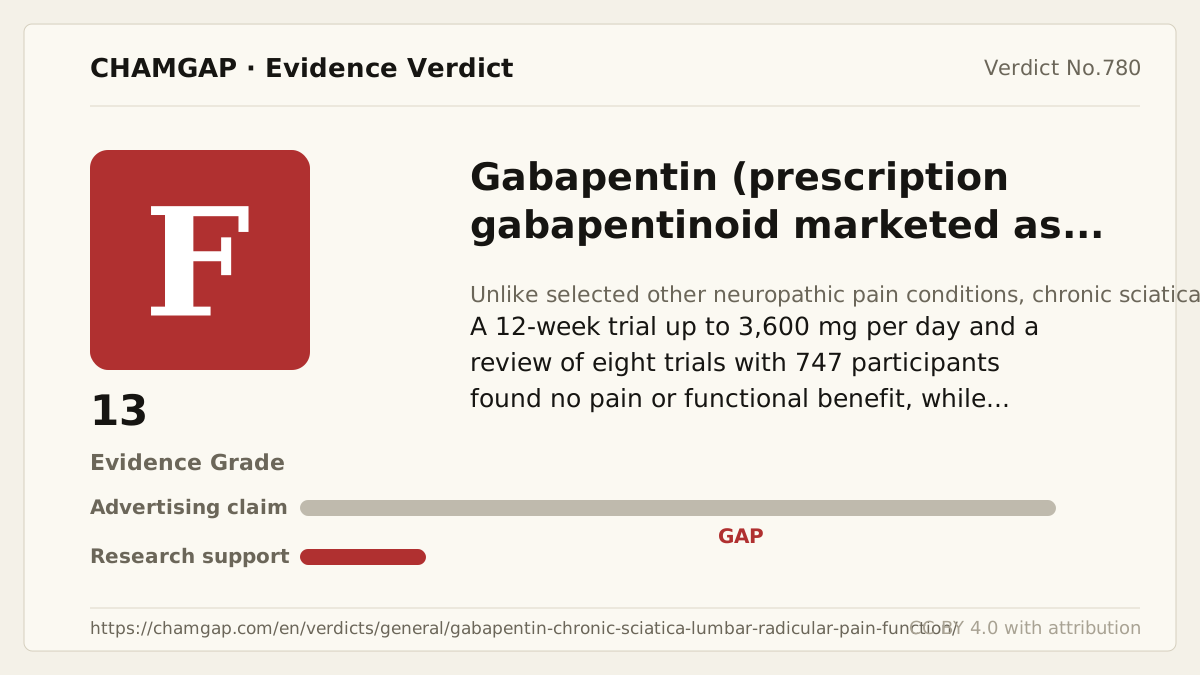
[Chamgap] Gabapentin x improved pain and function in chronic sciatica or lumbar radicular pain — Evidence Grade F·13. 3 cited sources checked. Source: https://chamgap.com/en/verdicts/general/gabapentin-chronic-sciatica-lumbar-radicular-pain-function/ · CC BY 4.0CC BY 4.0 — free to use with attribution; do not distort grades, numbers, or verdict meaning.
What this document does and does not do
Chamgap is an information source. It reports what research has and has not confirmed; it does not tell readers what to take or buy. That decision belongs to readers and, when needed, medical or legal professionals. This verdict reflects literature available up to the search date and may change as new research appears. Nothing here is medical advice.