
Fondaparinux,
does it really help with Prevention of symptomatic recurrent venous thromboembolism during initial treatment of acute pulmonary embolism and deep-vein thrombosis?
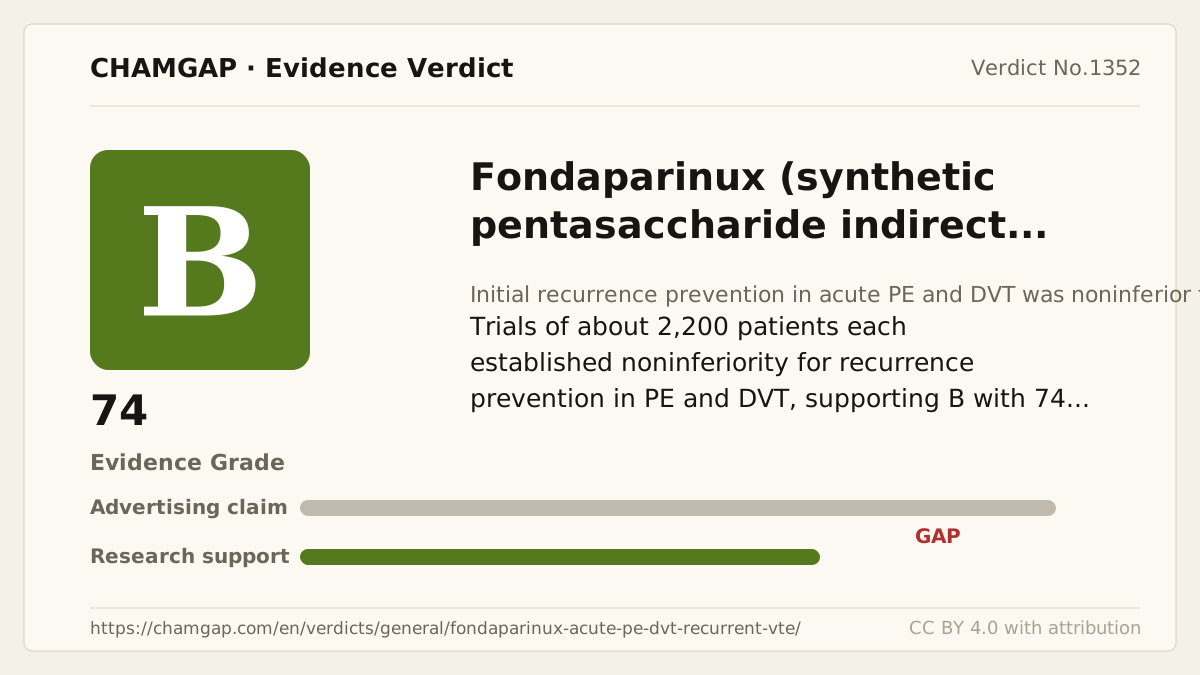
research showsFondaparinux is rated B because it prevented symptomatic recurrent venous thromboembolism no less effectively than standard heparin therapy during initial treatment of acute pulmonary embolism and deep-vein thrombosis. Recurrence was 3.8% versus 5.0% in MATISSE-PE and 3.9% versus 4.1% in MATISSE-DVT. Both trials used direct clinical recurrence endpoints, but they established noninferiority rather than superiority, so the evidence does not qualify for A.
ads claimOnce-daily convenience should not be translated into stronger anticoagulation or absence of bleeding risk. Dosing depends on weight and indication, and renal function and bleeding risk must be assessed.
Useful facts when choosing a product
- Fondaparinux is a synthetic pentasaccharide prescription injection that selectively inhibits factor Xa indirectly through antithrombin.
- For initial treatment of acute DVT or hemodynamically stable PE, weight-based doses of 5 mg, 7.5 mg, or 10 mg once daily are commonly overlapped with transition to longer-term anticoagulation.
- Bleeding is the principal harm, and renal elimination means that severe renal impairment can cause accumulation and is subject to contraindication or strong restriction.
- Immune heparin-induced thrombocytopenia is rarer than with heparin but is not impossible; active major bleeding, low body weight, and invasive procedures require additional caution.
Chamgap Semantic Classification Code
Candidate index · review held
M.fondaparinux.intravenous.symptomatic-recurrent-venous-thromboembolism-during-initial-treatment-of-acute-pulmonary-embolism-and-deep-vein-thrombosis.prevent.UNKMedicinal interventions > Fondaparinux > Intravenous > symptomatic recurrent venous thromboembolism during initial treatment of acute pulmonary embolism and deep-vein thrombosis > Occurrence-prevention claim > Unknown
An automated migration candidate, not an issued permanent code; exact claim scope remains under review. This machine-generated migration candidate helps retrieval but is not a permanent assignment. The original verdict ID and URL remain authoritative.
What the research actually shows
MATISSE-PE openly randomized hemodynamically stable patients with acute symptomatic pulmonary embolism to weight-based once-daily fondaparinux or adjusted unfractionated heparin, with both groups transitioning to a vitamin K antagonist. Three-month recurrent VTE was 3.8% versus 5.0%, and major bleeding during initial treatment was 1.3% versus 1.1%. MATISSE-DVT double-blindly compared the same fondaparinux strategy with weight-adjusted enoxaparin in acute symptomatic DVT; recurrence was 3.9% versus 4.1%, and major bleeding was 1.1% versus 1.2%.
Why this is classified as B (74)
Randomized trials exceeding 2,000 participants in both PE and DVT demonstrated noninferiority to standard heparin for the direct clinical endpoint of symptomatic recurrent VTE. Scale and replication are strong, but superiority or mortality reduction was not established, supporting B with 74 points. Bleeding and renal accumulation are separate safety considerations.
Counterpoint. Reduced injection frequency and monitoring burden are practical advantages, but renal function, weight, cancer, pregnancy, procedures, and the long-term anticoagulation plan affect drug selection.
Rejudgment record. New verdict — MATISSE-PE and MATISSE-DVT reproduced noninferiority to unfractionated heparin and enoxaparin for the direct clinical endpoint of symptomatic recurrent VTE, without demonstrating superiority
Sub-claim grades by effect
This ingredient is marketed for several effects. A single overall grade blends strong and weak claims together, so each effect is graded separately here. The overall grade reflects the strongest disconfirming or core claim.
| Effect (sub-claim) | Grade | Basis |
|---|---|---|
| Prevention of symptomatic recurrent VTE during initial treatment of acute pulmonary embolism | B | MATISSE-PE established noninferiority to unfractionated heparin, not superiority. |
| Prevention of symptomatic recurrent VTE during initial treatment of acute deep-vein thrombosis | B | MATISSE-DVT established noninferiority to enoxaparin. |
| Consistent prevention of symptomatic recurrent VTE across acute PE and DVT indications | B | Both MATISSE trials met noninferiority against different active comparators, but neither established superiority. |
Cross-check — AI research and Codex final gate
Evidence Table
| Study | Design | Sample | Funding | Endpoint | Result | Weight |
|---|---|---|---|---|---|---|
| Büller HR et al.; Matisse Investigators. 2003 (MATISSE-PE) | Multicenter open randomized noninferiority trial | 2,213 patients with acute symptomatic pulmonary embolism | Supported by Sanofi-Synthelabo and Organon | Three-month composite of symptomatic recurrent PE or new or recurrent DVT | Events occurred in 3.8% with fondaparinux and 5.0% with unfractionated heparin; absolute difference -1.2 percentage points (95% CI -3.0 to 0.5), meeting noninferiority. | Key direct recurrence evidence in PE |
| Büller HR et al.; Matisse Investigators. 2004 (MATISSE-DVT) | Multicenter randomized double-blind noninferiority trial | 2,205 patients with acute symptomatic deep-vein thrombosis | Supported by Sanofi-Synthelabo and Organon | Symptomatic recurrent VTE at three months | Events occurred in 3.9% with fondaparinux and 4.1% with enoxaparin; absolute difference -0.15 percentage points (95% CI -1.8 to 1.5), meeting noninferiority. | Independent replication in DVT |
Receipt — 2 References
All 2 cited sources were verified for existence at the original page (as of 2026-07-23).
Final verification and publication gate: Codex · Evidence date: 2026-07-23 · Corrections: none
Cite this verdict
[Chamgap] Fondaparinux x prevention of symptomatic recurrence during initial treatment of acute pulmonary embolism and deep-vein thrombosis — Evidence Grade B·74. 2 cited sources checked. Source: https://chamgap.com/en/verdicts/general/fondaparinux-acute-pe-dvt-recurrent-vte/ · CC BY 4.0CC BY 4.0 — free to use with attribution; do not distort grades, numbers, or verdict meaning.
What this document does and does not do
Chamgap is an information source. It reports what research has and has not confirmed; it does not tell readers what to take or buy. That decision belongs to readers and, when needed, medical or legal professionals. This verdict reflects literature available up to the search date and may change as new research appears. Nothing here is medical advice.