
Emicizumab prophylaxis,
does it really help with Reduced treated bleeding in hemophilia A with factor VIII inhibitors?
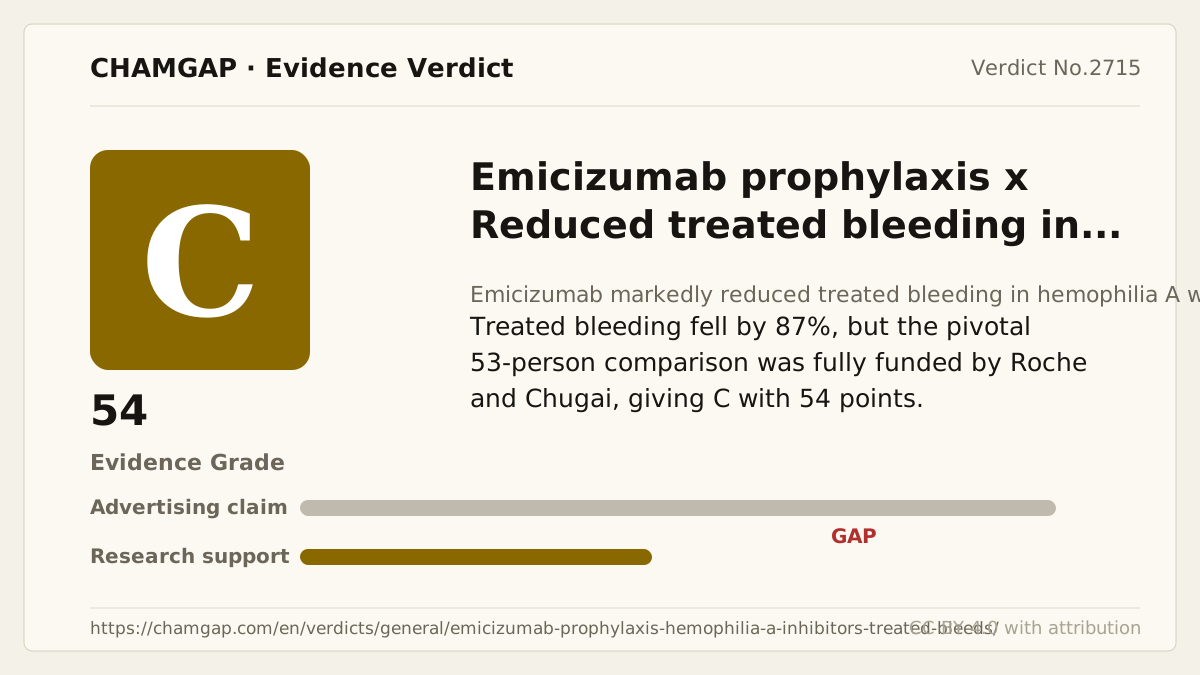
research showsThe grade is C with 54 points. HAVEN 1 randomized 53 participants previously using episodic bypassing agents to emicizumab (35) or no prophylaxis (18). The annualized rate of treated bleeding was 2.9 versus 23.3, rate ratio 0.13 (95% CI 0.06 to 0.28, P<.001), while zero treated bleeds occurred in 62.9% versus 5.6%. The effect is very large, but the pivotal comparison included only 53 participants and was wholly manufacturer funded.
ads claimThis does not mean hemophilia is cured or coagulation is normalized. Emicizumab prophylaxis reduced bleeding, but breakthrough bleeds and surgery still require a separate hemostatic plan and careful dosing of bypassing agents.
Useful facts when choosing a product
- Emicizumab is a subcutaneous bispecific antibody that bridges activated factor IX and factor X to mimic factor VIII cofactor activity.
- The pivotal randomized comparison was 35 versus 18, not 53 versus 18; total trial enrollment was 109.
- Three thrombotic microangiopathy events and two thrombotic events occurred in participants exposed to high-dose activated prothrombin complex concentrate for more than 24 hours.
Chamgap Semantic Classification Code
Candidate index · review held
UNK.emicizumab-prophylaxis.UNK.treated-bleeding-in-hemophilia-a-with-factor-viii-inhibitors.reduce.UNKUnknown > Emicizumab prophylaxis > Unknown > treated bleeding in hemophilia A with factor VIII inhibitors > Reduction claim > Unknown
An automated migration candidate, not an issued permanent code; exact claim scope remains under review. This machine-generated migration candidate helps retrieval but is not a permanent assignment. The original verdict ID and URL remain authoritative.
What the research actually shows
HAVEN 1 enrolled 109 people, but the pivotal randomized comparison included only 53 who had previously used episodic bypassing agents. Of these, 35 received weekly emicizumab and 18 received no prophylaxis for 24 weeks. Central randomization was stratified by prior bleed count, and all participants in the two randomized groups contributed to the core analysis. The trial was open label, but a bleed-adjudication committee confirmed events. The prespecified primary endpoint in NCT02622321 was the annualized rate of treated bleeding and matched the paper. Enrollment below 200 was counted as the main limitation. F. Hoffmann-La Roche and Chugai Pharmaceutical fully funded the trial, and sponsor employees participated in design, analysis, and manuscript development.
Why this is classified as C (54)
A very large effect on clinical bleeding is compelling, but the pivotal 53-person comparison was fully manufacturer funded and small, giving C with 54 points.
Counterpoint. The large bleed reduction must be interpreted alongside manufacturer dependence and serious thrombotic risk with high-dose aPCC use.
Rejudgment record. Cross-check applied — Cross-checked the NEJM report, protocol, and NCT02622321 for the pivotal randomized denominator of 35/18, prespecified bleeding endpoint, event confirmation, effect estimates, sponsor role, and thrombotic harms
| Endpoint | H | Hard endpoint - actual events such as death |
| Replication | R1 | Single confirmatory trial |
| Independence | I0 | Evidence comes only from manufacturer studies |
| Effect size | E+ | Meets the clinically important threshold |
Stored derived and displayed grades match; this is not a current recalculation or validity check (C).
Sub-claim grades by effect
This ingredient is marketed for several effects. A single overall grade blends strong and weak claims together, so each effect is graded separately here. The overall grade reflects the strongest disconfirming or core claim.
| Effect (sub-claim) | Grade | Basis |
|---|---|---|
| Reduced treated bleeding | C | Annualized rates were 2.9 versus 23.3, rate ratio 0.13. |
| Increased achievement of zero treated bleeds | C | Zero treated bleeds occurred in 62.9% versus 5.6%. |
Cross-check — AI research and Codex final gate
Evidence Table
| Study | Design | Sample | Funding | Endpoint | Result | Weight |
|---|---|---|---|---|---|---|
| Oldenburg J et al. 2017 HAVEN 1 | Multinational open-label phase 3 centrally randomized trial | 109 total; pivotal randomized comparison 53 (35/18) | Fully funded by F. Hoffmann-La Roche and Chugai Pharmaceutical | Annualized rate of treated bleeding over 24 weeks | 2.9 vs 23.3; rate ratio 0.13 (95% CI 0.06 to 0.28), P<.001; zero treated bleeds 62.9% vs 5.6% | Very large bleed reduction in a small manufacturer-only pivotal comparison |
Receipt — 2 References
All 2 cited sources were verified for existence at the original page (as of 2026-08-18).
Final verification and publication gate: Codex · Evidence date: 2026-08-18 · Corrections: none
Cite this verdict
[Chamgap] Emicizumab prophylaxis x bleeding in hemophilia A with inhibitors — Evidence Grade C·54. 2 cited sources checked. Source: https://chamgap.com/en/verdicts/general/emicizumab-prophylaxis-hemophilia-a-inhibitors-treated-bleeds/ · CC BY 4.0CC BY 4.0 — free to use with attribution; do not distort grades, numbers, or verdict meaning.
What this document does and does not do
Chamgap is an information source. It reports what research has and has not confirmed; it does not tell readers what to take or buy. That decision belongs to readers and, when needed, medical or legal professionals. This verdict reflects literature available up to the search date and may change as new research appears. Nothing here is medical advice.