
Double voiding,
does it really help with Prevention of recurrent urinary tract infection, acute retention, catheterization, or hospitalization?
research showsThe grade is ? with a null score. No eligible direct comparative human study that was completed and had reported results compared double with regular voiding for recurrent urinary tract infection, acute retention, catheterization, or hospitalization. Reduction in post-void residual is a surrogate endpoint (S), whereas recurrent UTI is a clinical event (H), so even a temporary residual reduction would not establish infection prevention.
ads claimA reduction in residual urine, a surrogate endpoint (S), must not be converted into guaranteed prevention of recurrent UTI, a clinical event (H). Recurrent infection, fever, flank pain, or difficult voiding requires diagnostic assessment and appropriate treatment.
Useful facts when choosing a product
- Double voiding means waiting or changing posture after a first void and attempting to urinate again.
- Reduction in post-void residual is a surrogate endpoint (S), whereas recurrent urinary tract infection is a clinical event (H).
- Databases: PubMed and ClinicalTrials.gov. Search date: 2026-08-15. Additional query: ("double voiding" OR "double micturition") AND ("residual urine" OR "post-void residual") AND ("recurrent urinary tract infection" OR UTI). Zero eligible direct comparative human studies were completed with reported results.
- Ongoing NCT05711446 targets 438 kidney-transplant recipients and compares UTI with double versus regular voiding, but results are not posted and primary completion is estimated for December 2026, so it is not evidence for the current verdict.
- Exclusions: residual-urine–infection association studies, bundled urotherapy, and nocturnal bladder-emptying packages could not isolate double voiding alone.
Chamgap Semantic Classification Code
Candidate index · review held
UNK.double-voiding-waiting-or-changing-position-after-a-first-void-and-urinating-again.UNK.recurrent-urinary-tract-infection-acute-retention-catheterization-or-hospitalization.prevent.UNKUnknown > Double voiding: waiting or changing position after a first void and urinating again > Unknown > recurrent urinary tract infection, acute retention, catheterization, or hospitalization > Occurrence-prevention claim > Unknown
An automated migration candidate, not an issued permanent code; exact claim scope remains under review. This machine-generated migration candidate helps retrieval but is not a permanent assignment. The original verdict ID and URL remain authoritative.
What the research actually shows
PubMed searches used ("double voiding" OR "double void" OR "double micturition") AND ("recurrent urinary tract infection" OR "urinary tract infection" OR urinary retention OR catheterization), the double-voiding terms with randomized trial or cohort, and ("double voiding" OR "double micturition") AND ("residual urine" OR "post-void residual") AND ("recurrent urinary tract infection" OR UTI). ClinicalTrials.gov was also searched. Zero eligible direct comparative human studies were completed with reported results. NCT05711446 targets 438 kidney-transplant recipients and compares UTI occurrence with double versus regular voiding, but it has no posted results and estimated primary completion is December 2026, so it is not evidence for the current verdict. Koff et al.'s 2002 nocturnal program mixed intermittent catheterization, overnight drainage, and frequent double voiding without a regular-voiding comparator. Residual-urine–infection association studies, pediatric bundled urotherapy, and nocturnal emptying packages could not isolate double voiding alone.
Why this is classified as ?
There were zero eligible direct comparative human studies of the advertised clinical event that were completed with reported results, giving ? and a null score. Reduction in residual urine, a surrogate endpoint (S), cannot substitute for recurrent UTI, a clinical event (H), and the ongoing trial with no posted results is not evidence for the current verdict.
Counterpoint. Clinically important residual urine or recurrent infection warrants evaluation for obstruction, neurogenic bladder, stones, prostate disease, or pelvic-floor dysfunction.
Rejudgment record. Cross-check applied — Searched PubMed and ClinicalTrials.gov using double-voiding synonyms combined with residual urine, recurrent UTI, retention, and catheterization; excluded the ongoing trial with no posted results and association studies or bundles that could not isolate double voiding
Sub-claim grades by effect
This ingredient is marketed for several effects. A single overall grade blends strong and weak claims together, so each effect is graded separately here. The overall grade reflects the strongest disconfirming or core claim.
| Effect (sub-claim) | Grade | Basis |
|---|---|---|
| Prevention of recurrent urinary tract infection | ? | Recurrent UTI is a clinical event (H), and zero eligible direct comparative human studies were completed with reported results. |
| Reduction in post-void residual | ? | Reduction in post-void residual is a surrogate endpoint (S) and does not establish the recurrent-infection event judged here. |
Cross-check — AI research and Codex final gate
Evidence Table
| Study | Design | Sample | Funding | Endpoint | Result | Weight |
|---|---|---|---|---|---|---|
| PubMed and ClinicalTrials.gov direct-evidence search, 2026-08-15 | Search for completed randomized trials and cohorts with reported results | Zero eligible direct comparative human studies completed with reported results | No eligible study | Recurrent UTI (H), acute retention, catheterization, or hospitalization; distinguished from residual-volume reduction (S) | No completed direct comparison of double versus regular voiding with reported results was found | Reproducible search supporting an ungraded verdict |
| NCT05711446 | Ongoing trial of double versus regular voiding in kidney-transplant recipients | Target enrollment 438 | Per registry record | UTI occurrence within three months | No results posted; estimated primary completion December 2026 | Ongoing and not evidence for the current verdict |
| Koff SA, Mutabagani KH, Jayanthi VR. 2002 | Case series of a nocturnal bladder-emptying program after posterior urethral valves | 18 boys | Not identified in the accessible record | Hydronephrosis and bladder function | Catheterization, overnight drainage, and frequent double voiding were bundled, with no regular-voiding comparator or recurrent-UTI comparison | Bundled intervention excluded from direct evidence |
Receipt — 3 References
All 3 cited sources were verified for existence at the original page (as of 2026-08-15).
Final verification and publication gate: Codex · Evidence date: 2026-08-15 · Corrections: none
Cite this verdict
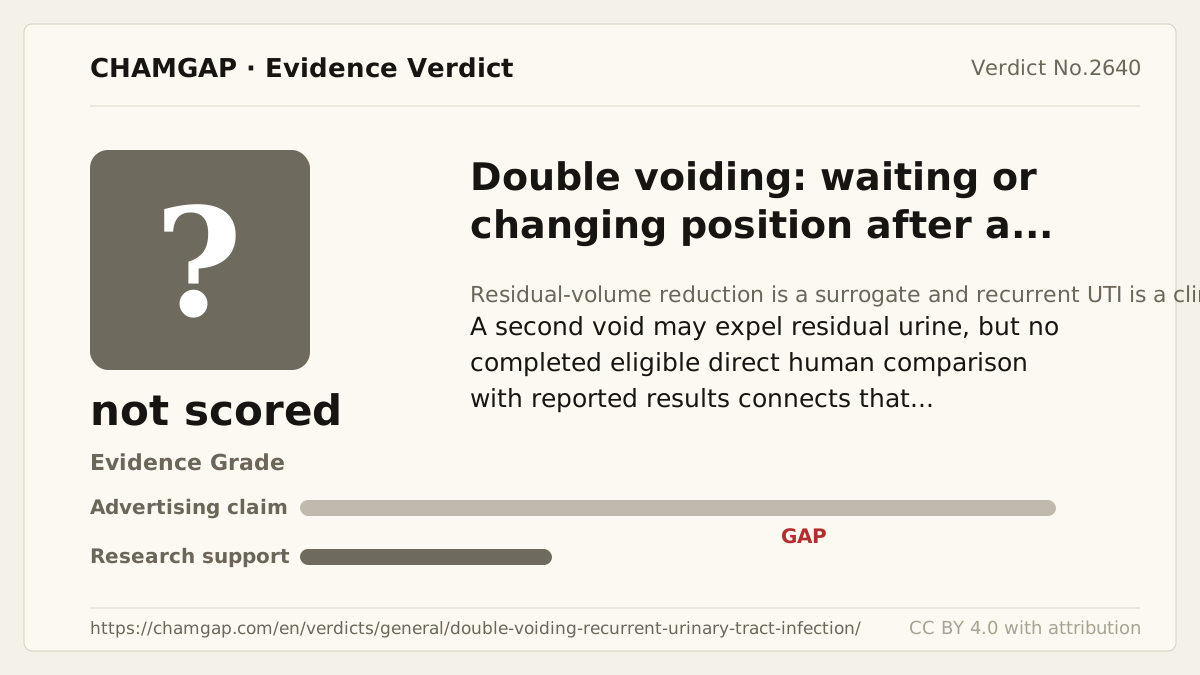
[Chamgap] Double voiding x prevention of recurrent urinary tract infection — Evidence Grade ?. 3 cited sources checked. Source: https://chamgap.com/en/verdicts/general/double-voiding-recurrent-urinary-tract-infection/ · CC BY 4.0CC BY 4.0 — free to use with attribution; do not distort grades, numbers, or verdict meaning.
What this document does and does not do
Chamgap is an information source. It reports what research has and has not confirmed; it does not tell readers what to take or buy. That decision belongs to readers and, when needed, medical or legal professionals. This verdict reflects literature available up to the search date and may change as new research appears. Nothing here is medical advice.