
Detox foot pads,
does it really help with Removal of heavy metals and metabolic waste through the soles during overnight use?
research showsThe claim that detox foot pads remove heavy metals or metabolic waste through the soles overnight is rated D. A 2018 peer-reviewed original report by Ragab and colleagues compared metals in pads before and after overnight use by 53 people aged 18 to 64 and found no increased removal of lead, cadmium, mercury, arsenic, selenium, or silver. This low-quality nonrandomized proof-of-principle study tested the claim in people and found it ineffective, yielding D with 20 points. No clinical trial has measured blood or urine body burden.
ads claimAdvertising presents the brown or black pad seen in the morning as visible proof that toxins left the body overnight. Wood-vinegar and related ingredients can darken on contact with moisture from perspiration, warmth, and air, and a similar change occurs with tap water alone. Color does not identify the type or amount of a heavy metal or demonstrate lower body burden.
Useful facts when choosing a product
- Detox foot pads are consumer adhesive products commonly containing wood or bamboo vinegar, starch, and botanical powders and are worn on the soles overnight.
- The brown discoloration can result from ingredients reacting with moisture, warmth, and air, and a similar color can appear when the pad is wetted with water alone.
- A 53-person human-use study compared metals in pads before and after use but did not measure changes in blood, urine, or other indicators of body burden.
- Adhesives and ingredients may irritate skin or cause contact dermatitis, and suspected toxic exposure or disease should not have diagnosis or treatment delayed.
Chamgap Semantic Classification Code
Candidate index · review held
UNK.detox-foot-pads.UNK.removal-of-heavy-metals-and-metabolic-waste-through-the-soles-during-overnight-use.assess.baselineUnknown > Detox foot pads > Unknown > Removal of heavy metals and metabolic waste through the soles during overnight use > Association or change assessment > Within-group baseline comparison
An automated migration candidate, not an issued permanent code; exact claim scope remains under review. This machine-generated migration candidate helps retrieval but is not a permanent assignment. The original verdict ID and URL remain authoritative.
What the research actually shows
The 2018 peer-reviewed original report by Ragab and colleagues was a nonrandomized proof-of-principle study in which 53 people aged 18 to 64 used pads overnight. It found no increased removal of lead, cadmium, mercury, arsenic, selenium, or silver when comparing pads before and after use. The low-quality journal and absence of blood or urine body-burden measurements limit the evidence, but it is direct human-use evidence of a null effect. Manufacturer materials from Kenrico and others labeled as clinical studies were not accepted as independent efficacy evidence because they are neither peer-reviewed papers nor regulatory clinical results.
Why this is classified as D (20)
A peer-reviewed original report in a low-quality journal used a nonrandomized 53-person proof-of-principle design and found no increased heavy-metal removal from pads after overnight use. Because the claim was tested in people and found ineffective, it receives D at the lower boundary, D with 20 points; lack of blood or urine body-burden measurements limits certainty. The FTC sales ban is advertising enforcement rather than an efficacy-trial result, and manufacturer materials from Kenrico and others are neither peer-reviewed papers nor regulatory clinical results, so neither was adopted as independent efficacy evidence.
Counterpoint. The pad may absorb perspiration and temporarily make the foot feel drier, but that local experience is different from systemic removal of heavy metals or metabolic waste. Suspected exposure requires validated medical testing.
Rejudgment record. Cross-check applied — Applied D because a peer-reviewed but low-quality nonrandomized proof-of-principle study of 53 people found no increase in metals in pads after use; FTC action is advertising enforcement and body-burden trials remain absent
Sub-claim grades by effect
This ingredient is marketed for several effects. A single overall grade blends strong and weak claims together, so each effect is graded separately here. The overall grade reflects the strongest disconfirming or core claim.
| Effect (sub-claim) | Grade | Basis |
|---|---|---|
| Removal of heavy metals through the soles | D | A 53-person human-use study found no increase in heavy-metal removal when comparing pads before and after use. |
| Removal of metabolic waste or toxins through the soles | D | A human proof-of-principle study found no increase in metal removal from the pads. |
| Reduction of systemic toxin burden after overnight use | ? | No human trial tested changes in blood or urine measures of systemic burden. |
Cross-check — AI research and Codex final gate
Evidence Table
| Study | Design | Sample | Funding | Endpoint | Result | Weight |
|---|---|---|---|---|---|---|
| Ragab AR et al. 2018 | Peer-reviewed original report (low-quality journal; nonrandomized proof-of-principle study) | Actual analysis of 53 participants aged 18 to 64 years | Independent funding was unclear in the original report | Comparison of lead, cadmium, mercury, arsenic, selenium, and silver in pads before and after overnight use | No increased removal of lead, cadmium, mercury, arsenic, selenium, or silver was demonstrated; blood and urine body burden were not measured. | Direct null human-use evidence with low design quality |
| Federal Trade Commission v. Xacta 3000, Inc. 2009-2010 | Advertising-enforcement complaint and court-approved final order | Not a clinical-trial sample | U.S. Federal Trade Commission | Scientific substantiation for advertising claims of toxin, metabolic-waste, and heavy-metal removal | Claims were challenged as false or unsupported, and a sales and promotion ban was approved. | Advertising-enforcement context, not an efficacy trial |
Receipt — 4 References
All 4 cited sources were verified for existence at the original page (as of 2026-07-24).
Final verification and publication gate: Codex · Evidence date: 2026-07-24 · Corrections: none
Cite this verdict
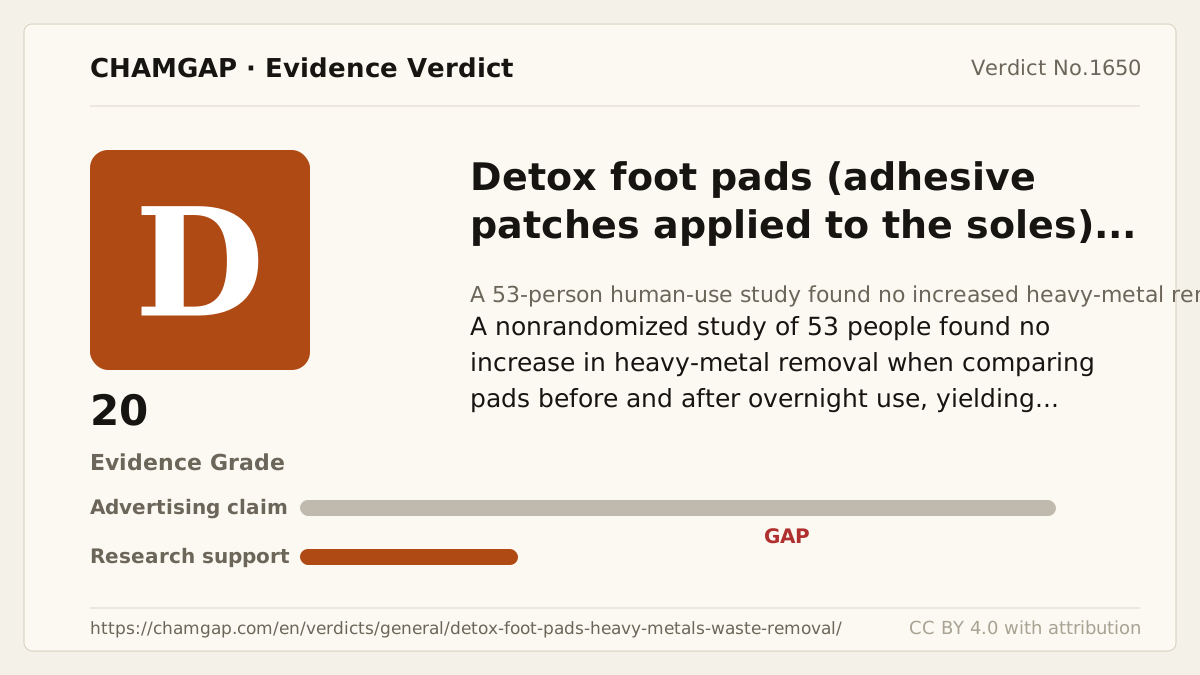
[Chamgap] Detox foot pads x removal of heavy metals and waste — Evidence Grade D·20. 4 cited sources checked. Source: https://chamgap.com/en/verdicts/general/detox-foot-pads-heavy-metals-waste-removal/ · CC BY 4.0CC BY 4.0 — free to use with attribution; do not distort grades, numbers, or verdict meaning.
What this document does and does not do
Chamgap is an information source. It reports what research has and has not confirmed; it does not tell readers what to take or buy. That decision belongs to readers and, when needed, medical or legal professionals. This verdict reflects literature available up to the search date and may change as new research appears. Nothing here is medical advice.