
Darbepoetin alfa,
does it really help with Reduced red-cell transfusions in very-low-birth-weight preterm infants?
research showsThe grade is B. In a masked placebo-controlled trial of 102 infants, transfusions averaged 1.2 per infant with darbepoetin versus 2.4 with placebo, an absolute reduction of 1.2. Fifty-nine percent versus 38% remained untransfused, an absolute increase of 21 points.
ads claimReduced transfusion and improved neurodevelopment are separate claims. Verdict 2798 is D with 34 points for the same ESA class in a different indication: treatment of neonatal hypoxic-ischemic encephalopathy rather than anemia prevention.
Useful facts when choosing a product
- Included infants weighed 500 to 1250 g and were enrolled within 48 hours of birth.
- Darbepoetin 10 µg/kg weekly plus sham dosing continued through 35 weeks' gestation.
- Amgen performed the antibody assay; public and nonprofit funding was reported.
Chamgap Semantic Classification Code
Candidate index · review held
UNK.darbepoetin-alfa.UNK.red-cell-transfusions-in-very-low-birth-weight-preterm-infants.reduce.MULTIUnknown > Darbepoetin alfa > Unknown > red-cell transfusions in very-low-birth-weight preterm infants > Reduction claim > Multiple: primary unresolved
An automated migration candidate, not an issued permanent code; exact claim scope remains under review. This machine-generated migration candidate helps retrieval but is not a permanent assignment. The original verdict ID and URL remain authoritative.
What the research actually shows
Four gates: ① fewer than 200 participants; ② the listed small-study item; ③ the paper enrolled 102 infants, 34 per arm, based on a small groupwise sample-size calculation; ④ larger multicenter recruitment was feasible, so one defect was counted. Treatment through 35 weeks' gestation matched the neonatal hospitalization window and was not counted as avoidably short. Computer permuted-block randomization, caregiver and investigator masking, sham doses, and standardized transfusion criteria prevented additional counts. Funding came from the Thrasher Research Fund, University of Colorado CTSI, and NIH/NCRR/NCATS. The paper states, "We thank Amgen for performing the antibody assay," but reports neither study-drug supply nor trial funding by Amgen. Because the assay was an evaluation tool, it did not lower independence.
Why this is classified as B (72)
An independently funded masked placebo-controlled trial showed a meaningful reduction in a hard recorded outcome, but one 102-infant trial gives B with 72 points.
Counterpoint. Rare harms and long-term neurodevelopment cannot be settled by this small primary report.
Rejudgment record. Cross-check applied — A publicly and non-profit funded masked placebo-controlled RCT reduced protocol-defined actual transfusions but enrolled only 102 infants
| Endpoint | H | Hard endpoint - actual events such as death |
| Replication | R1 | Single confirmatory trial |
| Independence | I2 | Decisive evidence is publicly or non-profit funded |
| Effect size | E+ | Meets the clinically important threshold |
Stored derived and displayed grades match; this is not a current recalculation or validity check (B).
Sub-claim grades by effect
This ingredient is marketed for several effects. A single overall grade blends strong and weak claims together, so each effect is graded separately here. The overall grade reflects the strongest disconfirming or core claim.
| Effect (sub-claim) | Grade | Basis |
|---|---|---|
| Reduced red-cell transfusions | B | The mean was 1.2 versus 2.4 transfusions. |
| Improved neurodevelopment | ? | This was not primary in the main report and came from separate follow-up. |
Cross-check — AI research and Codex final gate
Evidence Table
| Study | Design | Sample | Funding | Endpoint | Result | Weight |
|---|---|---|---|---|---|---|
| Ohls RK et al. 2013 | Multicenter randomized masked placebo-controlled three-arm trial | 102 infants, 34 per arm | Thrasher Research Fund, University of Colorado CTSI, NIH/NCRR/NCATS; Amgen performed antibody assay | Number of red-cell transfusions under a standardized protocol | Darbepoetin 1.2±2.4 vs placebo 2.4±2.9 transfusions; transfusion-free 59% vs 38% | Pivotal independent small hard-outcome evidence |
Receipt — 2 References
All 2 cited sources were verified for existence at the original page (as of 2026-08-26).
Final verification and publication gate: Codex · Evidence date: 2026-08-26 · Corrections: none
Cite this verdict
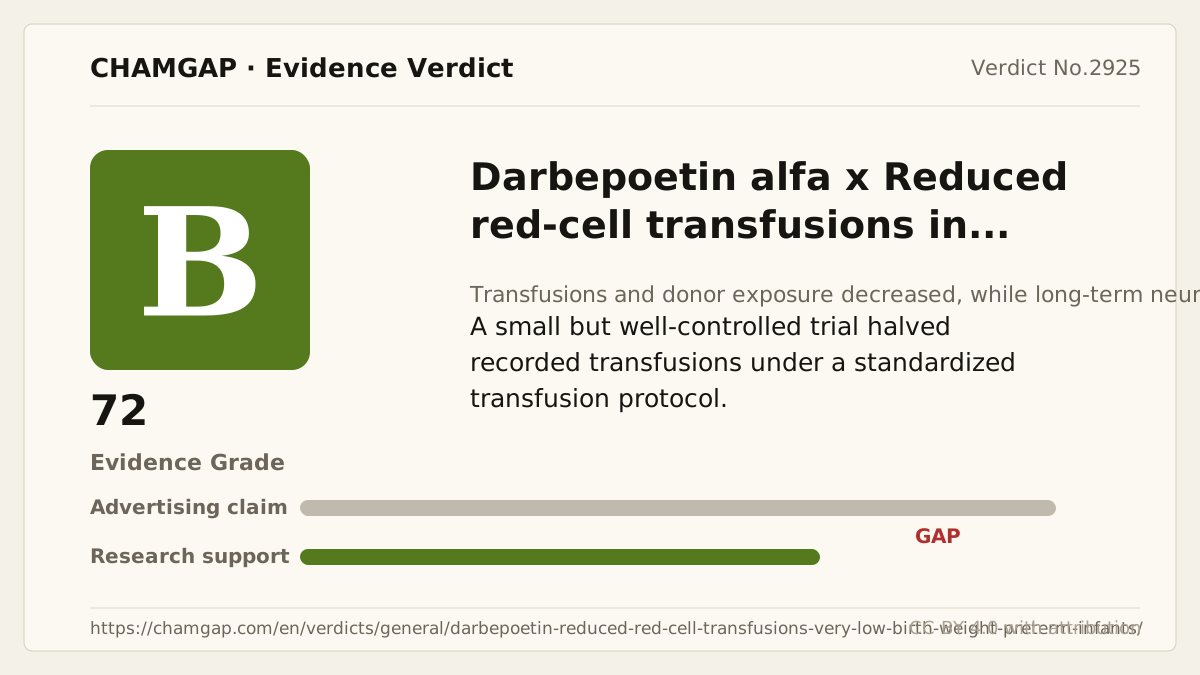
[Chamgap] Benefit of Darbepoetin Alfa × Reducing Red-Cell Transfusions in Very-Low-Birth-Weight Preterm Infants — Evidence Grade B·72. 2 cited sources checked. Source: https://chamgap.com/en/verdicts/general/darbepoetin-reduced-red-cell-transfusions-very-low-birth-weight-preterm-infants/ · CC BY 4.0CC BY 4.0 — free to use with attribution; do not distort grades, numbers, or verdict meaning.
What this document does and does not do
Chamgap is an information source. It reports what research has and has not confirmed; it does not tell readers what to take or buy. That decision belongs to readers and, when needed, medical or legal professionals. This verdict reflects literature available up to the search date and may change as new research appears. Nothing here is medical advice.