
A phase-change-material cooling vest and an on-site cooling oasis combining hydration, cold towels, fans, and water dousing,
does it really help with Reduced physiological heat strain measured by core temperature and heart rate during sawmill work in Thailand?
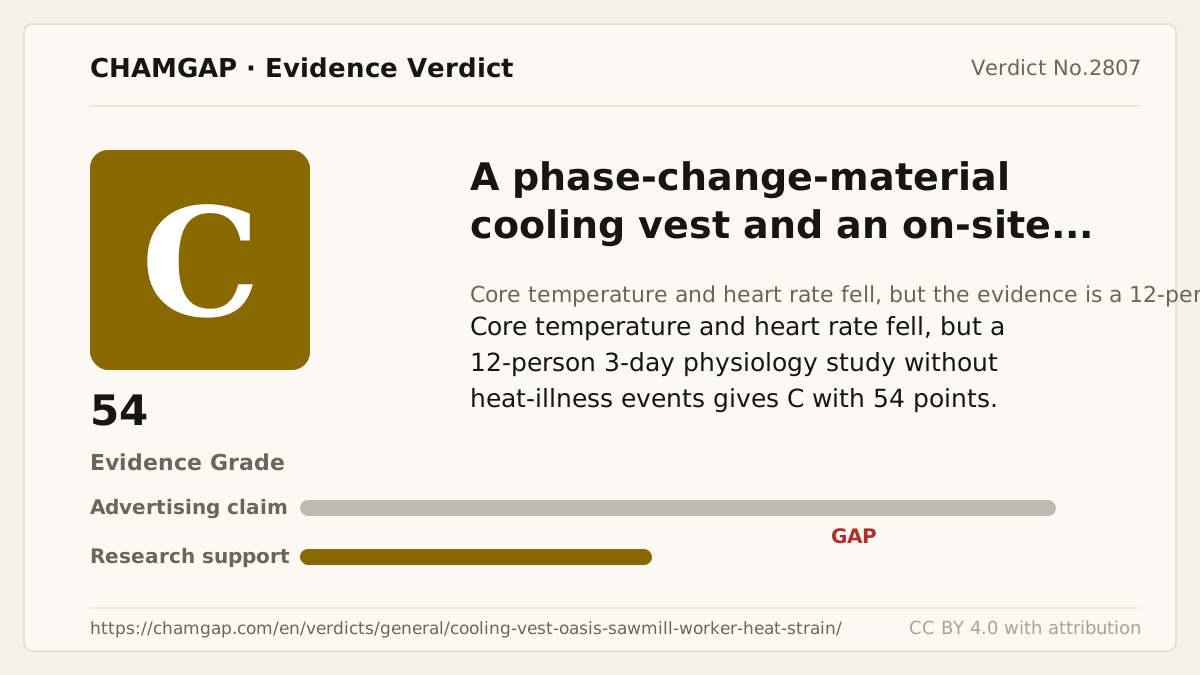
research showsThe grade is C. Twelve Thai sawmill workers crossed over across no cooling, a phase-change vest, and a cooling oasis over 3 days. Versus no cooling, core temperature was lower by 0.25°C (95% CI 0.24 to 0.25) with the oasis and 0.17°C (0.17 to 0.18) with the vest; heart rate was lower by 7 and 10 bpm. These were physiological markers, not heat-exhaustion or heatstroke events, in a 12-person 3-day pilot, giving C with 54 points.
ads claimKorean occupational-heat guidance treats water, shade or ventilation, rest, and personal cooling equipment such as cooling vests as real workplace controls. This pilot adds physiological evidence for those measures, but it does not guarantee that a particular vest prevents heat illness or replace water, rest, work adjustment, and emergency planning.
Useful facts when choosing a product
- The non-ice Kewlfit phase-change vest weighed 1.8 kg and was listed at about US$150.
- The oasis combined hourly 5-minute breaks, a fan, 330 mL water, water spray, and a cold wet towel at about 2°C.
- The paper reported university funding and no conflicts but did not report manufacturer provision of the vest.
Chamgap Semantic Classification Code
Candidate index · review held
UNK.phase-change-material-cooling-vest-and-an-on-site-cooling-oasis-combining-hydration.UNK.physiological-heat-strain-measured-by-core-temperature-and-heart-rate-during-sawmill-work-in-thailand.reduce.UNKUnknown > phase-change-material cooling vest and an on-site cooling oasis combining hydration > Unknown > physiological heat strain measured by core temperature and heart rate during sawmill work in Thailand > Reduction claim > Unknown
An automated migration candidate, not an issued permanent code; exact claim scope remains under review. This machine-generated migration candidate helps retrieval but is not a permanent assignment. The original verdict ID and URL remain authoritative.
What the research actually shows
At one sawmill in Trang, Thailand, in June 2023, 12 medically screened workers, including five women, experienced all three conditions in randomized counterbalanced order on 3 consecutive workdays. The article states, "In a crossover design on 3 consecutive workdays in June 2023, 12 ... workers were randomly ... counterbalanced across three conditions." The two key limitations are the sample below 200 and only 3 days of observation, leaving long-term adherence and clinical heat illness untested. Funding came from University of Queensland grants and start-up funds, and the authors declared no conflicts. The vest was identified as a Kewlfit product from TechNiche, costing about US$150, but the article did not state that the manufacturer supplied it.
Why this is classified as C (54)
A publicly funded randomized crossover trial consistently lowered physiological strain, but surrogate outcomes and a 12-person 3-day design give C with 54 points.
Counterpoint. One Thai sawmill of screened workers does not directly represent Korean construction, logistics, or agricultural workers, older adults, people with chronic illness, or more extreme heat.
Rejudgment record. Cross-check applied — Credits reduced physiological heat strain in a publicly funded crossover trial while accounting for surrogate outcomes and a 12-person 3-day design
| Endpoint | S | Surrogate marker - laboratory or imaging measures |
| Replication | R1 | Single confirmatory trial |
| Independence | I2 | Decisive evidence is publicly or non-profit funded |
| Effect size | E+ | Meets the clinically important threshold |
Stored derived and displayed grades match; this is not a current recalculation or validity check (C).
Sub-claim grades by effect
This ingredient is marketed for several effects. A single overall grade blends strong and weak claims together, so each effect is graded separately here. The overall grade reflects the strongest disconfirming or core claim.
| Effect (sub-claim) | Grade | Basis |
|---|---|---|
| Reduced physiological heat strain | C | Core temperature and heart rate fell, but evidence is a 12-person 3-day trial. |
| Reduced heat exhaustion or heatstroke events | ? | This trial did not measure clinical heat-illness events as its primary outcome. |
| Increased productivity | D | Confidence intervals for pallet productivity differences included no effect. |
Cross-check — AI research and Codex final gate
Evidence Table
| Study | Design | Sample | Funding | Endpoint | Result | Weight |
|---|---|---|---|---|---|---|
| Bach AJE et al. 2024 Thai sawmill pilot | Single-workplace randomized three-condition crossover field trial | 12 workers crossing over across three conditions on 3 consecutive workdays | University of Queensland Enabler Grant, Faculty of Medicine Research Seed Funding, and investigator start-up fund; no conflicts declared; no manufacturer provision reported | Gastrointestinal telemetry core temperature and continuous heart rate during work | Versus no cooling, oasis core temperature -0.25°C (95% CI -0.25 to -0.24) and heart rate -7 bpm (-9 to -6); vest -0.17°C (-0.18 to -0.17) and -10 bpm (-12 to -9) | Very small, very short pilot showing reduced physiological heat strain |
Receipt — 2 References
All 2 cited sources were verified for existence at the original page (as of 2026-08-18).
Final verification and publication gate: Codex · Evidence date: 2026-08-18 · Corrections: none
Cite this verdict
[Chamgap] Practical Cooling Interventions for Preventing Heat Strain in Indoor Factory Workers in Thailand - Benefit — Evidence Grade C·54. 2 cited sources checked. Source: https://chamgap.com/en/verdicts/general/cooling-vest-oasis-sawmill-worker-heat-strain/ · CC BY 4.0CC BY 4.0 — free to use with attribution; do not distort grades, numbers, or verdict meaning.
What this document does and does not do
Chamgap is an information source. It reports what research has and has not confirmed; it does not tell readers what to take or buy. That decision belongs to readers and, when needed, medical or legal professionals. This verdict reflects literature available up to the search date and may change as new research appears. Nothing here is medical advice.