
High-dose pralidoxime regimen using a 2 g loading dose followed by 1 g per hour for 48 hours,
does it really help with Reduced need for intubation and duration of mechanical ventilation in moderately severe organophosphorus pesticide poisoning?
research showsThe grade is B. In a 200-patient single-center open randomized trial in India, intubation occurred in 88/100 (88%) with repeated standard boluses versus 64/100 (64%) with continuous high-dose infusion, an absolute difference of -24 points and RR 0.72 (95% CI 0.62 to 0.86). Median ventilation was 10 versus 5 days. The absence of independent replication and unmasked treatment decisions limit the result to B with 70 points.
ads claimOrganophosphorus pesticide poisoning is a real emergency-medicine and toxicology problem requiring immediate airway, atropine, oxime, and intensive-care decisions. This evidence applies to hospital intravenous dosing in moderately severe acute poisoning, not to consumer detox products or self-treatment.
Useful facts when choosing a product
- Both groups received a 2 g loading dose and maintenance pralidoxime.
- The high-dose arm received 1 g hourly for 48 hours; control received 1 g every 4 hours.
- The paper reported no funding source, and families bought subsequent pralidoxime from a local pharmacy.
Chamgap Semantic Classification Code
Candidate index · review held
UNK.pralidoxime-regimen-using-a-loading-dose-followed-by-per-hour.UNK.need-for-intubation-and-duration-of-mechanical-ventilation-in-moderately-severe-organophosphorus-pesticide-poisoning.reduce.UNKUnknown > pralidoxime regimen using a loading dose followed by per hour > Unknown > need for intubation and duration of mechanical ventilation in moderately severe organophosphorus pesticide poisoning > Reduction claim > Unknown
An automated migration candidate, not an issued permanent code; exact claim scope remains under review. This machine-generated migration candidate helps retrieval but is not a permanent assignment. The original verdict ID and URL remain authoritative.
What the research actually shows
The trial ran at one 50-bed private hospital in Maharashtra from May 28, 2000, through June 26, 2003. It randomized 200 patients, 100 per arm, with no dropouts and intention-to-treat analysis. An independent programmer generated and concealed the sequence, and participants were unaware of assignment, but the article states, "Duty doctors were unaware of the allocation sequence but were aware of the allocation once each patient was allocated." Knowledge of assignment by clinicians making atropine and airway decisions in an open single-center study is the key avoidable limitation. The paper states, "There was no funding source for this study," and relatives bought subsequent doses from a local pharmacy. No funding is not confirmed public funding.
Why this is classified as B (70)
A randomized trial found large effects on intubation and ventilation, but lack of replication and unmasked treatment decisions in one center give B with 70 points.
Counterpoint. This does not answer pralidoxime versus no pralidoxime, extreme poisoning, asymptomatic exposure, or other oximes.
Rejudgment record. Cross-check applied — Credits large effects on direct intubation and ventilation outcomes while accounting for one unreplicated open single-center trial
| Endpoint | H | Hard endpoint - actual events such as death |
| Replication | R1 | Single confirmatory trial |
| Independence | I1 | Mixed funding sources |
| Effect size | E+ | Meets the clinically important threshold |
Stored derived and displayed grades match; this is not a current recalculation or validity check (B).
Sub-claim grades by effect
This ingredient is marketed for several effects. A single overall grade blends strong and weak claims together, so each effect is graded separately here. The overall grade reflects the strongest disconfirming or core claim.
| Effect (sub-claim) | Grade | Basis |
|---|---|---|
| Reduced need for intubation | B | Rates were 88% versus 64%, absolute difference -24 points, RR 0.72 (95% CI 0.62 to 0.86). |
| Shorter duration of mechanical ventilation | B | Median duration was 10 versus 5 days. |
Cross-check — AI research and Codex final gate
Evidence Table
| Study | Design | Sample | Funding | Endpoint | Result | Weight |
|---|---|---|---|---|---|---|
| Pawar K et al. 2006 | Indian single-center open randomized active-regimen trial | 200 randomized, 100 per arm, no dropouts, all 200 analyzed by intention to treat | The article declared no funding source; families bought subsequent drug from a local pharmacy | Primary outcomes of 24-hour atropine dose, proportion requiring intubation, and days of ventilation | Intubation 88/100 (88%) versus 64/100 (64%), absolute difference -24 points, RR 0.72 (95% CI 0.62 to 0.86); median ventilation 10 versus 5 days, difference 5 days (95% CI 5 to 6) | Single-center open trial showing large direct clinical effects |
Receipt — 1 References
All 1 cited sources were verified for existence at the original page (as of 2026-08-18).
Final verification and publication gate: Codex · Evidence date: 2026-08-18 · Corrections: none
Cite this verdict
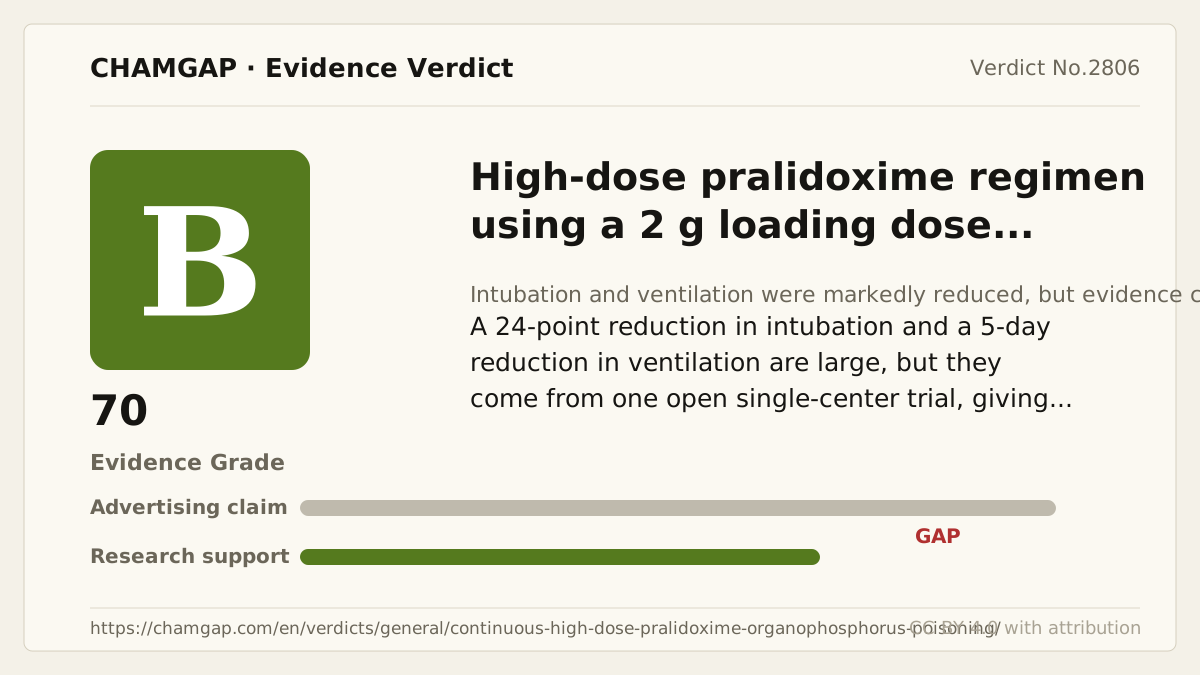
[Chamgap] Continuous Pralidoxime Infusion Versus Repeated Bolus Injection for Organophosphorus Pesticide Poisoning - Benefit — Evidence Grade B·70. 1 cited sources checked. Source: https://chamgap.com/en/verdicts/general/continuous-high-dose-pralidoxime-organophosphorus-poisoning/ · CC BY 4.0CC BY 4.0 — free to use with attribution; do not distort grades, numbers, or verdict meaning.
What this document does and does not do
Chamgap is an information source. It reports what research has and has not confirmed; it does not tell readers what to take or buy. That decision belongs to readers and, when needed, medical or legal professionals. This verdict reflects literature available up to the search date and may change as new research appears. Nothing here is medical advice.