
0.12% to 0.2% chlorhexidine rinse or 0.2% intrasocket gel,
does it really help with Prevention of alveolar osteitis, or dry socket, after tooth extraction?
research showsThe grade is B. In the Cochrane review, 0.12% to 0.2% rinse used before extraction and from 24 hours afterward reduced dry socket versus placebo in six trials with 1,547 participants, OR 0.38 (95% CI 0.25 to 0.58), I-squared 48%. A single 0.2% gel application in the socket reduced events in seven trials with 753 participants, OR 0.44 (0.27 to 0.71), I-squared 44%. In the largest 0.12% rinse trial, 10/372 (2.69%) versus 27/372 (7.26%) analyzed patients developed dry socket, absolute reduction 4.57 points (1.5 to 7.7), NNT 21.88 (13.0 to 69.3).
ads claim'Use a rinse after extraction' is underspecified. Evidence-based regimens used 0.12% or 0.2% rinse before and after surgery for roughly seven days, or one dentist-applied 0.2% intrasocket gel dose. This is not 2% endodontic solution or indefinite self-use.
Useful facts when choosing a product
- Rinses were generally 0.12% to 0.2%, while intrasocket gel was mainly 0.2%; formulation and timing differ.
- Dry socket was generally diagnosed by severe pain two to three days after extraction with partial or complete clot loss, sometimes with exposed bone or halitosis.
- Verdict 828 is B with 62 points for chlorhexidine mouthrinse reducing plaque and gingivitis. This verdict addresses the separate indication of post-extraction dry socket.
Chamgap Semantic Classification Code
Candidate index · review held
UNK.0-12-percent-to-0-2-percent-chlorhexidine-rinse-or-a-single-intrasocket-application-of-0-2-percent-chlorhexidine-gel.oromucosal.alveolar-osteitis-or-dry-socket-after-tooth-extraction.prevent.MULTIUnknown > 0.12% to 0.2% chlorhexidine rinse or a single intrasocket application of 0.2% chlorhexidine gel > Oromucosal > alveolar osteitis, or dry socket, after tooth extraction > Occurrence-prevention claim > Multiple: primary unresolved
An automated migration candidate, not an issued permanent code; exact claim scope remains under review. This machine-generated migration candidate helps retrieval but is not a permanent assignment. The original verdict ID and URL remain authoritative.
What the research actually shows
The 2022 Cochrane review included 39 prevention trials with 6,219 participants and 10 treatment trials with 552. In Halabi's 744-person analysis, high-risk patients undergoing maxillary or mandibular extraction used 15 mL of 0.12% rinse for 30 seconds twice daily for seven days, beginning 24 hours after extraction, versus sterile-water placebo. A total of 822 people were assessed for eligibility; 78 were excluded at that stage, after which 744 were allocated 372 per group and analyzed. The primary endpoint required increasing pain within and around the socket for four postoperative days plus partial or total clot breakdown, with or without exposed bone. The report called the trial double-blind, but blinding of the alveolar-osteitis assessor could not be confirmed. Gel trials mainly placed 0.2% gel once in the socket immediately after extraction and before suturing, versus placebo gel, placebo dressing, or no treatment. Halabi was self-funded by the authors, but funding for every other pooled trial could not be directly verified, so full independent replication was not assigned.
Why this is classified as B (70)
Six rinse trials and seven gel trials showed direct event reductions versus placebo, including an absolute reduction in a large individual trial, but blinding of the alveolar-osteitis assessor was not confirmed and populations were concentrated in third-molar surgery. The result is B with 70 points.
Counterpoint. Direct evidence is insufficient to claim that rinse is superior to gel or vice versa. A dental professional should select formulation and schedule based on extraction type, allergy, and baseline risk.
Rejudgment record. Cross-check applied — Separated rinse and intrasocket-gel concentrations and schedules and combined Cochrane estimates with absolute events from the 744-person trial
| Endpoint | H | Hard endpoint - actual events such as death |
| Replication | R1 | Single confirmatory trial |
| Independence | I1 | Mixed funding sources |
| Effect size | E+ | Meets the clinically important threshold |
Stored derived and displayed grades match; this is not a current recalculation or validity check (B).
Sub-claim grades by effect
This ingredient is marketed for several effects. A single overall grade blends strong and weak claims together, so each effect is graded separately here. The overall grade reflects the strongest disconfirming or core claim.
| Effect (sub-claim) | Grade | Basis |
|---|---|---|
| Prevention of dry socket with 0.12% to 0.2% rinse | B | Six trials with 1,547 participants found OR 0.38 (0.25 to 0.58), I-squared 48%. |
| Prevention of dry socket with 0.2% intrasocket gel | B | Seven trials with 753 participants found OR 0.44 (0.27 to 0.71), I-squared 44%. |
| Gel is superior to rinse | D | Direct comparison gave RR 0.74 (0.46 to 1.20), so superiority was not established. |
Cross-check — AI research and Codex final gate
Evidence Table
| Study | Design | Sample | Funding | Endpoint | Result | Weight |
|---|---|---|---|---|---|---|
| Daly BJM et al. 2022 Cochrane review | Systematic review of randomized local interventions after extraction | 39 prevention trials with 6,219 participants; six rinse trials with 1,547 and seven gel trials with 753 | NIHR Cochrane Infrastructure funding; individual trial funding was mixed or unavailable | Clinically diagnosed dry socket at approximately seven days | Rinse OR 0.38 (95% CI 0.25 to 0.58), I-squared 48%; gel OR 0.44 (0.27 to 0.71), I-squared 44%; gel versus rinse RR 0.74 (0.46 to 1.20), two trials and 383 participants. | Pivotal pooled direct-event evidence |
| Halabi D et al. 2018 | Risk-stratified double-blind placebo-controlled randomized trial | 822 assessed for eligibility; 78 excluded at the eligibility stage, then 744 allocated and analyzed, 372 per group | Self-funded by the authors; no conflicts declared | Alveolar osteitis defined by increasing pain for four days around the socket plus partial or total clot breakdown | 0.12% rinse 10/372 (2.69%) versus sterile-water placebo 27/372 (7.26%); absolute reduction 4.57 points (95% CI 1.5 to 7.7), NNT 21.88 (13.0 to 69.3), P=.006. | Largest individual rinse trial with absolute event data |
Receipt — 2 References
All 2 cited sources were verified for existence at the original page (as of 2026-08-08).
Final verification and publication gate: Codex · Evidence date: 2026-08-08 · Corrections: none
Cite this verdict
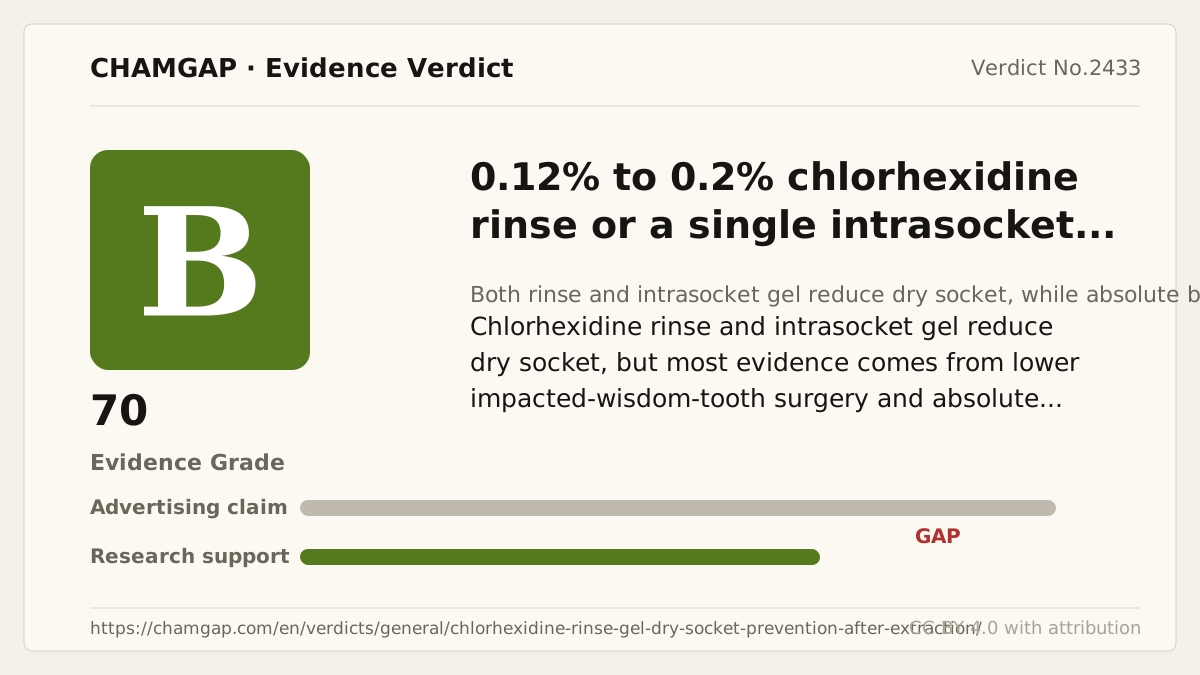
[Chamgap] 0.12% to 0.2% chlorhexidine rinse or 0.2% intrasocket gel x prevention of dry socket — Evidence Grade B·70. 2 cited sources checked. Source: https://chamgap.com/en/verdicts/general/chlorhexidine-rinse-gel-dry-socket-prevention-after-extraction/ · CC BY 4.0CC BY 4.0 — free to use with attribution; do not distort grades, numbers, or verdict meaning.
What this document does and does not do
Chamgap is an information source. It reports what research has and has not confirmed; it does not tell readers what to take or buy. That decision belongs to readers and, when needed, medical or legal professionals. This verdict reflects literature available up to the search date and may change as new research appears. Nothing here is medical advice.