
Chlorhexidine mouthwash,
does it really help with Reduced plaque accumulation and gingivitis as an adjunct to toothbrushing?
research showsChlorhexidine mouthwash is rated at the lower end of B because it substantially reduces plaque as an adjunct to mechanical oral hygiene but has only a small effect on gingivitis. An independent Cochrane review of 51 randomized trials and 5,345 participants found a large plaque reduction of SMD −1.45, while gingivitis fell by only 0.21 on a zero-to-three scale. Fifty of 51 trials had high risk of bias in at least one domain, and tooth staining and taste disturbance are common with longer use. It does not replace definitive treatment of periodontitis.
ads claimMarketing can turn bacterial reduction into claims of curing gum disease at its cause and providing indefinite protection. The established range is adjunctive plaque suppression and limited improvement in mild gingivitis indices, not definitive periodontal treatment.
Useful facts when choosing a product
- Chlorhexidine mouthwash suppresses plaque regrowth through antimicrobial action and oral-tissue substantivity; concentration and directions vary, so the product label and dental advice take priority.
- Trials evaluated it as an adjunct to brushing, interdental cleaning, or professional cleaning, so rinsing alone cannot replace mechanical plaque removal.
- Use for four weeks or longer can cause brown staining of teeth or tongue, increased calculus, temporary taste change, burning, or mucosal irritation, so purpose and duration should be defined.
- It should not be swallowed, and facial, lip, or tongue swelling, hives, or breathing difficulty requires immediate discontinuation and medical care.
Chamgap Semantic Classification Code
Candidate index · review held
UNK.chlorhexidine-mouthwash.MULTI.plaque-accumulation-and-gingivitis-as-an-adjunct-to-toothbrushing.reduce.UNKUnknown > Chlorhexidine mouthwash > Multiple: primary unresolved > plaque accumulation and gingivitis as an adjunct to toothbrushing > Reduction claim > Unknown
An automated migration candidate, not an issued permanent code; exact claim scope remains under review. This machine-generated migration candidate helps retrieval but is not a permanent assignment. The original verdict ID and URL remain authoritative.
What the research actually shows
James 2017 included 51 randomized trials and 5,345 participants using chlorhexidine for at least four weeks. Plaque reduction was large and high-certainty at four to six weeks and six months; mild-gingivitis scores also fell with high certainty, but the average effect might not be clinically important. Fifty of 51 trials had high overall risk of bias, and 19 received direct industry funding. Van Strydonck 2012 confirmed improvements in plaque, gingival, and bleeding indices together with increased staining. An allergy review found that allergy to dental chlorhexidine rinses is rare but possible; that is separate safety information.
Why this is classified as B (62)
The independent Cochrane review of 51 trials and 5,345 participants found a large plaque reduction of SMD −1.45 but only a 0.21 gingivitis reduction on a zero-to-three scale. High risk of bias in 50 of 51 trials plus staining and taste disturbance limit the verdict to lower-end B with 62 points; this is not evidence of definitive periodontitis treatment.
Counterpoint. For a short dental indication after a procedure or during gingivitis care, benefit can outweigh staining risk. Repeated long-term need calls for reassessment of plaque causes and periodontal status.
Rejudgment record. New verdict — Applied lower-end B because the independent Cochrane synthesis of 51 trials and 5,345 participants found a large plaque reduction of SMD −1.45 but only a 0.21 gingivitis reduction on a zero-to-three scale, with high risk of bias in most trials and staining and taste disturbance
Sub-claim grades by effect
This ingredient is marketed for several effects. A single overall grade blends strong and weak claims together, so each effect is graded separately here. The overall grade reflects the strongest disconfirming or core claim.
| Effect (sub-claim) | Grade | Basis |
|---|---|---|
| Reduced plaque accumulation as an adjunct to toothbrushing | B | A large and consistent reduction was found across 51 randomized trials. |
| Reduced mild gingivitis scores | C | The mean reduction was only 0.21 on a zero-to-three scale and may have limited clinical importance. |
| Safety outcome of tooth staining and taste disturbance | ? | These repeatedly observed adverse effects are separated under safety rather than efficacy grading. |
| Definitive treatment of periodontitis | F | Adjunctive rinsing cannot replace periodontal evaluation, scaling, and other definitive treatment. |
Cross-check — AI research and Codex final gate
Evidence Table
| Study | Design | Sample | Funding | Endpoint | Result | Weight |
|---|---|---|---|---|---|---|
| James P et al. Cochrane 2017 | Systematic review and meta-analysis of randomized trials | Fifty-one randomized trials and 5,345 participants | Cochrane Oral Health; 19 included trials had direct industry funding | Plaque and gingival indices and staining at four to six weeks and six months | Plaque fell substantially and mild gingivitis fell modestly, while staining increased with four weeks or longer. | Key large evidence synthesis |
| Van Strydonck DAC et al. 2012 | Systematic review and meta-analysis | Controlled clinical trials in 30 publications | Specific funding was not identified in the PubMed abstract | Plaque, gingivitis, bleeding, and staining indices | Plaque, gingivitis, and bleeding indices improved while staining increased. | Independent replication of direction |
| Solderer A and Schmidlin PR. 2022 | Umbrella review of allergy potential | Review of existing aggregated evidence | Specific funding was not identified in the PubMed abstract | Allergy associated with chlorhexidine mouthrinse | Allergy is rare but possible and requires discontinuation when symptoms occur. | Safety-only evidence |
Receipt — 3 References
All 3 cited sources were verified for existence at the original page (as of 2026-07-20).
Final verification and publication gate: Codex · Evidence date: 2026-07-20 · Corrections: none
Cite this verdict
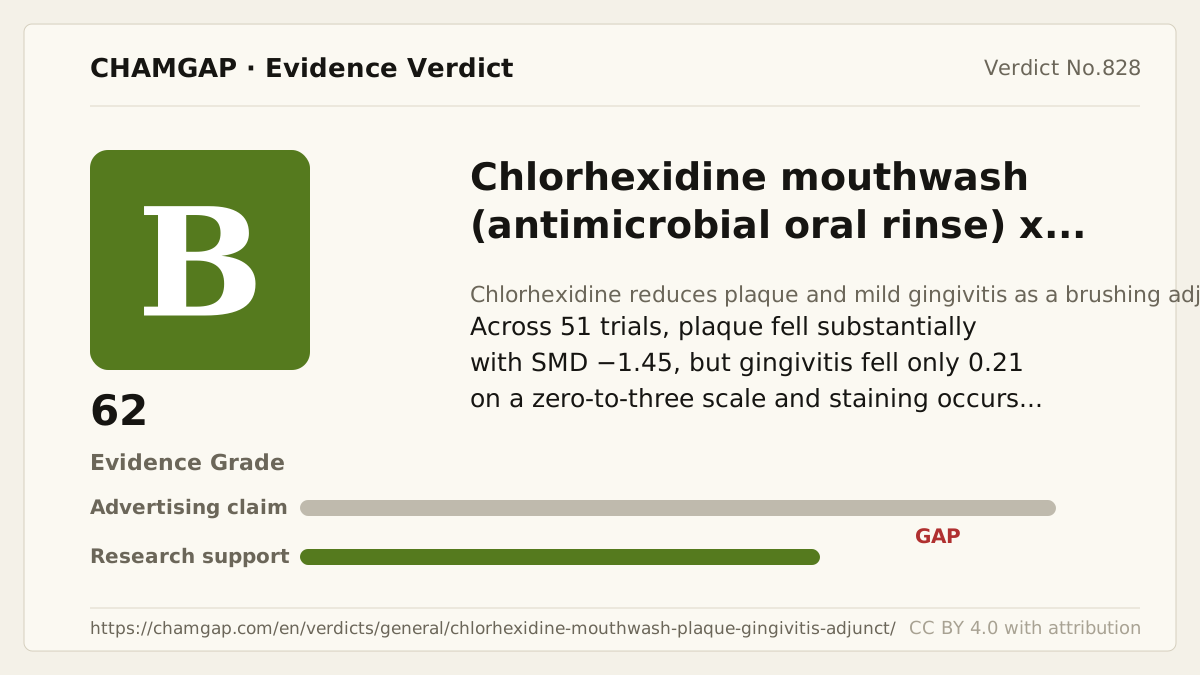
[Chamgap] Chlorhexidine mouthwash x reduced plaque accumulation and gingivitis — Evidence Grade B·62. 3 cited sources checked. Source: https://chamgap.com/en/verdicts/general/chlorhexidine-mouthwash-plaque-gingivitis-adjunct/ · CC BY 4.0CC BY 4.0 — free to use with attribution; do not distort grades, numbers, or verdict meaning.
What this document does and does not do
Chamgap is an information source. It reports what research has and has not confirmed; it does not tell readers what to take or buy. That decision belongs to readers and, when needed, medical or legal professionals. This verdict reflects literature available up to the search date and may change as new research appears. Nothing here is medical advice.