
Oral cannabidiol isolate, or CBD isolate, at 400 to 600 mg,
does it really help with Clinically meaningful relief of musculoskeletal pain, including acute low back pain and knee osteoarthritis.?
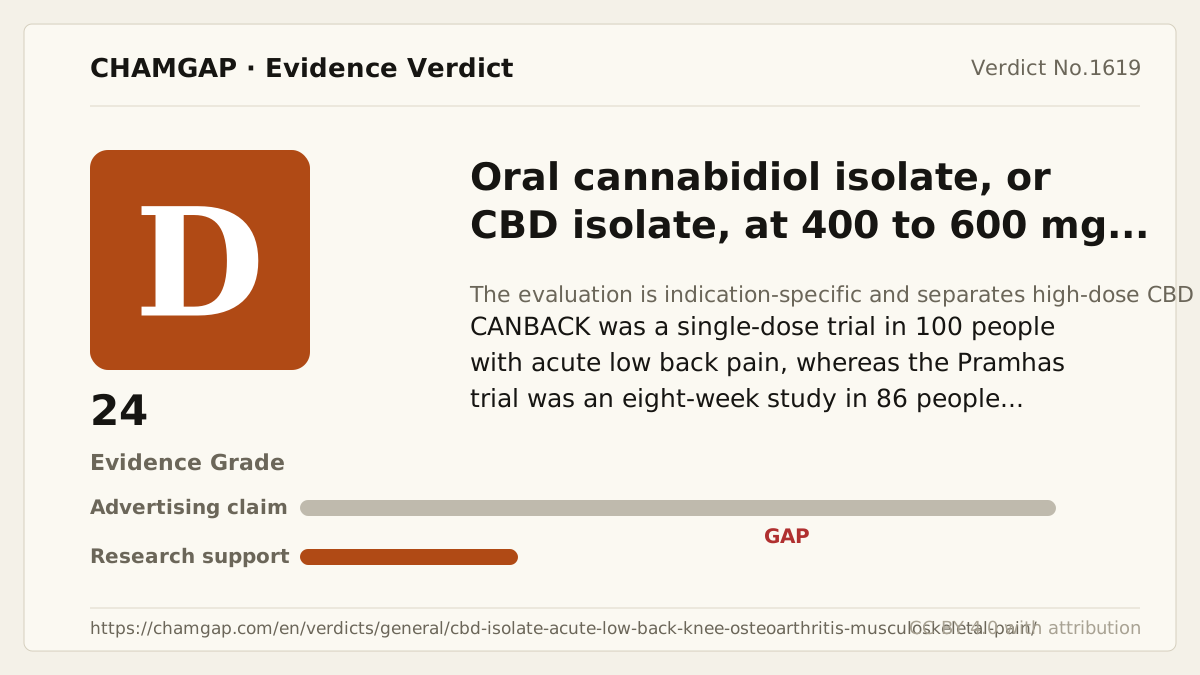
research showsCurrent direct trials do not support efficacy. In the 100-person CANBACK acute-low-back-pain trial, mean pain at two hours was 6.2 with CBD versus 5.8 with placebo, with the source-reported absolute difference of -0.3 points (95% CI -1.3 to 0.6). In an 86-person chronic knee osteoarthritis trial, WOMAC pain fell by 2.5 points with CBD and 2.4 with placebo (P=.80), while adverse events and liver-enzyme elevations were more frequent with CBD. Because these are single null trials in different indications rather than a repeated-refutation series, the verdict is D with 24 points.
ads claimOnline marketing links anti-inflammatory mechanisms and testimonials to broad musculoskeletal pain relief, but direct high-dose isolate trials were clinically null in acute low back pain and chronic knee osteoarthritis. Insomnia in verdict 1307, which is D with 30 points, differs in indication, dose, and endpoint and is not direct comparative evidence, but fairness places both verdicts in the D band.
Useful facts when choosing a product
- CBD isolate is formulated without intentional tetrahydrocannabinol and is not equivalent to full-spectrum extracts or THC-containing combinations.
- The studied doses, a single 400-mg dose and 600 mg per day, exceed the labeled dose of many consumer products.
- CBD can affect hepatic enzymes and drug transporters, creating potential interactions with other medicines.
- The content and purity of pharmaceutical-grade trial material cannot be assumed for unregulated online products.
Chamgap Semantic Classification Code
Candidate index · review held
UNK.cannabidiol-isolate.oral.musculoskeletal-pain-including-acute-low-back-pain-and-knee-osteoarthritis.relieve.MULTIUnknown > cannabidiol isolate > Oral > musculoskeletal pain, including acute low back pain and knee osteoarthritis. > Symptom-relief claim > Multiple: primary unresolved
An automated migration candidate, not an issued permanent code; exact claim scope remains under review. This machine-generated migration candidate helps retrieval but is not a permanent assignment. The original verdict ID and URL remain authoritative.
What the research actually shows
In the 100-person acute-low-back-pain CANBACK trial, adding 400 mg oral CBD to usual care produced mean two-hour pain scores of 6.2 with CBD and 5.8 with placebo, with the source-reported absolute difference of -0.3 (95% CI -1.3 to 0.6). In the 86-person chronic knee osteoarthritis trial, eight-week WOMAC pain reduction was 2.5 with 600 mg per day CBD and 2.4 with placebo (P=.80), while total adverse events and liver-enzyme elevations were more frequent with CBD. These are single null trials in different indications and were not treated as repeated refutation of one disease claim. A 201-person healthy-adult trial also found aminotransferase levels above three times the upper limit of normal within 28 days in eight CBD participants (5.6%) and no placebo participants.
Why this is classified as D (24)
The direct trials in acute low back pain and chronic knee osteoarthritis were each null, and the knee and healthy-adult high-dose trials showed liver-enzyme or adverse-event signals. Because these are single trials in different diseases rather than repeated refutations within one indication, they do not justify the repeated-refutation grade. The result is D with 24 points, in the same D band as the different CBD insomnia claim in verdict 1307, which is D with 30 points.
Counterpoint. Lower doses or other pain conditions are separate questions, but the current direct evidence refutes clinically meaningful relief from the requested 400-to-600-mg isolate regimen.
Rejudgment record. Cross-check applied — The direct trials in acute low back pain and chronic knee osteoarthritis were each null and included harm signals, but one trial in each of two different diseases does not constitute repeated refutation of the same indication, supporting grade D
Sub-claim grades by effect
This ingredient is marketed for several effects. A single overall grade blends strong and weak claims together, so each effect is graded separately here. The overall grade reflects the strongest disconfirming or core claim.
| Effect (sub-claim) | Grade | Basis |
|---|---|---|
| Relief of acute low back pain with 400 mg oral CBD | D | In CANBACK, mean pain at two hours was 6.2 versus 5.8, with a source-reported absolute difference of -0.3 points and no clinical or statistical superiority. |
| Relief of knee osteoarthritis pain with 600 mg per day oral CBD | D | Eight-week WOMAC pain was indistinguishable from placebo, with more adverse events and liver-enzyme elevations. |
| Clinically meaningful musculoskeletal pain relief with 400 to 600 mg CBD isolate | D | Direct results were null in acute low back pain and chronic knee osteoarthritis, but single trials in different diseases were not combined as repeated refutation of one efficacy claim; the repeated-dose harm signal is retained separately. |
Cross-check — AI research and Codex final gate
Evidence Table
| Study | Design | Sample | Funding | Endpoint | Result | Weight |
|---|---|---|---|---|---|---|
| Bebee B et al. 2021 | Randomized double-blind placebo-controlled emergency-department trial | 100 adults with acute nontraumatic low back pain | Funding information was not stated in the PubMed abstract | Pain on a 0-to-10 scale two hours after dosing | Mean pain at two hours was 6.2 with 400 mg CBD and 5.8 with placebo; the source-reported absolute difference was -0.3 (95% CI -1.3 to 0.6), a null result. | Direct null randomized trial in acute low back pain |
| Pramhas S et al. 2023 | Randomized double-blind placebo-controlled add-on trial | 86 adults with painful chronic knee osteoarthritis | Funded by Trigal Pharma GmbH, which supplied the study drug | Eight-week primary WOMAC pain endpoint, adverse events, and liver enzymes | WOMAC pain fell by 2.5 with 600 mg per day CBD and 2.4 with placebo (P=.80); adverse events were 135 versus 105 (P=.008), and liver-enzyme or GGT elevations occurred in 15 versus five participants (P=.02). | Direct null knee osteoarthritis trial with harm signals |
| Florian J et al. 2025 | Randomized double-blind placebo-controlled safety trial in healthy adults | 201 participants: 151 assigned to CBD and 50 to placebo | Supported and conducted as U.S. FDA research | ALT or AST elevation and drug-induced liver injury over 28 days | Aminotransferase elevation above three times the upper limit of normal occurred in eight CBD participants (5.6%) and no placebo participants; seven met criteria for potential drug-induced liver injury. | Confirmation of high-dose CBD liver risk |
Receipt — 3 References
All 3 cited sources were verified for existence at the original page (as of 2026-07-24).
Final verification and publication gate: Codex · Evidence date: 2026-07-24 · Corrections: none
Cite this verdict
[Chamgap] Does high-dose CBD isolate relieve acute low back or knee osteoarthritis pain? — Evidence Grade D·24. 3 cited sources checked. Source: https://chamgap.com/en/verdicts/general/cbd-isolate-acute-low-back-knee-osteoarthritis-musculoskeletal-pain/ · CC BY 4.0CC BY 4.0 — free to use with attribution; do not distort grades, numbers, or verdict meaning.
What this document does and does not do
Chamgap is an information source. It reports what research has and has not confirmed; it does not tell readers what to take or buy. That decision belongs to readers and, when needed, medical or legal professionals. This verdict reflects literature available up to the search date and may change as new research appears. Nothing here is medical advice.