
Oral calcium plus vitamin D,
does it really help with Prevention of symptomatic hypocalcemia after total thyroidectomy plus central neck dissection for papillary thyroid cancer?
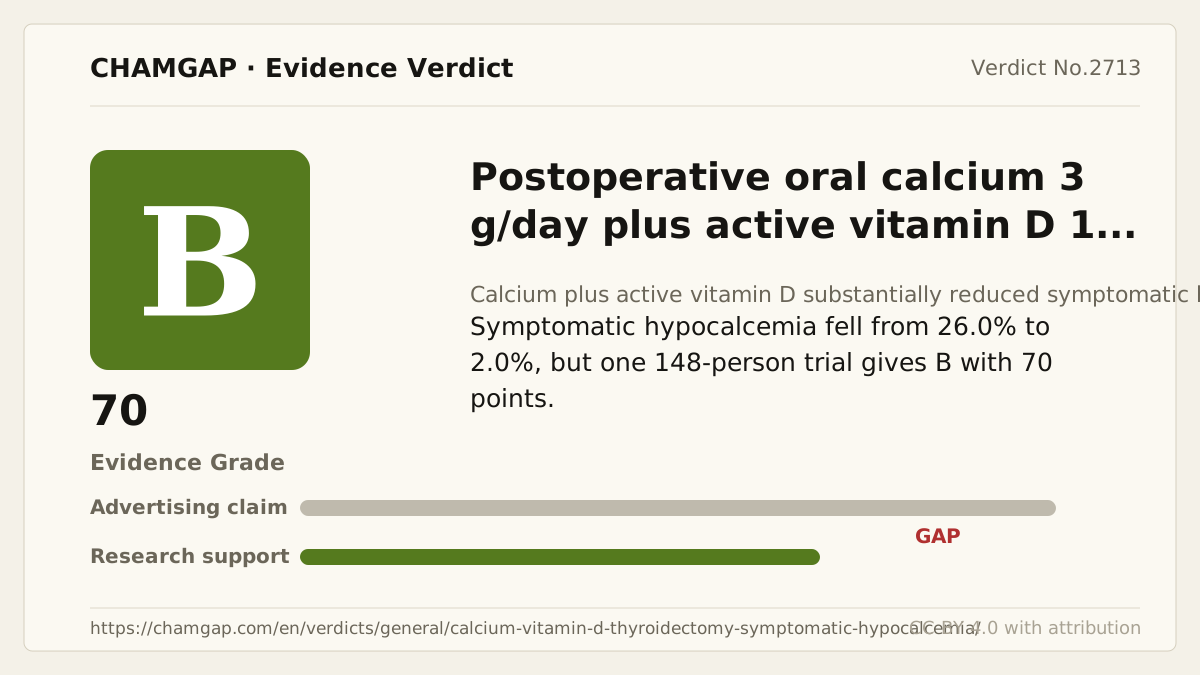
research showsThe grade is B with 70 points. In a three-arm randomized trial of 148 patients undergoing total thyroidectomy plus central neck dissection, symptomatic hypocalcemia occurred in 1/49 (2.0%) with calcium plus vitamin D, 6/49 (12.2%) with calcium alone, and 13/50 (26.0%) with no supplementation. The combination versus no-supplement difference was 24 points, an NNT of about four, but this is one trial with 148 participants.
ads claimThis does not mean every thyroid-surgery patient should automatically take this dose. Kidney function, surgical extent, postoperative PTH and calcium, and baseline vitamin D status affect dose and duration.
Useful facts when choosing a product
- The combination used oral calcium 3 g/day plus active vitamin D 1 microgram/day, with separate calcium-only and no-supplement groups.
- Laboratory hypocalcemia occurred in 8.2%, 24.5%, and 44.0%, respectively.
- The trial reported no increase in hypercalcemia or PTH suppression.
Chamgap Semantic Classification Code
Candidate index · review held
P.postoperative-oral-calcium-plus-active-vitamin-d-1-microgram-day.oral.symptomatic-hypocalcemia-after-total-thyroidectomy-plus-central-neck-dissection-for-papillary-thyroid-cancer.prevent.noneProcedures, devices and tests > Postoperative oral calcium plus active vitamin D 1 microgram/day > Oral > symptomatic hypocalcemia after total thyroidectomy plus central neck dissection for papillary thyroid cancer > Occurrence-prevention claim > No intervention
An automated migration candidate, not an issued permanent code; exact claim scope remains under review. This machine-generated migration candidate helps retrieval but is not a permanent assignment. The original verdict ID and URL remain authoritative.
What the research actually shows
Of 197 patients, 49 who underwent thyroidectomy alone formed a separate observational group. The 148 who also had central neck dissection were randomized to calcium plus vitamin D (49), calcium alone (49), or no supplements (50). The interventions and hypocalcemia-prevention endpoint in NCT00630214 match the article. Participant and assessor masking could not be confirmed in publicly accessible material, but the symptomatic endpoint required symptoms together with serum calcium and the laboratory outcome agreed. Enrollment below 200 was counted as the main limitation. The funding or acknowledgments sentence in the Wiley full text could not be accessed, so public independent funding was not assumed.
Why this is classified as B (70)
A large absolute reduction in a clinical surgical complication is persuasive, but one 148-person trial with unavailable funding text gives B with 70 points.
Counterpoint. No hypercalcemia signal in this trial does not establish that excessive supplementation is safe in every patient.
Rejudgment record. Cross-check applied — Cross-checked the abstract, Wiley article page, and NCT00630214 for randomized denominators, symptomatic and laboratory outcomes, and registered endpoints; funding was treated as unavailable because the full statement could not be accessed
| Endpoint | H | Hard endpoint - actual events such as death |
| Replication | R1 | Single confirmatory trial |
| Independence | I1 | Mixed funding sources |
| Effect size | E+ | Meets the clinically important threshold |
Stored derived and displayed grades match; this is not a current recalculation or validity check (B).
Sub-claim grades by effect
This ingredient is marketed for several effects. A single overall grade blends strong and weak claims together, so each effect is graded separately here. The overall grade reflects the strongest disconfirming or core claim.
| Effect (sub-claim) | Grade | Basis |
|---|---|---|
| Prevention of symptomatic hypocalcemia | B | Rates were 2.0% with combination therapy versus 26.0% without supplements. |
| Prevention of laboratory hypocalcemia | C | Rates were 8.2% versus 44.0%, but this is a laboratory surrogate. |
Cross-check — AI research and Codex final gate
Evidence Table
| Study | Design | Sample | Funding | Endpoint | Result | Weight |
|---|---|---|---|---|---|---|
| Roh JL et al. 2009 | Three-arm randomized trial after total thyroidectomy plus central neck dissection for papillary thyroid cancer | 148 randomized: 49/49/50 | Original funding and acknowledgments statement unavailable because full-text access failed | Symptomatic and laboratory postoperative hypocalcemia | Symptomatic 2.0%/12.2%/26.0%; laboratory 8.2%/24.5%/44.0% | Single small trial with a large reduction in clinical events |
Receipt — 2 References
All 2 cited sources were verified for existence at the original page (as of 2026-08-18).
Final verification and publication gate: Codex · Evidence date: 2026-08-18 · Corrections: none
Cite this verdict
[Chamgap] Oral calcium plus vitamin D x symptomatic hypocalcemia after thyroidectomy — Evidence Grade B·70. 2 cited sources checked. Source: https://chamgap.com/en/verdicts/general/calcium-vitamin-d-thyroidectomy-symptomatic-hypocalcemia/ · CC BY 4.0CC BY 4.0 — free to use with attribution; do not distort grades, numbers, or verdict meaning.
What this document does and does not do
Chamgap is an information source. It reports what research has and has not confirmed; it does not tell readers what to take or buy. That decision belongs to readers and, when needed, medical or legal professionals. This verdict reflects literature available up to the search date and may change as new research appears. Nothing here is medical advice.