
Acupuncture or auricular acupuncture,
does it really help with Suppression of nicotine craving and smoking abstinence lasting at least six months?
research showsAcupuncture and auricular acupuncture are rated D because long-term smoking cessation has been studied but not confirmed. Waite 1998 analyzed 78 smokers by intention to treat and found six-month abstinence of 12.5% versus 0%; P=.055 failed to confirm efficacy, but the direction favored acupuncture. The article described this only as a major outcome measure, with no evidence that it was a preregistered primary endpoint. The White 2014 Cochrane long-term sham comparison included 9 studies providing 11 comparisons and 1,892 participants; RR 1.10 (95% CI 0.86 to 1.40) was null, but the confidence interval did not exclude meaningful benefit. This is unconfirmed efficacy rather than refutation, yielding D with 28 points.
ads claimShort-term craving relief or immediate post-treatment quit rates are expanded into abstinence lasting six months or more. The pooled long-term sham-controlled estimate was not significant.
Useful facts when choosing a product
- The pivotal trial used one electroacupuncture session plus self-retained ear seeds for two weeks.
- Evidence-based cessation support can include behavioral counseling, nicotine replacement, varenicline, or bupropion.
- Medication choice should account for pregnancy, seizure risk, mental health, and interacting medicines with a clinician.
Chamgap Semantic Classification Code
Candidate index · review held
K.acupuncture-or-auricular-acupuncture.UNK.suppression-of-nicotine-craving-and-smoking-abstinence-lasting-at-least.assess.MULTIFolk and alternative interventions > Acupuncture or auricular acupuncture > Unknown > Suppression of nicotine craving and smoking abstinence lasting at least > Association or change assessment > Multiple: primary unresolved
An automated migration candidate, not an issued permanent code; exact claim scope remains under review. This machine-generated migration candidate helps retrieval but is not a permanent assignment. The original verdict ID and URL remain authoritative.
What the research actually shows
The single-blind placebo-controlled trial by Waite and Clough randomized 78 current smokers to electroacupuncture at active or placebo sites plus two weeks of self-retained ear seeds. Biochemically validated complete abstinence at six months was 12.5% versus 0% with P=.055 in the intention-to-treat analysis: statistically unconfirmed but directionally positive. The article described it as a major outcome measure, with no evidence that it was a preregistered primary endpoint. The Cochrane review by White and colleagues included 9 studies providing 11 acupuncture-versus-sham comparisons with 1,892 participants at six months or longer; RR 1.10 (95% CI 0.86 to 1.40) was null but did not exclude meaningful benefit.
Why this is classified as D (28)
Waite 1998 found directionally positive six-month abstinence of 12.5% versus 0% in 78 intention-to-treat participants but did not confirm efficacy at P=.055. White 2014 included 9 studies providing 11 comparisons and 1,892 participants; RR 1.10 (95% CI 0.86 to 1.40) did not exclude meaningful benefit. This is unconfirmed rather than repeatedly refuted, yielding D with 28 points.
Counterpoint. If acupuncture is desired, it should be treated only as an adjunctive preference and must not replace proven counseling or medication.
Rejudgment record. Cross-check applied — Reserved F for repeated refutation in the same indication; treated Waite 1998 as a directionally positive but unconfirmed major outcome measure in 78 intention-to-treat participants, with no evidence of a preregistered primary endpoint, and interpreted White 2014's 9 studies providing 11 comparisons and 1,892 participants at RR 1.10 (95% CI 0.86 to 1.40) as null but unable to exclude meaningful benefit, supporting D for studied but unconfirmed efficacy
Sub-claim grades by effect
This ingredient is marketed for several effects. A single overall grade blends strong and weak claims together, so each effect is graded separately here. The overall grade reflects the strongest disconfirming or core claim.
| Effect (sub-claim) | Grade | Basis |
|---|---|---|
| Biochemically validated complete abstinence at six months | D | The major outcome measure in 78 intention-to-treat participants was 12.5% versus 0%, P=.055: unconfirmed but directionally positive. |
| Smoking abstinence lasting six months or longer | D | Nine studies providing 11 sham comparisons and 1,892 participants yielded RR 1.10 (95% CI 0.86 to 1.40), which did not exclude meaningful benefit. |
| Short-term relief of nicotine craving | C | Some short-term signals exist, but they are conflicting and did not translate into durable abstinence. |
Cross-check — AI research and Codex final gate
Evidence Table
| Study | Design | Sample | Funding | Endpoint | Result | Weight |
|---|---|---|---|---|---|---|
| Waite NR and Clough JB. 1998 | Randomized single-blind placebo-site-controlled trial | 78 randomized; all 78 in the actual intention-to-treat analysis counting dropouts as smokers | Primary-care academic research | Major outcome measure: biochemically validated complete abstinence at six months, with no evidence of a preregistered primary endpoint | 12.5% versus 0%, 95% CI -3.3 to 32.3 percentage points, P=.055; unconfirmed but directionally positive. | Direct original long-term cessation trial |
| White AR et al. 2014 | Cochrane systematic review and meta-analysis | Nine studies providing 11 acupuncture-versus-sham comparisons with 1,892 participants at six months or longer | Academic review by the Cochrane Tobacco Addiction Group | Smoking abstinence at six months or longer | RR 1.10 (95% CI 0.86 to 1.40) was null but did not exclude meaningful benefit. | Unconfirmed long-term efficacy |
Receipt — 2 References
All 2 cited sources were verified for existence at the original page (as of 2026-07-24).
Final verification and publication gate: Codex · Evidence date: 2026-07-24 · Corrections: none
Cite this verdict
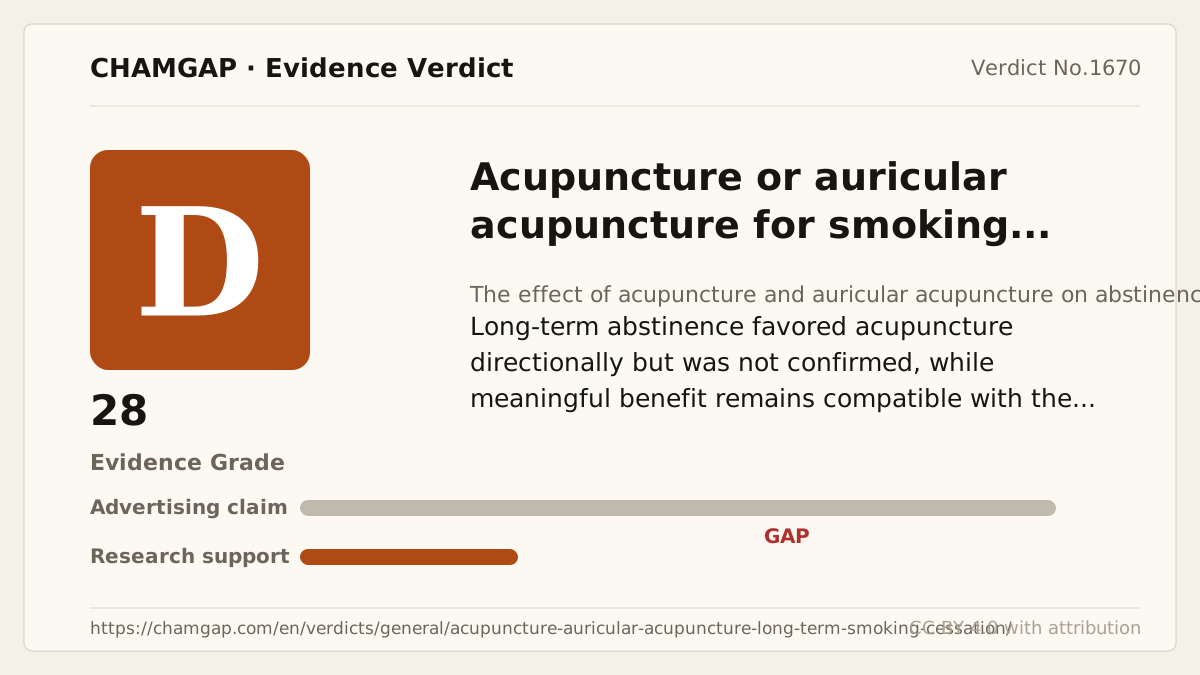
[Chamgap] Acupuncture or auricular acupuncture x smoking abstinence lasting at least six months — Evidence Grade D·28. 2 cited sources checked. Source: https://chamgap.com/en/verdicts/general/acupuncture-auricular-acupuncture-long-term-smoking-cessation/ · CC BY 4.0CC BY 4.0 — free to use with attribution; do not distort grades, numbers, or verdict meaning.
What this document does and does not do
Chamgap is an information source. It reports what research has and has not confirmed; it does not tell readers what to take or buy. That decision belongs to readers and, when needed, medical or legal professionals. This verdict reflects literature available up to the search date and may change as new research appears. Nothing here is medical advice.