
Whole bell peppers,
does it really help with Improved eye fatigue and visual function?
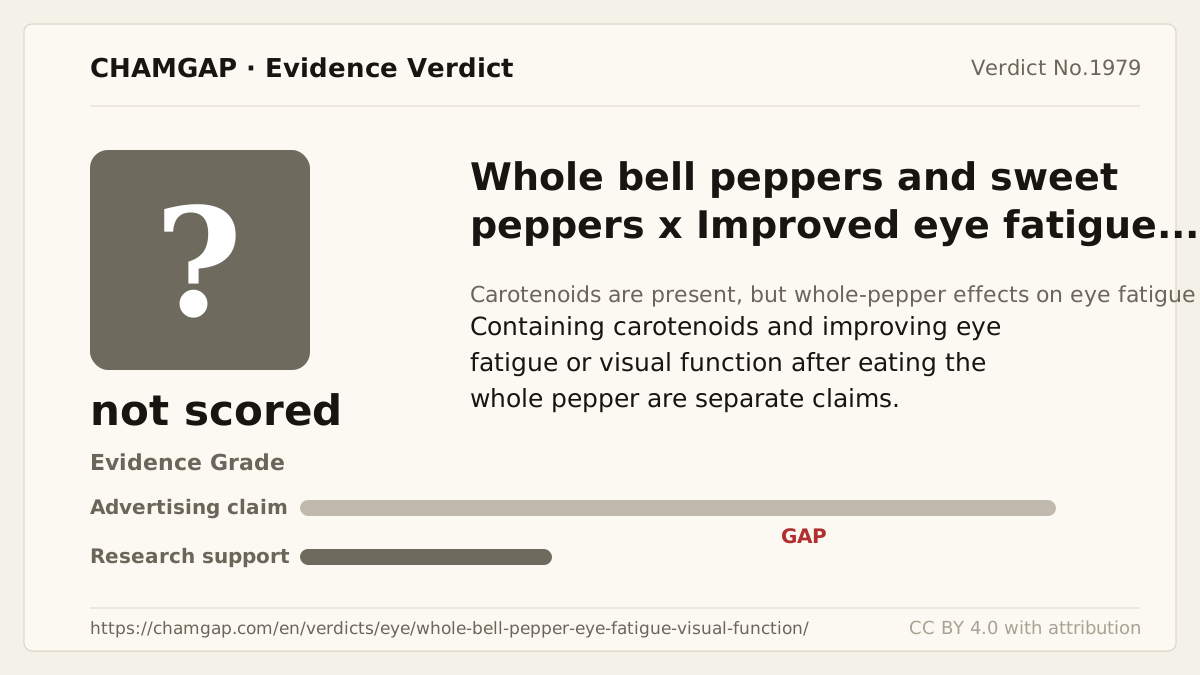
research showsThe grade is ?. Composition analysis confirms that red bell pepper contains carotenoids such as beta-carotene. No human study was found, however, that fed whole bell peppers and measured visual acuity, eye fatigue, or macular function, so there is no score.
ads claimRetail food and juicer materials do connect pepper carotenoids with eye-health language. Moving from ingredient content to improved eye fatigue or visual function requires a human trial of the whole food itself.
Useful facts when choosing a product
- USDA FoodData Central reports 1,620 micrograms of beta-carotene per 100 g of raw red sweet pepper. Red bell pepper containing carotenoids is a true composition statement.
- Bell peppers and sweet peppers are cultivated forms of Capsicum annuum, native to the Americas.
- Trials of isolated lutein and zeaxanthin supplements for visual fatigue or performance exist, but a purified carotenoid capsule is not the same intervention as whole bell pepper.
- Verdict 1962 is ungraded with no score for whole carrots and improved normal vision. Both verdicts separate nutrient content from enhancement in nondeficient people; deficiency correction is a different question.
- The PubMed concepts searched on 2026-08-02 combined bell pepper, sweet pepper, or Capsicum annuum with visual fatigue, eyestrain, visual acuity, or macular function and humans. Eligible whole-pepper studies numbered zero across multilingual literature and registry searches after excluding isolated carotenoid capsules and other foods.
Chamgap Semantic Classification Code
Candidate index · review held
F.whole-bell-peppers-and-sweet-peppers.food.eye-fatigue-and-visual-function.improve.UNKFoods and beverages > Whole bell peppers and sweet peppers > Food consumption > eye fatigue and visual function > Improvement claim > Unknown
An automated migration candidate, not an issued permanent code; exact claim scope remains under review. This machine-generated migration candidate helps retrieval but is not a permanent assignment. The original verdict ID and URL remain authoritative.
What the research actually shows
On 2026-08-02, PubMed, the Cochrane Library, ClinicalTrials.gov, WHO ICTRP, and Korean and Japanese databases were searched by combining bell pepper, sweet pepper, paprika, Capsicum annuum, visual fatigue, eyestrain, visual acuity, and macular-function concepts. Zero eligible human studies fed whole bell pepper and measured these outcomes. Isolated lutein, zeaxanthin, astaxanthin, or anthocyanin capsules, other foods, animals, and composition studies were excluded. No eligible registered trial was identified.
Why this is classified as ?
No human study directly measured eye fatigue, acuity, or macular function after whole bell pepper, and the repeated search yielded zero eligible studies. The grade is ? with no score.
Counterpoint. Carotenoid content is established, but whole-food ocular efficacy has not been measured.
Rejudgment record. Cross-check applied — Multilingual literature and trial-registry searches found no eligible human study feeding whole bell pepper and measuring eye fatigue, acuity, or macular function
Sub-claim grades by effect
This ingredient is marketed for several effects. A single overall grade blends strong and weak claims together, so each effect is graded separately here. The overall grade reflects the strongest disconfirming or core claim.
| Effect (sub-claim) | Grade | Basis |
|---|---|---|
| Red bell pepper contains beta-carotene | ? | This is a measured composition fact, not a graded clinical endpoint. |
| Whole bell peppers improve eye fatigue or visual function | ? | No direct human trial exists. |
Cross-check — AI research and Codex final gate
Evidence Table
| Study | Design | Sample | Funding | Endpoint | Result | Weight |
|---|---|---|---|---|---|---|
| Multilingual literature and trial-registry search on 2026-08-02 | Screening for eye-fatigue and visual-function outcomes after whole bell pepper | 0 eligible human studies | Not applicable | Eye fatigue, visual acuity, and macular function | No eligible whole-pepper study; isolated carotenoid supplements excluded | Search record documenting absence of direct human evidence |
Receipt — 2 References
All 2 cited sources were verified for existence at the original page (as of 2026-08-02).
Final verification and publication gate: Codex · Evidence date: 2026-08-02 · Corrections: none
Cite this verdict
[Chamgap] Whole bell peppers x eye fatigue and visual function — Evidence Grade ?. 2 cited sources checked. Source: https://chamgap.com/en/verdicts/eye/whole-bell-pepper-eye-fatigue-visual-function/ · CC BY 4.0CC BY 4.0 — free to use with attribution; do not distort grades, numbers, or verdict meaning.
What this document does and does not do
Chamgap is an information source. It reports what research has and has not confirmed; it does not tell readers what to take or buy. That decision belongs to readers and, when needed, medical or legal professionals. This verdict reflects literature available up to the search date and may change as new research appears. Nothing here is medical advice.