
Vitamin D3,
does it really help with Improvement in OSDI, tear-film stability, and tear secretion in patients with dry eye and vitamin D deficiency?
research showsOral vitamin D3 supplementation is graded C for dry eye accompanied by vitamin D deficiency. In a randomized controlled trial of 100 patients, adding 50,000 IU once weekly for eight weeks to artificial tears improved tear breakup time, Schirmer testing, and tear osmolarity compared with artificial tears alone. A 2024 meta-analysis of eight studies and 439 participants also reported positive signals for tear secretion, tear-film stability, and OSDI. The pivotal 100-person trial, however, used no placebo and did not measure OSDI, while the meta-analysis mixed oral, injected, and topical administration and variable doses. A 2026 systematic review found no included study of high quality and identified short follow-up, variable dosing, and inconsistent results. The positive meta-analysis keeps the verdict above D, but it cannot establish a general dry-eye treatment or definitive clinical benefit, giving C with 50 points.
ads claimMarketing may turn a limited adjunctive effect in deficient patients into claims such as a tear-producing vitamin, a root-cause cure for dry eye, or recovery without artificial tears. The studies examined documented deficiency and specific high-dose regimens; general supplement labeling does not establish dry-eye efficacy.
Useful facts when choosing a product
- This verdict is limited to patients with dry eye and documented low serum 25-hydroxyvitamin D. It does not show the same benefit in vitamin D-replete people.
- The pivotal trial used oral vitamin D at 50,000 IU once weekly for eight weeks together with artificial tears. This high-dose research regimen is not a self-treatment instruction.
- Vitamin D3 supplements vary in dose, formulation, and quality. Deficiency and replacement dosing should account for blood testing, diet, sun exposure, kidney disease, and concomitant medicines.
- Vitamin D3 is generally tolerated within recommended ranges, but chronic excess can cause hypercalcemia, nausea, thirst, polyuria, kidney stones, or kidney injury. High-dose use requires medical monitoring.
Chamgap Semantic Classification Code
Candidate index · review held
S.vitamin-d3.UNK.osdi-tear-film-stability-and-tear-secretion-with-dry-eye-and-vitamin-d-deficiency.improve.placeboSupplements and nutraceuticals > Vitamin D3 (cholecalciferol) > Unknown > OSDI, tear-film stability, and tear secretion with dry eye and vitamin D deficiency > Improvement claim > Placebo
An automated migration candidate, not an issued permanent code; exact claim scope remains under review. This machine-generated migration candidate helps retrieval but is not a permanent assignment. The original verdict ID and URL remain authoritative.
What the research actually shows
Najjaran and colleagues randomized 100 dry-eye patients with serum 25-hydroxyvitamin D below 20 ng/mL to artificial tears alone or artificial tears plus oral vitamin D at 50,000 IU weekly. At eight weeks, changes favored the combination for tear breakup time, 3.95 versus 0.92 seconds; Schirmer testing, 2.38 versus 0.70 mm; and osmolarity, -16.90 versus -3.34 mOsm/L. There was no placebo and OSDI was not measured. Chen and colleagues in 2024 pooled eight studies and 439 participants and found improvement in tear secretion, tear breakup time, and OSDI, but routes and designs were mixed. Heidari and colleagues in 2026 reviewed 13 oral-vitamin studies and found generally positive OSDI signals for vitamin D, inconsistent tear breakup and Schirmer findings, and no study of high quality. A deficiency-specific adjunct may help, but a standardized dose and durable clinical effect remain unestablished.
Why this is classified as C (50)
A positive human randomized trial and meta-analysis keep this verdict above D at C. The pivotal trial was an unblinded-to-patient adjunctive comparison without placebo and did not measure OSDI, while the synthesis mixed routes, doses, populations, and inconsistent findings. The 2026 review found no high-quality study and short follow-up, so the limited-clinical-endpoint ceiling gives C with 50 points. High-dose toxicity and product variability remain separate safety issues.
Counterpoint. Persistent dry eye warrants evaluation for blepharitis, meibomian gland dysfunction, medicines, autoimmune disease, contact lenses, and environmental triggers. Correcting deficiency may be appropriate but does not replace artificial tears, eyelid care, or treatment of the cause.
Rejudgment record. Cross-validation incorporated — Applied C rather than D because positive randomized human evidence and meta-analysis exist in deficiency-associated dry eye, while imposing the limited-clinical-endpoint ceiling for a no-placebo adjunctive pivotal trial, no OSDI measurement in that trial, mixed administration routes, short follow-up, and no high-quality study in the 2026 review
Sub-claim grades by effect
This ingredient is marketed for several effects. A single overall grade blends strong and weak claims together, so each effect is graded separately here. The overall grade reflects the strongest disconfirming or core claim.
| Effect (sub-claim) | Grade | Basis |
|---|---|---|
| Improvement in OSDI in vitamin D-deficient patients with dry eye | C | Small studies and synthesis provide a positive signal, but the pivotal 100-person trial did not measure OSDI and study quality is low. |
| Improvement in tear-film stability in vitamin D-deficient patients with dry eye | C | The 100-person trial and meta-analysis found improved tear breakup time, but another oral study was negative and routes and doses were heterogeneous. |
| Improvement in tear secretion in vitamin D-deficient patients with dry eye | C | A positive Schirmer signal exists, but the no-placebo adjunctive design and short follow-up leave durable treatment benefit uncertain. |
Cross-check — AI research and Codex final gate
Evidence Table
| Study | Design | Sample | Funding | Endpoint | Result | Weight |
|---|---|---|---|---|---|---|
| Najjaran M et al. 2023 | Randomized assessor-masked controlled parallel trial without placebo | 100 patients with dry eye and vitamin D deficiency | Mashhad University of Medical Sciences grant 950617; no commercial conflict reported | Tear breakup time, Schirmer testing, and tear osmolarity at eight weeks | Artificial tears plus oral vitamin D at 50,000 IU weekly improved all three objective measures over artificial tears alone, but OSDI was not measured. | Key positive human trial limited by no placebo and adjunctive treatment |
| Chen Z et al. 2024 | Systematic review and meta-analysis | Eight studies and 439 participants | Commercial sponsorship details were not clearly established from the public article record | Schirmer testing, tear breakup time, OSDI, corneal staining, hyperemia, and pain | Results were positive for tear secretion, SMD 1.43; tear breakup time, SMD 1.19; and OSDI, SMD -1.10, but routes, doses, and designs were heterogeneous. | Positive synthesis limited by indirectness and heterogeneity |
| Heidari H et al. 2026 | Systematic review of oral vitamin supplementation | Thirteen eligible studies; eight vitamin D studies with 304 participants in total | UNSW Sydney University International Postgraduate Award; funder reported to have no analytic role | OSDI, tear breakup time, Schirmer testing, corneal staining, hyperemia, and pain | OSDI signals for vitamin D were generally positive, objective measures were inconsistent, and no included study was judged high quality. | Latest quality assessment and certainty limitation |
Receipt — 4 References
All 4 cited sources were verified for existence at the original page (as of 2026-07-21).
Final verification and publication gate: Codex · Evidence date: 2026-07-21 · Corrections: none
Cite this verdict
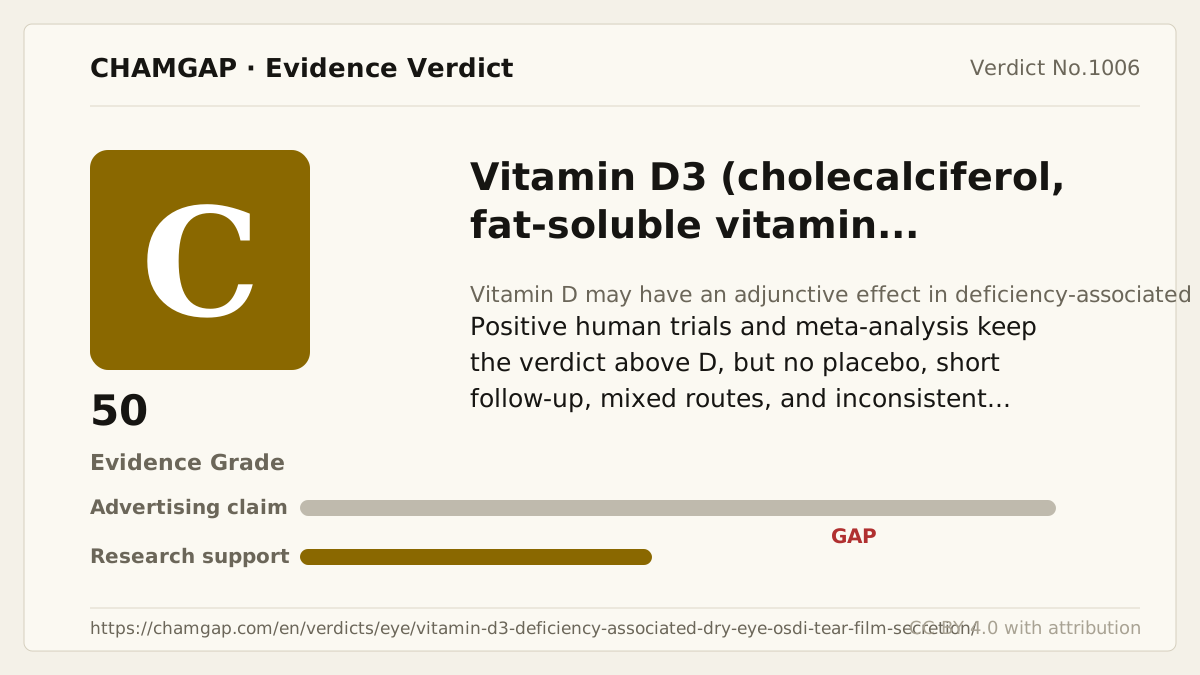
[Chamgap] Vitamin D3 x improved OSDI, tear-film stability, and tear secretion in deficiency-associated dry eye — Evidence Grade C·50. 4 cited sources checked. Source: https://chamgap.com/en/verdicts/eye/vitamin-d3-deficiency-associated-dry-eye-osdi-tear-film-secretion/ · CC BY 4.0CC BY 4.0 — free to use with attribution; do not distort grades, numbers, or verdict meaning.
What this document does and does not do
Chamgap is an information source. It reports what research has and has not confirmed; it does not tell readers what to take or buy. That decision belongs to readers and, when needed, medical or legal professionals. This verdict reflects literature available up to the search date and may change as new research appears. Nothing here is medical advice.