
Verteporfin,
does it really help with Prevention of moderate or severe vision loss in wet age-related macular degeneration with classic choroidal neovascularization?
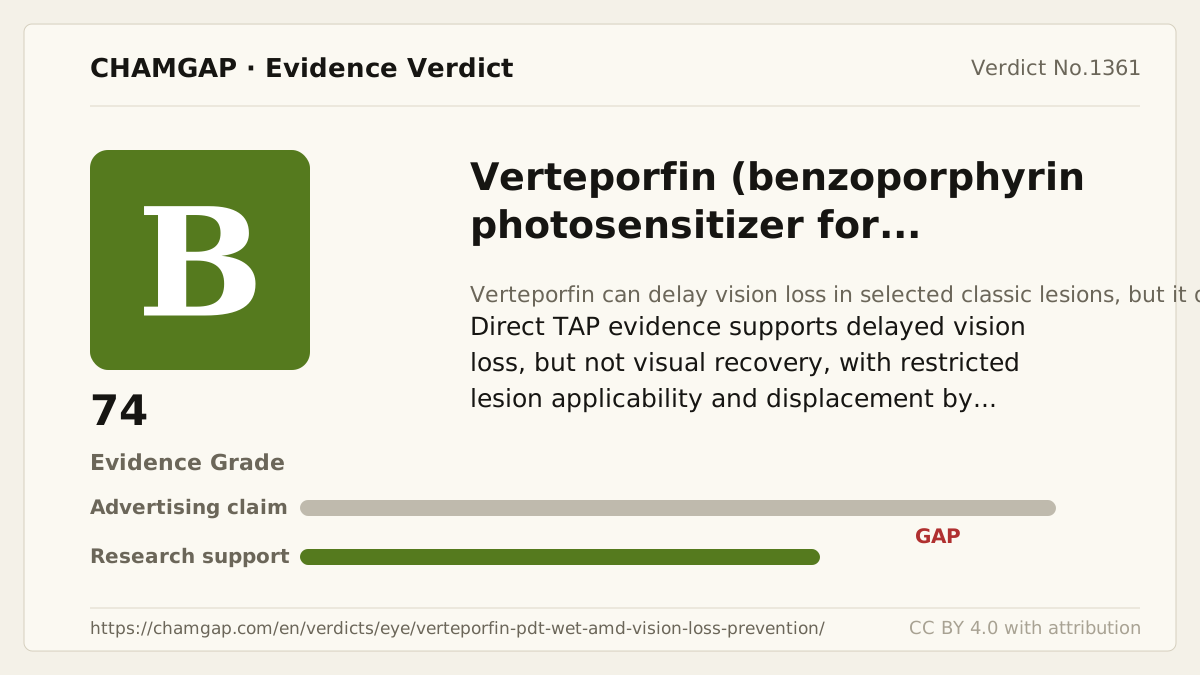
research showsVerteporfin photodynamic therapy is rated B because randomized placebo-controlled trials showed delayed vision loss in wet age-related macular degeneration with classic choroidal neovascularization. In the two TAP trials, 53% versus 38% lost fewer than 15 letters at 24 months, with the clearest benefit in predominantly classic lesions. This is prevention of further loss rather than restoration of vision, and it is a different modality from intravitreal anti-VEGF therapy, which is now first line.
ads claimClaims that photodynamic therapy regenerates the retina or restores lost vision overstate the evidence. The supported outcome is a lower risk of additional vision loss in selected lesions.
Useful facts when choosing a product
- Verteporfin is infused intravenously and then activated at the lesion with a 689-nm nonthermal laser, so the infusion alone is not the treatment.
- The TAP protocol reassessed retreatment every three months when angiographic leakage persisted, while anti-VEGF injections are now generally first-line therapy for wet age-related macular degeneration.
- Photosensitivity, infusion-site reactions, transient visual disturbance or vision reduction, and infusion-related back pain can occur, and strong light exposure must be avoided for the specified period.
Chamgap Semantic Classification Code
Candidate index · review held
P.verteporfin.procedural.moderate-or-severe-vision-loss-in-wet-age-related-macular-degeneration-with-classic-choroidal-neovascularization.prevent.placeboProcedures, devices and tests > Verteporfin > Procedural > moderate or severe vision loss in wet age-related macular degeneration with classic choroidal neovascularization > Occurrence-prevention claim > Placebo
An automated migration candidate, not an issued permanent code; exact claim scope remains under review. This machine-generated migration candidate helps retrieval but is not a permanent assignment. The original verdict ID and URL remain authoritative.
What the research actually shows
The TAP Study Group randomized 609 patients with classic choroidal neovascularization from age-related macular degeneration 2:1 to verteporfin or placebo photodynamic therapy. Fewer than 15 letters were lost by 61% versus 46% at 12 months and 53% versus 38% at 24 months. The 24-month figures in predominantly classic lesions were 59% versus 31%, whereas minimally classic lesions showed no significant difference.
Why this is classified as B (74)
Two placebo-controlled trials provide direct two-year functional benefit, but lesion selection, prevention rather than improvement, and displacement by anti-VEGF therapy yield B with 74 points.
Counterpoint. Photodynamic therapy may still be considered for inadequate anti-VEGF response or selected lesion patterns after retinal imaging and specialist review.
Rejudgment record. New verdict — Accepted the procedure-specific placebo-controlled two-year visual endpoint from TAP while accounting for delayed loss rather than improvement, lesion-subgroup dependence, and displacement by first-line anti-VEGF therapy
Sub-claim grades by effect
This ingredient is marketed for several effects. A single overall grade blends strong and weak claims together, so each effect is graded separately here. The overall grade reflects the strongest disconfirming or core claim.
| Effect (sub-claim) | Grade | Basis |
|---|---|---|
| Prevention of moderate vision loss | B | TAP showed a lower two-year risk of losing at least 15 letters. |
| Prevention of vision loss in predominantly classic choroidal neovascularization | B | At 24 months, 59% versus 31% lost fewer than 15 letters. |
| Improvement of vision | C | The established effect is delayed loss rather than recovery, and improvement is limited. |
Cross-check — AI research and Codex final gate
Evidence Table
| Study | Design | Sample | Funding | Endpoint | Result | Weight |
|---|---|---|---|---|---|---|
| TAP Study Group. 1999 | One-year report of two multicenter double-masked placebo-controlled randomized trials | 609 patients | Sponsored by CIBA Vision | Loss of fewer than 15 letters at 12 months | 61% versus 46%; 67% versus 39% in predominantly classic lesions. | Key direct randomized evidence |
| Bressler NM and the TAP Study Group. 2001 | Twenty-four-month follow-up of the same two randomized trials | 609 patients | Sponsored by CIBA Vision | Loss of fewer than 15 letters at 24 months | 53% versus 38%; 59% versus 31% in predominantly classic lesions. | Confirmation of sustained benefit |
Receipt — 2 References
All 2 cited sources were verified for existence at the original page (as of 2026-07-23).
Final verification and publication gate: Codex · Evidence date: 2026-07-23 · Corrections: none
Cite this verdict
[Chamgap] Verteporfin x prevention of moderate or severe vision loss in wet age-related macular degeneration with classic choroidal neovascularization — Evidence Grade B·74. 2 cited sources checked. Source: https://chamgap.com/en/verdicts/eye/verteporfin-pdt-wet-amd-vision-loss-prevention/ · CC BY 4.0CC BY 4.0 — free to use with attribution; do not distort grades, numbers, or verdict meaning.
What this document does and does not do
Chamgap is an information source. It reports what research has and has not confirmed; it does not tell readers what to take or buy. That decision belongs to readers and, when needed, medical or legal professionals. This verdict reflects literature available up to the search date and may change as new research appears. Nothing here is medical advice.