
Travoprost 0.004%,
does it really help with Reduction of intraocular pressure in open-angle glaucoma and ocular hypertension?
research showsTravoprost 0.004% is rated B because it lowers intraocular pressure in open-angle glaucoma and ocular hypertension. In a 12-month randomized trial of 801 participants, mean intraocular pressure with once-daily travoprost ranged from 17.7 to 19.1 mm Hg across visits and time points and was equal or superior to latanoprost and superior to timolol. A meta-analysis of 17 randomized trials involving 1,491 participants likewise found overall pressure lowering similar to latanoprost. The direct endpoint, however, is intraocular pressure, and no dedicated trial establishes that travoprost itself preserves visual fields or prevents blindness over the long term. In alignment with other pressure-lowering eye drops in the corpus, the score is B with 65 points. Conjunctival hyperemia, iris and eyelid pigmentation, eyelash changes, and orbital fat atrophy are recorded separately under safety.
ads claimMarketing can turn once-daily pressure lowering into a promise to stop glaucoma or preserve vision. The demonstrated effect is lower pressure with regular use; reduced blindness risk cannot be assumed without adherence and ongoing visual-field and optic-nerve monitoring.
Useful facts when choosing a product
- Travoprost 0.004% is generally instilled as one drop in the conjunctival sac once daily in the evening, and more frequent administration can reduce its pressure-lowering effect.
- When other eye drops are used, they are generally separated by at least five minutes to avoid washout, and product-specific contact-lens instructions should be followed.
- Conjunctival hyperemia, irritation, increased pigmentation of the iris and eyelid skin, and changes in eyelash length and thickness can occur, and iris color change may be permanent.
- Long-term prostaglandin eye-drop use can cause periorbital changes including deepening of the upper eyelid sulcus and orbital fat atrophy, so cosmetic changes also merit clinical review.
Chamgap Semantic Classification Code
Candidate index · review held
M.travoprost-0-004-percent.ophthalmic.intraocular-pressure-in-open-angle-glaucoma-and-ocular-hypertension.reduce.activeMedicinal interventions > Travoprost 0.004% > Ophthalmic > intraocular pressure in open-angle glaucoma and ocular hypertension > Reduction claim > Active comparator
An automated migration candidate, not an issued permanent code; exact claim scope remains under review. This machine-generated migration candidate helps retrieval but is not a permanent assignment. The original verdict ID and URL remain authoritative.
What the research actually shows
Netland and colleagues randomized 801 patients with open-angle glaucoma or ocular hypertension to travoprost 0.0015%, travoprost 0.004%, latanoprost 0.005%, or timolol 0.5% for 12 months. Mean pressure with travoprost 0.004% ranged from 17.7 to 19.1 mm Hg, was lower than with timolol, and was similar to or lower than with latanoprost at selected times. Cheng and colleagues synthesized 17 randomized trials with 1,491 participants and concluded that longer-term pressure lowering was generally similar between travoprost and latanoprost; conjunctival hyperemia was more frequent with travoprost. These studies establish pressure lowering but do not directly test travoprost-specific long-term preservation of the visual field.
Why this is classified as B (65)
A large 12-month randomized trial and a 17-trial meta-analysis repeatedly establish pressure lowering. Intraocular pressure is a validated treatment target but remains a surrogate for visual-field preservation and blindness prevention, and travoprost-specific long-term visual outcomes are absent. Alignment with the pressure-lowering eye-drop corpus therefore gives B with 65 points. Local pigmentation, hyperemia, eyelash, and periorbital changes are separate safety issues.
Counterpoint. Lowering intraocular pressure is central to glaucoma management, so a B grade does not imply a small effect. Drug choice and changes should integrate target pressure, visual-field progression, corneal thickness, adherence, and adverse effects.
Rejudgment record. New verdict — Accepted consistent pressure lowering in an 801-participant 12-month randomized trial and a 17-trial meta-analysis, but applied B in alignment with the pressure-lowering eye-drop corpus because the direct endpoint is intraocular pressure and no travoprost-specific long-term visual-field trial exists
Sub-claim grades by effect
This ingredient is marketed for several effects. A single overall grade blends strong and weak claims together, so each effect is graded separately here. The overall grade reflects the strongest disconfirming or core claim.
| Effect (sub-claim) | Grade | Basis |
|---|---|---|
| Reduction of intraocular pressure in open-angle glaucoma | B | Repeatedly confirmed in a 12-month randomized trial and a trial synthesis, with intraocular pressure as the direct endpoint. |
| Reduction of intraocular pressure in ocular hypertension | B | A clinically meaningful reduction was demonstrated in randomized trials enrolling ocular hypertension alongside glaucoma. |
| Travoprost-specific long-term preservation of the visual field | ? | Class-level support exists for pressure lowering, but no direct travoprost-specific visual-field or blindness trial was found. |
Cross-check — AI research and Codex final gate
Evidence Table
| Study | Design | Sample | Funding | Endpoint | Result | Weight |
|---|---|---|---|---|---|---|
| Netland et al. 2001 | Twelve-month multicenter randomized active-controlled trial | 801 participants with open-angle glaucoma or ocular hypertension | Alcon product-development program with company-affiliated investigators | Intraocular pressure across time points and response of at least 30% reduction or 17 mm Hg or lower | Mean pressure with travoprost 0.004% was 17.7 to 19.1 mm Hg, equal or superior to latanoprost and superior to timolol; the response rate was 54.7%. | Key longer-term pressure-efficacy evidence |
| Cheng et al. 2009 | Systematic review and meta-analysis of randomized trials | 17 randomized trials and 1,491 participants | Academic review; some included trials were industry-supported | Pressure reduction and adverse events with travoprost versus latanoprost | After four low-quality studies were excluded, mean pressure reduction did not differ; conjunctival hyperemia was more frequent with travoprost. | Synthesis of consistency and comparative efficacy |
Receipt — 3 References
All 3 cited sources were verified for existence at the original page (as of 2026-07-21).
Final verification and publication gate: Codex · Evidence date: 2026-07-21 · Corrections: none
Cite this verdict
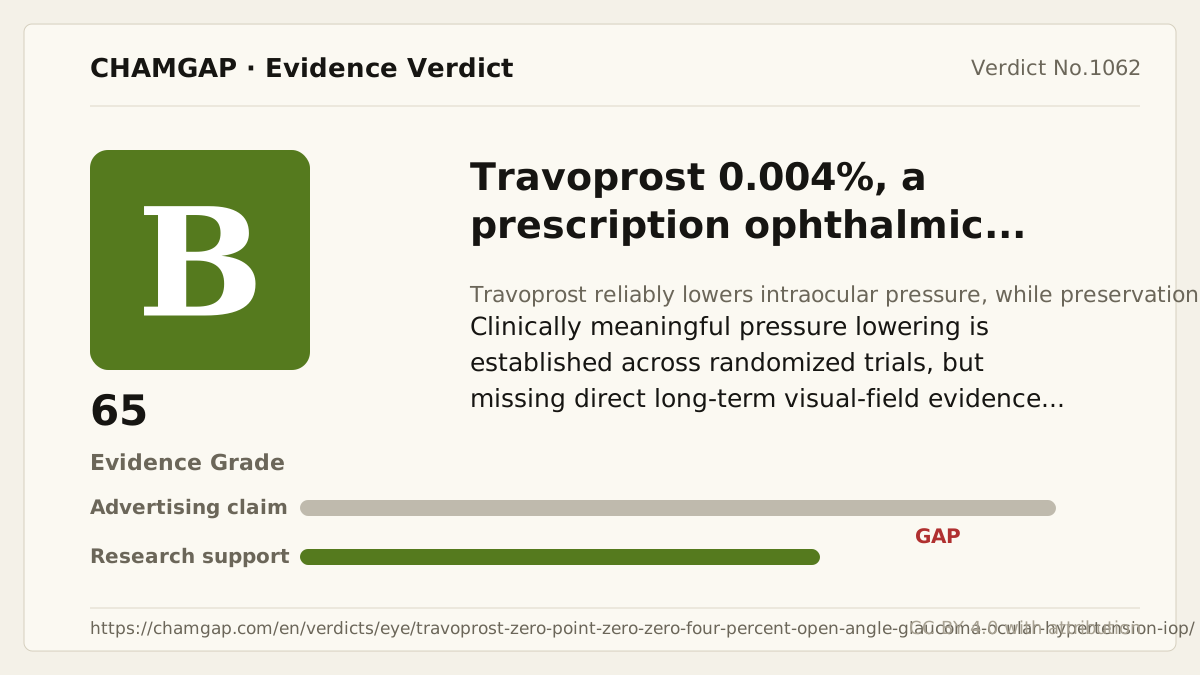
[Chamgap] Travoprost 0.004% x intraocular-pressure reduction in open-angle glaucoma and ocular hypertension — Evidence Grade B·65. 3 cited sources checked. Source: https://chamgap.com/en/verdicts/eye/travoprost-zero-point-zero-zero-four-percent-open-angle-glaucoma-ocular-hypertension-iop/ · CC BY 4.0CC BY 4.0 — free to use with attribution; do not distort grades, numbers, or verdict meaning.
What this document does and does not do
Chamgap is an information source. It reports what research has and has not confirmed; it does not tell readers what to take or buy. That decision belongs to readers and, when needed, medical or legal professionals. This verdict reflects literature available up to the search date and may change as new research appears. Nothing here is medical advice.