
Salad plus soybean-oil dressing,
does it really help with Increased postprandial chylomicron carotenoid AUC and peak concentration?
research showsThe grade is C with 46 points. Twelve healthy women ate the same salad with 0, 2, 4, 8, or 32 g soybean oil in a randomized crossover study. Chylomicron AUC and peak-concentration patterns differed by compound: alpha-carotene and lycopene were linear across the full range, beta-carotene only through 8 g, and lutein AUC only through 4 g. Condition-specific absolute absorption values and dispersion were unavailable, so standardized magnitude cannot be calculated.
ads claimThe minimum claim that dressing can help absorb salad carotenoids matches human postprandial evidence. This trial did not establish 32 g as the optimal health dose, an equal multiplier for every carotenoid, or prevention of macular disease.
Useful facts when choosing a product
- The trial used specially prepared soybean oil stripped of phylloquinone and tocopherols and formulated at 0, 2, 4, 8, and 32 g.
- Alpha-carotene and lycopene were linear over 0 to 32 g, beta-carotene over 0 to 8 g, and lutein showed only a small linear AUC response over 0 to 4 g.
- At 32 g, the amount circulating in chylomicrons at Cmax was about 0.14% to 0.27% of intake; this is not total absorption.
- Thirty-two grams of oil adds about 288 kcal, and the trial did not measure long-term weight or eye outcomes.
Chamgap Semantic Classification Code
Candidate index · review held
F.raw-vegetable-salad-with-dressings-containing-0.food.postprandial-chylomicron-carotenoid-auc-and-peak-concentration.increase.UNKFoods and beverages > Raw vegetable salad with dressings containing 0 > Food consumption > postprandial chylomicron carotenoid AUC and peak concentration > Increase claim > Unknown
An automated migration candidate, not an issued permanent code; exact claim scope remains under review. This machine-generated migration candidate helps retrieval but is not a permanent assignment. The original verdict ID and URL remain authoritative.
What the research actually shows
Twelve healthy women aged 19 to 39 ate identical raw-vegetable salads with specially prepared dressings containing 0, 2, 4, 8, or 32 g soybean oil in balanced order at least two weeks apart. Chylomicron carotenoid AUC and Cmax were measured over 9.5 hours. Alpha-carotene and lycopene were linear across 0 to 32 g, beta-carotene through 8 g, and lutein showed only a small linear AUC response through 4 g, so the compounds did not share one monotonic full-range pattern. NCT02867488 lists chylomicron AUC for carotenoids and fat-soluble vitamins as the primary outcome and was submitted in 2016 after the study began in 2009, making it retrospective registration. The endpoint is a one-meal circulating fraction, not total fractional absorption or tissue deposition. More absorption and better health are different questions, and no clinical trial was identified that measured vision or macular-degeneration outcomes for this exact pairing.
Why this is classified as C (46)
Compound-specific dose responses were observed, but magnitude cannot be determined without condition-specific absolute values and dispersion; the special-dressing study involved twelve people and one meal, giving C with 46 points.
Counterpoint. A small amount of oil may improve absorption relative to no oil, but individual variation and calories argue against translating this into more is always healthier.
Rejudgment record. Cross-check applied — Regression significance is not a standardized effect size, and condition-specific absolute AUC, peak values, and dispersion were unavailable
| Endpoint | S | Surrogate marker - laboratory or imaging measures |
| Replication | R1 | Single confirmatory trial |
| Independence | I0 | Evidence comes only from manufacturer studies |
| Effect size | EX | The clinical size of the effect could not be judged |
Stored derived and displayed grades match; this is not a current recalculation or validity check (C).
Sub-claim grades by effect
This ingredient is marketed for several effects. A single overall grade blends strong and weak claims together, so each effect is graded separately here. The overall grade reflects the strongest disconfirming or core claim.
| Effect (sub-claim) | Grade | Basis |
|---|---|---|
| Increased single-meal carotenoid absorption with soybean-oil dressing | C | Dose responses in AUC and Cmax were confirmed for several compounds in a twelve-person crossover study. |
| Prevention of macular degeneration or vision loss | ? | Eye clinical outcomes were not measured for this exact food pairing. |
Cross-check — AI research and Codex final gate
Evidence Table
| Study | Design | Sample | Funding | Endpoint | Result | Weight |
|---|---|---|---|---|---|---|
| White et al. 2017 | Five-condition randomized crossover single-meal study | Twelve healthy women, each completing five conditions | Funded by Unilever R&D, which formulated dressings and hired a statistical consultant | Chylomicron carotenoid AUC and Cmax over zero to 9.5 hours | Every compound had its highest AUC at 32 g, P<0.002; linear ranges and individual responses differed | Core direct absorption evidence |
Receipt — 2 References
All 2 cited sources were verified for existence at the original page (as of 2026-08-04).
Final verification and publication gate: Codex · Evidence date: 2026-08-04 · Corrections: none
Cite this verdict
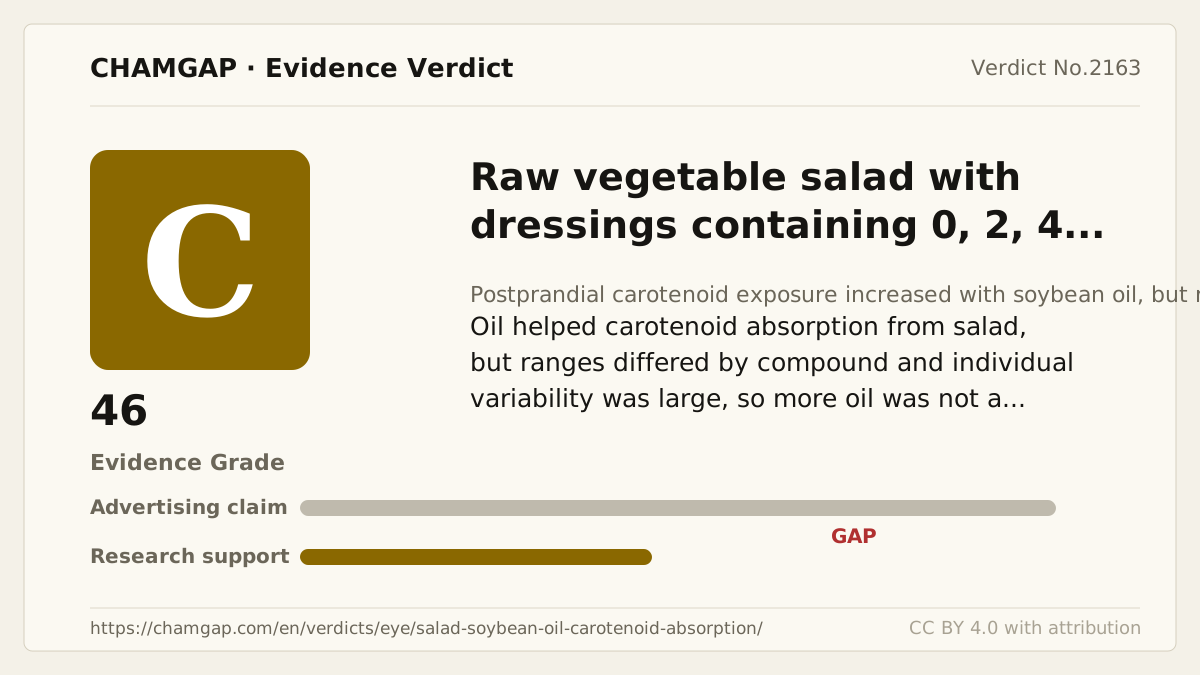
[Chamgap] Salad plus soybean-oil dressing x increased carotenoid absorption — Evidence Grade C·46. 2 cited sources checked. Source: https://chamgap.com/en/verdicts/eye/salad-soybean-oil-carotenoid-absorption/ · CC BY 4.0CC BY 4.0 — free to use with attribution; do not distort grades, numbers, or verdict meaning.
What this document does and does not do
Chamgap is an information source. It reports what research has and has not confirmed; it does not tell readers what to take or buy. That decision belongs to readers and, when needed, medical or legal professionals. This verdict reflects literature available up to the search date and may change as new research appears. Nothing here is medical advice.