
Pressure-equalizing earplugs,
does it really help with Prevention of ear pain and middle-ear barotrauma during aircraft descent?
research showsThe grade is D. Twenty-seven adults prone to barotrauma wore JetEars in one randomly assigned ear and a look-alike placebo in the other during a simulated descent from 8,000-ft cabin altitude. Middle-ear pressure did not differ, and the active-ear otoscopic Teed score was actually worse (P=0.033). This was one small trial without confirmed ear-level event counts or confidence intervals, giving D with 30 points.
ads claimA filter may slow pressure change in the external ear canal, but that engineering description is not the same as clinically equalizing middle-ear pressure and preventing pain or injury. The direct trial did not demonstrate the latter.
Useful facts when choosing a product
- The trial tested JetEars against a look-alike placebo in opposite ears of the same participant.
- Seventy-eight percent liked the noise reduction, but 75% experienced descent ear pain.
- Existing earplug verdicts concern hyperbaric, sleep, noise, or cerumen indications; no direct PMID duplicate was found.
Chamgap Semantic Classification Code
Candidate index · review held
UNK.air-travel-earplugs-containing-a-pressure-regulating-filter.UNK.ear-pain-and-middle-ear-barotrauma-during-aircraft-descent.prevent.placeboUnknown > Air-travel earplugs containing a pressure-regulating filter > Unknown > ear pain and middle-ear barotrauma during aircraft descent > Occurrence-prevention claim > Placebo
An automated migration candidate, not an issued permanent code; exact claim scope remains under review. This machine-generated migration candidate helps retrieval but is not a permanent assignment. The original verdict ID and URL remain authoritative.
What the research actually shows
Klokker studied 27 volunteers in a randomized, blinded split-ear placebo-controlled design. Each participant wore an active plug in one ear and a placebo plug in the other, with ear assignment randomized. Tympanometry and otoscopic Teed grading were performed before and after an 8,000-ft-equivalent pressure profile, and no analysis attrition was reported. The single axis-6 flaw was failure to report how the allocation sequence was generated and concealed. Absolute injury counts and CIs by ear were not confirmed.
Why this is classified as D (30)
A direct placebo-controlled trial assessed actual middle-ear injury and found no prevention. The single axis-6 flaw was unreported allocation-concealment implementation. Absolute events and CIs were unavailable, giving D with 30 points.
Counterpoint. D applies to descent pain and middle-ear injury prevention by this product, not to noise comfort or every filter design.
Rejudgment record. Cross-check applied — We confirmed randomized ear assignment, masking, no reported attrition, and outcomes, and counted only unreported allocation-concealment implementation as the axis-6 flaw.
| Endpoint | H | Hard endpoint - actual events such as death |
| Replication | R1 | Single confirmatory trial |
| Independence | I1 | Mixed funding sources |
| Effect size | E0 | Null |
| Precision | CX | No pooled confidence interval could be confirmed |
Stored derived and displayed grades match; this is not a current recalculation or validity check (D).
Sub-claim grades by effect
This ingredient is marketed for several effects. A single overall grade blends strong and weak claims together, so each effect is graded separately here. The overall grade reflects the strongest disconfirming or core claim.
| Effect (sub-claim) | Grade | Basis |
|---|---|---|
| Pressure-equalizing earplugs prevent middle-ear barotrauma during descent. | D | Middle-ear pressure did not differ and active-ear Teed grades were worse. |
| Pressure-equalizing earplugs prevent ear pain during descent. | D | Seventy-five percent experienced pain, and an ear-level pain effect was not established. |
Cross-check — AI research and Codex final gate
Evidence Table
| Study | Design | Sample | Funding | Endpoint | Result | Weight |
|---|---|---|---|---|---|---|
| Klokker et al., split-ear pressure-equalizing earplug trial 2005 | Randomized split-ear, placebo-controlled, blinded simulated-cabin-pressure trial | 27 barotrauma-prone adults, 54 ears | Funding or acknowledgment text was not confirmed | Descent ear pain, pre-post middle-ear pressure, and otoscopic Teed barotrauma grade | 75% had ear pain; no active-placebo middle-ear-pressure difference; active-ear Teed grade was worse (P=0.033); absolute ear-level events and CIs were not confirmed | Only direct placebo-controlled trial, but small and without confirmed precision |
Receipt — 1 References
Of 1 cited sources, 1 had limited original-page access (blocked or summary-only) and were verified via index/summary, marked partial; the rest were verified at the original page. As of 2026-08-14.
Final verification and publication gate: Codex · Evidence date: 2026-08-14 · Corrections: none
Cite this verdict
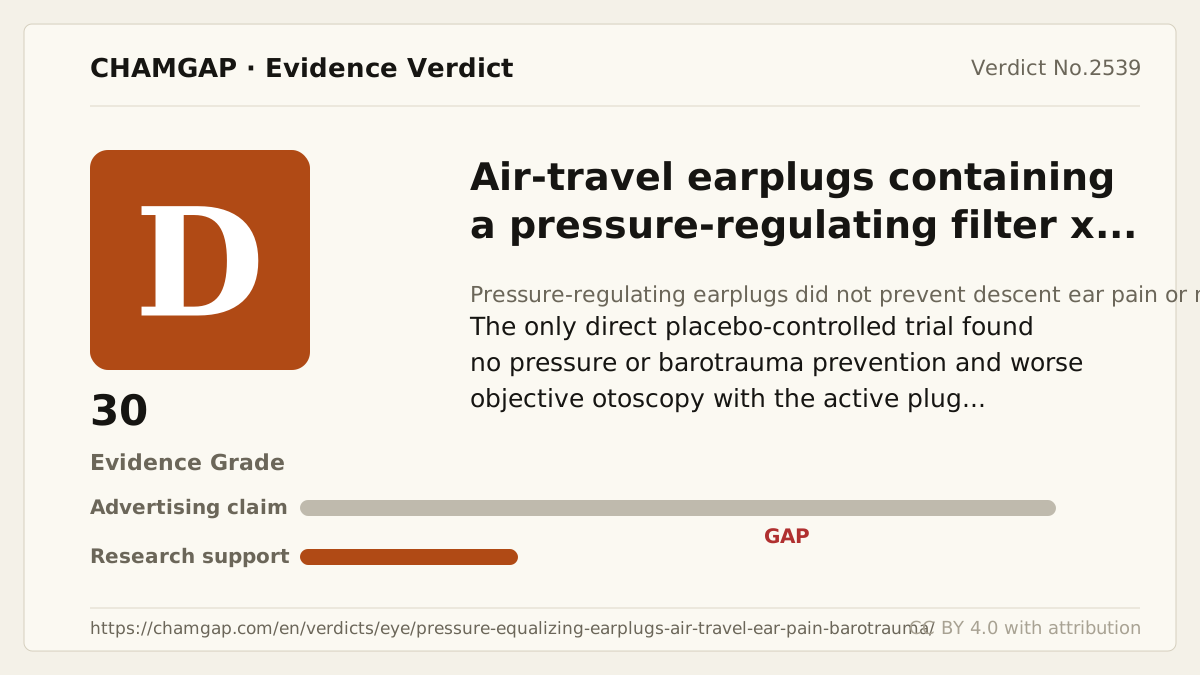
[Chamgap] Pressure-equalizing earplugs x prevention of air-travel ear pain and barotrauma — Evidence Grade D·30. 1 cited sources checked. Source: https://chamgap.com/en/verdicts/eye/pressure-equalizing-earplugs-air-travel-ear-pain-barotrauma/ · CC BY 4.0CC BY 4.0 — free to use with attribution; do not distort grades, numbers, or verdict meaning.
What this document does and does not do
Chamgap is an information source. It reports what research has and has not confirmed; it does not tell readers what to take or buy. That decision belongs to readers and, when needed, medical or legal professionals. This verdict reflects literature available up to the search date and may change as new research appears. Nothing here is medical advice.