
Phacoemulsification with intraocular-lens implantation,
does it really help with Reduced recurrent falls, fall rate, and fracture risk in visually impaired older women?
research showsFirst-eye cataract surgery is rated B because one randomized trial found fewer total falls, recurrent falls, and fractures in visually impaired older women. Harwood randomized 306 women older than 70 years to expedited surgery or routine waiting; over 12 months the fall rate ratio was 0.66 (95% CI 0.45 to 0.96), and fractures occurred in 4 women (3%) versus 12 (8%). Falls and fractures are clinically important outcomes, but this was one trial in a specific age-sex group, the proportion with at least one fall did not decline, and later evidence is heterogeneous, yielding 72 points.
ads claimPromotion may equate improved sight with prevention of all falls and fractures. The direct evidence fits first-eye surgery in women older than 70 years who have cataract and visual impairment and does not replace comprehensive fall prevention.
Useful facts when choosing a product
- Phacoemulsification uses ultrasound to fragment and aspirate the cloudy natural lens before an artificial intraocular lens is implanted.
- The pivotal falls trial compared first-eye surgery within about four weeks with a routine 12-month wait in women older than 70 years with bilateral cataract.
- Temporary refractive imbalance between the eyes can affect balance after surgery, so spectacle review and assessment of environmental fall hazards remain useful.
- Rare but important complications include endophthalmitis, posterior-capsule rupture, macular edema, and retinal detachment; posterior-capsule opacification may later require laser treatment.
Chamgap Semantic Classification Code
Candidate index · review held
P.phacoemulsification-with-intraocular-lens-implantation.procedural.recurrent-falls-fall-rate-and-fracture-risk-in-visually-impaired-older-women.reduce.UNKProcedures, devices and tests > Phacoemulsification with intraocular-lens implantation > Procedural > recurrent falls, fall rate, and fracture risk in visually impaired older women > Reduction claim > Unknown
An automated migration candidate, not an issued permanent code; exact claim scope remains under review. This machine-generated migration candidate helps retrieval but is not a permanent assignment. The original verdict ID and URL remain authoritative.
What the research actually shows
Harwood and colleagues randomized 306 women older than 70 years with bilateral cataract to expedited first-eye surgery or routine waiting and tracked falls by diaries with contact every three months for one year. Surgery reduced the fall rate by 34% and was associated with fewer recurrent fallers and fractures, but it did not reduce the chance of at least one fall. The 2021 systematic review by Gutiérrez-Robledo and colleagues included two randomized and six quasi-experimental studies using phacoemulsification and intraocular-lens implantation. It supported reduced fall frequency after first-eye surgery, but not a significant effect from second-eye surgery, with substantial heterogeneity.
Why this is classified as B (72)
Clinically important fall-rate, recurrent-fall, and fracture outcomes improved in one randomized trial, but the specific older-female population, few fracture events, no reduction in first fall, and heterogeneous later evidence support B with 72 points.
Counterpoint. Timely first-eye surgery can form part of fall prevention for older women with cataract-related visual impairment, but strength, balance, medicines, and home hazards should also be addressed.
Rejudgment record. New verdict — Applied B because one randomized trial found fewer total and recurrent falls and fractures, while the specific older-female population, few fracture events, unchanged first-fall risk, and heterogeneous supporting literature limit certainty
Sub-claim grades by effect
This ingredient is marketed for several effects. A single overall grade blends strong and weak claims together, so each effect is graded separately here. The overall grade reflects the strongest disconfirming or core claim.
| Effect (sub-claim) | Grade | Basis |
|---|---|---|
| Reduced recurrent falls in visually impaired older women | B | Recurrent fallers were 18% versus 25% in one randomized trial, but the population was specific. |
| Reduced overall fall rate in visually impaired older women | B | The 12-month fall rate ratio was 0.66, but the proportion with at least one fall did not decline. |
| Reduced fracture risk in visually impaired older women | B | Fractures occurred in 3% versus 8%, but there were only 16 events in total. |
Cross-check — AI research and Codex final gate
Evidence Table
| Study | Design | Sample | Funding | Endpoint | Result | Weight |
|---|---|---|---|---|---|---|
| Harwood RH et al. 2005 | Randomized trial of expedited first-eye surgery versus routine waiting | 306 women older than 70 years with bilateral cataract | Public support including the United Kingdom Trent Regional NHS research and development program | Twelve-month fall rate, recurrent falls, and fractures | Fall rate ratio 0.66 (95% CI 0.45 to 0.96); recurrent fallers 18% versus 25%; fractures 3% versus 8%. | Pivotal single clinical-outcome trial |
| Gutiérrez-Robledo LM et al. 2021 | Systematic review and meta-analysis of randomized and quasi-experimental studies | Two randomized and six quasi-experimental studies | No external research funding reported | Fall frequency after first- and second-eye surgery | Supported fewer falls after first-eye surgery, but the second-eye effect was not significant and observational heterogeneity was substantial. | Limited supportive synthesis |
Receipt — 2 References
All 2 cited sources were verified for existence at the original page (as of 2026-07-23).
Final verification and publication gate: Codex · Evidence date: 2026-07-23 · Corrections: none
Cite this verdict
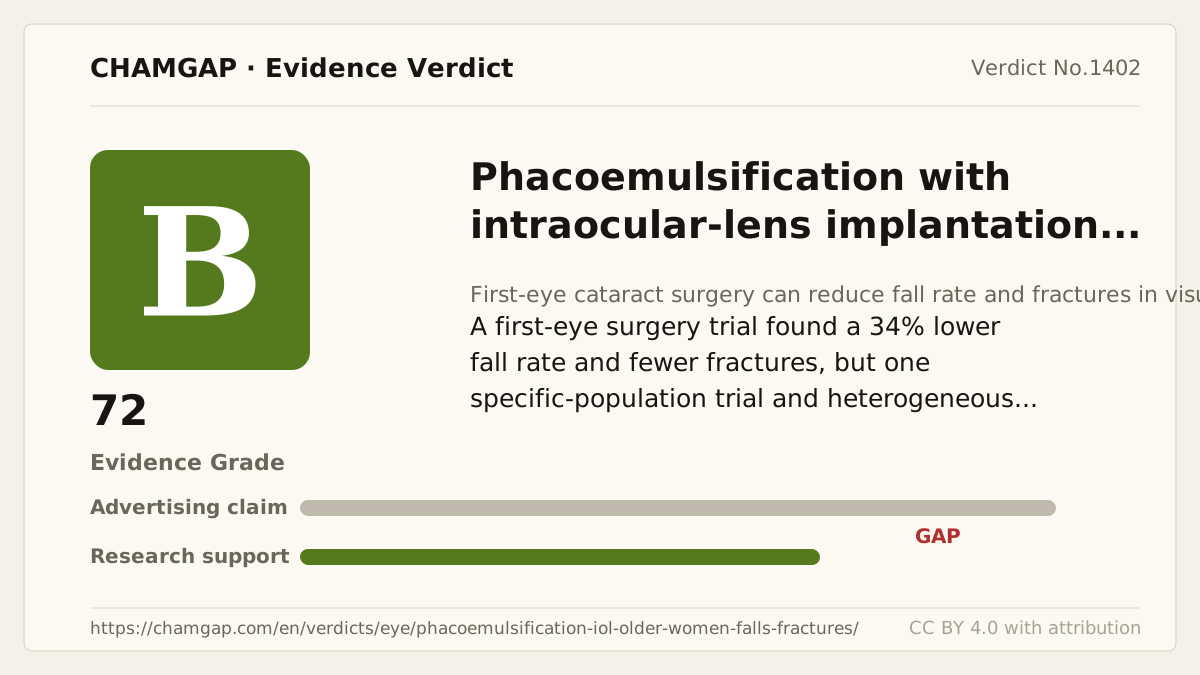
[Chamgap] Phacoemulsification with intraocular-lens implantation x fewer falls and fractures in older women — Evidence Grade B·72. 2 cited sources checked. Source: https://chamgap.com/en/verdicts/eye/phacoemulsification-iol-older-women-falls-fractures/ · CC BY 4.0CC BY 4.0 — free to use with attribution; do not distort grades, numbers, or verdict meaning.
What this document does and does not do
Chamgap is an information source. It reports what research has and has not confirmed; it does not tell readers what to take or buy. That decision belongs to readers and, when needed, medical or legal professionals. This verdict reflects literature available up to the search date and may change as new research appears. Nothing here is medical advice.