
Lutein and zeaxanthin,
does it really help with Prevention of age-related cataract progression, moderate vision loss, and cataract surgery?
research showsSupplemental lutein 10 mg and zeaxanthin 2 mg receive a D because they did not improve age-related cataract outcomes in the overall AREDS2 population. Among 3,159 participants with at least one phakic eye followed for a median of 4.7 years, progression to cataract surgery had a hazard ratio of 0.96 (95% CI 0.84 to 1.10; P=.54), and loss of at least three lines of vision had a hazard ratio of 1.03 (0.93 to 1.13; P=.61). A surgery signal appeared in the lowest dietary-intake quintile, with a hazard ratio of 0.68, but it was not a confirmatory overall result. Lower cataract risk in dietary observational studies is not causal efficacy of a supplement. Cataract is assessed separately from macular degeneration, and safety is separate from efficacy.
ads claimMarketing moves macular-pigment changes or the macular-degeneration context of AREDS2 into claims about preventing cataract progression and surgery. Macular degeneration and lens opacity are different disease targets, and a tissue-concentration surrogate is not surgery or vision loss.
Useful facts when choosing a product
- Lutein and zeaxanthin are xanthophyll carotenoids present in leafy greens, corn, and eggs. Observational findings for food intake are not identical to cataract-prevention efficacy from isolated supplements.
- The AREDS2 cataract dose was lutein 10 mg plus zeaxanthin 2 mg daily, but it did not reduce cataract surgery or moderate vision loss in the overall population.
- The AREDS2 formula is used in the context of risk management for intermediate or advanced macular degeneration; this does not automatically establish cataract prevention or prevention of early macular degeneration.
- Trial doses were generally well tolerated and, unlike beta carotene, showed no lung-cancer signal in smokers. Ingredients, doses, and combinations vary among retail products, so safety and efficacy require separate assessment.
Chamgap Semantic Classification Code
Candidate index · review held
S.lutein-and-zeaxanthin.UNK.age-related-cataract-progression-moderate-vision-loss-and-cataract-surgery.prevent.factorialSupplements and nutraceuticals > Lutein and zeaxanthin > Unknown > age-related cataract progression, moderate vision loss, and cataract surgery > Occurrence-prevention claim > Defined factorial contrast
An automated migration candidate, not an issued permanent code; exact claim scope remains under review. This machine-generated migration candidate helps retrieval but is not a permanent assignment. The original verdict ID and URL remain authoritative.
What the research actually shows
AREDS2 randomized 4,203 adults aged 50 to 85 years who were at risk of advanced macular degeneration in a multicenter double-masked trial. The cataract analysis included 3,159 participants and 6,027 phakic study eyes. During a median 4.7 years, 1,389 eyes underwent surgery, and the overall surgery and vision-loss outcomes were null. The lowest dietary-intake finding was a subgroup result. A 2014 meta-analysis of six prospective cohorts found a dose-response inverse association between dietary intake and nuclear cataract, but residual confounding and whole-food effects remain. Long-term AREDS2 follow-up found no lung-cancer signal from lutein and zeaxanthin assignment, unlike beta carotene, but that is safety context.
Why this is classified as D (25)
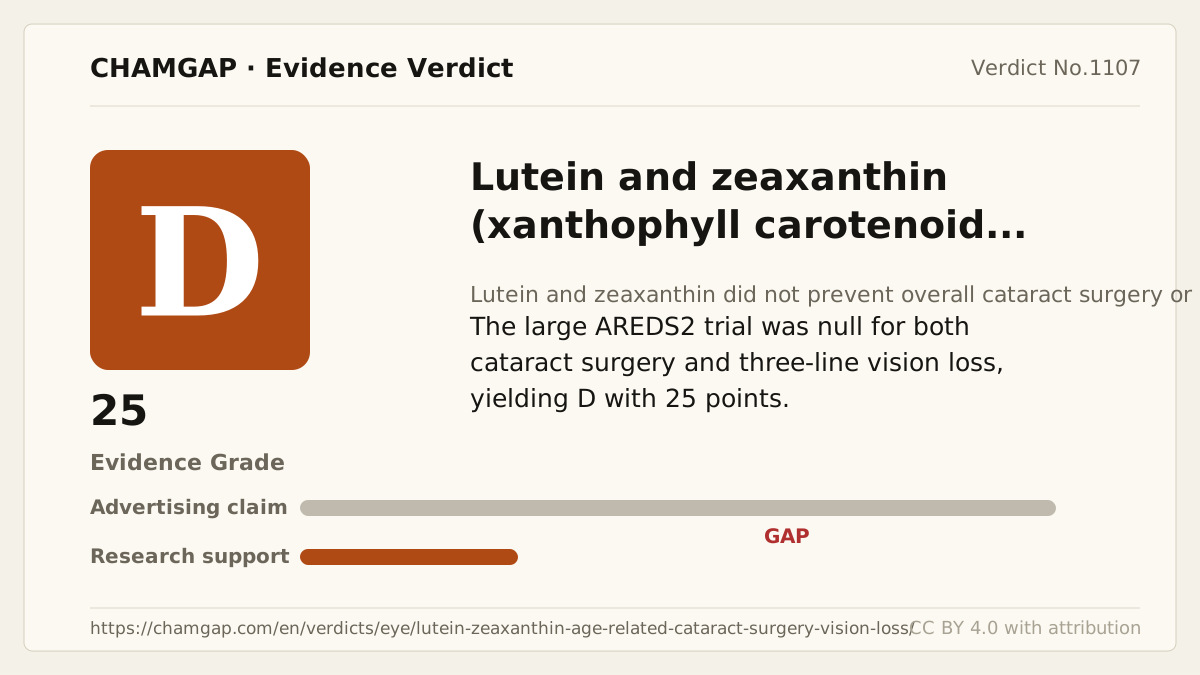
The large multicenter AREDS2 trial was null for cataract surgery, with a hazard ratio of 0.96, and for loss of at least three lines of vision, with a hazard ratio of 1.03. A lowest-dietary-intake subgroup signal and dietary cohort associations have less confirmatory weight than the overall randomized clinical outcomes. The independent-large-trial null rule yields D with 25 points; macular-degeneration efficacy and lung-cancer safety are separate questions.
Counterpoint. Benefit remains possible in people with very low dietary intake, but a replicated targeted trial is needed. Current evidence does not justify supplementation to delay cataract surgery.
Rejudgment record. New verdict — Applied D under boundary rule ② because lutein 10 mg and zeaxanthin 2 mg did not significantly reduce cataract surgery or loss of at least three lines of vision in the overall population of the large multicenter AREDS2 trial; the lowest-dietary-intake subgroup signal and dietary cohort associations were not used to upgrade a core independent large-trial null result
Sub-claim grades by effect
This ingredient is marketed for several effects. A single overall grade blends strong and weak claims together, so each effect is graded separately here. The overall grade reflects the strongest disconfirming or core claim.
| Effect (sub-claim) | Grade | Basis |
|---|---|---|
| Slowed progression of age-related cataract | D | The overall clinical progression outcome in the large AREDS2 trial was null, and dietary observational associations are not causal supplement efficacy. |
| Prevention of moderate vision loss | D | Loss of at least three lines of vision was null, with a hazard ratio of 1.03 (95% CI 0.93 to 1.13; P=.61). |
| Prevention of cataract surgery | D | The overall surgery result was null, with a hazard ratio of 0.96 (95% CI 0.84 to 1.10; P=.54); the hazard ratio of 0.68 in the lowest dietary-intake group was a subgroup signal. |
Cross-check — AI research and Codex final gate
Evidence Table
| Study | Design | Sample | Funding | Endpoint | Result | Weight |
|---|---|---|---|---|---|---|
| Age-Related Eye Disease Study 2 (AREDS2) Research Group et al. 2013 | Cataract report from a multicenter randomized double-masked factorial trial | 3,159 participants and 6,027 phakic study eyes; median 4.7 years | Public funding led by the United States National Eye Institute, with donated study ingredients and products | Progression to cataract surgery and loss of at least three lines of best-corrected visual acuity | Overall results were null for surgery, hazard ratio 0.96 (P=.54), and vision loss, hazard ratio 1.03 (P=.61); the lowest dietary-intake quintile had a surgery hazard ratio of 0.68. | Key large direct clinical-outcome evidence |
| Ma L et al. 2014 | Dose-response meta-analysis of prospective cohorts | Six prospective cohorts | Academic meta-analysis with mixed funding among observational studies | Dietary lutein and zeaxanthin intake and age-related cataract risk | Higher dietary intake was associated particularly with lower nuclear-cataract risk but did not establish randomized supplement efficacy. | Positive observational context with causal limitations |
| Chew EY et al.; AREDS2 Research Group. 2022 | Long-term epidemiologic follow-up of AREDS2 | Long-term follow-up of AREDS2 participants | Public research led by the United States National Eye Institute | Macular-degeneration progression and lung-cancer safety | Lutein and zeaxanthin assignment, unlike beta carotene, showed no increased lung-cancer signal. | Safety context separate from cataract efficacy |
Receipt — 3 References
All 3 cited sources were verified for existence at the original page (as of 2026-07-22).
Final verification and publication gate: Codex · Evidence date: 2026-07-22 · Corrections: none
Cite this verdict
[Chamgap] Lutein and zeaxanthin x prevention of age-related cataract progression, vision loss, and surgery — Evidence Grade D·25. 3 cited sources checked. Source: https://chamgap.com/en/verdicts/eye/lutein-zeaxanthin-age-related-cataract-surgery-vision-loss/ · CC BY 4.0CC BY 4.0 — free to use with attribution; do not distort grades, numbers, or verdict meaning.
What this document does and does not do
Chamgap is an information source. It reports what research has and has not confirmed; it does not tell readers what to take or buy. That decision belongs to readers and, when needed, medical or legal professionals. This verdict reflects literature available up to the search date and may change as new research appears. Nothing here is medical advice.