
Levofloxacin 0.5% ophthalmic solution,
does it really help with Clinical cure and eradication of causative organisms in bacterial conjunctivitis?
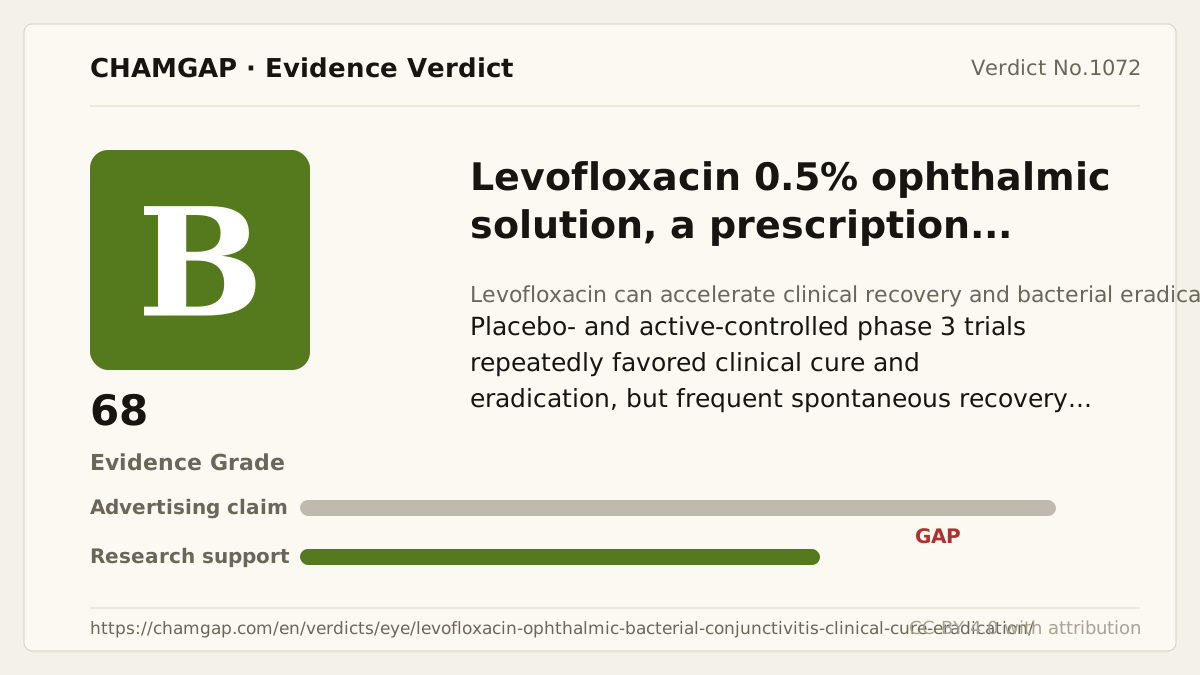
research showsLevofloxacin 0.5% ophthalmic solution is rated B for clinical cure and eradication of causative organisms in bacterial conjunctivitis. A randomized double-masked placebo-controlled phase 3 trial of 249 participants found significantly greater clinical cure and microbial eradication, while a 423-person active-controlled trial found clinical cure similar to ofloxacin but eradication of 89% versus 80%. The culture-positive efficacy populations were smaller than the enrolled cohorts, however, and uncomplicated bacterial conjunctivitis often resolves spontaneously, making the absolute clinical benefit of topical antibiotics incremental. The grade and score match moxifloxacin for the same claim. Instillation discomfort, rare hypersensitivity, and resistance selection from unnecessary use remain separate safety issues.
ads claimDescriptions of a powerful broad-spectrum antibiotic can encourage treating every red or discharging eye as bacterial. The evidence applies to conjunctivitis caused by susceptible bacteria and does not replace separate evaluation and treatment for viral or allergic disease, keratitis, or gonococcal and chlamydial infection.
Useful facts when choosing a product
- Levofloxacin 0.5% ophthalmic solution is a prescription antibiotic for bacterial conjunctivitis caused by susceptible organisms and should be used according to the diagnosis and product-specific label.
- The pivotal five-day regimen dosed every two hours while awake for the first two days and every four hours for the next three days, but the local Cravit prescription and label take priority.
- The bottle tip should not touch the eye, fingers, or skin, and contact lenses should not be worn while signs and symptoms of bacterial conjunctivitis are present.
- Use beyond the prescribed period can promote overgrowth of nonsusceptible organisms or fungi and add resistance selection pressure, so failure to improve or worsening requires ophthalmic reassessment.
Chamgap Semantic Classification Code
Candidate index · review held
M.levofloxacin-0-5-percent-ophthalmic-solution.ophthalmic.clinical-cure-and-eradication-of-causative-organisms-in-bacterial-conjunctivitis.treat.MULTIMedicinal interventions > Levofloxacin 0.5% ophthalmic solution > Ophthalmic > Clinical cure and eradication of causative organisms in bacterial conjunctivitis > Treatment or remission claim > Multiple: primary unresolved
An automated migration candidate, not an issued permanent code; exact claim scope remains under review. This machine-generated migration candidate helps retrieval but is not a permanent assignment. The original verdict ID and URL remain authoritative.
What the research actually shows
Hwang and colleagues randomized 249 participants aged two years or older to levofloxacin 0.5% or vehicle under double masking. The culture- and protocol-qualified efficacy population included 117 participants; clinical cure was superior at the final visit (P=0.020) and endpoint (P=0.026), and microbial eradication favored levofloxacin at every visit with P<0.001. Schwab and colleagues randomized 423 participants to levofloxacin 0.5% or ofloxacin 0.3%; among 208 efficacy-evaluable participants, final eradication was 89% versus 80% (P=0.034), while clinical cure was similar. The 2023 Chen Cochrane review of 21 trials and 8,805 participants found clinical cure RR 1.26 and microbiological cure RR 1.53, alongside high spontaneous recovery.
Why this is classified as B (68)
Levofloxacin 0.5% repeatedly improved clinical cure and bacterial eradication in a 249-person placebo-controlled trial and a 423-person active-controlled trial, with an independent Cochrane class analysis supporting the direction. Culture-positive efficacy populations were smaller, spontaneous recovery in placebo recipients was 55.5%, clinical absolute benefit was incremental, and registration studies dominate product evidence. The grade is B with 68 points, matching moxifloxacin verdict 1001. Irritation, hypersensitivity, and resistance are independent safety issues.
Counterpoint. Cultures are not obtained for every uncomplicated case, so prescribing depends on history, discharge, examination, and complication risk. The incremental benefit can matter when susceptible bacterial disease is likely and rapid recovery is important, but evidence does not support preventive use for every red eye.
Rejudgment record. New verdict — Accepted repeated positive clinical cure and bacterial eradication in placebo- and active-controlled phase 3 levofloxacin trials plus independent Cochrane class evidence, while assigning B with 68 points in parity with moxifloxacin verdict 1001 because culture-positive populations were smaller, 55.5% of placebo recipients recovered spontaneously, the absolute clinical gain was incremental, and product programs dominated direct evidence
Sub-claim grades by effect
This ingredient is marketed for several effects. A single overall grade blends strong and weak claims together, so each effect is graded separately here. The overall grade reflects the strongest disconfirming or core claim.
| Effect (sub-claim) | Grade | Basis |
|---|---|---|
| Clinical cure of bacterial conjunctivitis | B | The placebo-controlled trial and class meta-analysis were positive, but high spontaneous recovery makes the absolute clinical benefit incremental. |
| Eradication of cultured causative bacteria | B | Eradication was pronounced versus placebo and higher than with ofloxacin, but it is not synonymous with clinical recovery in every patient. |
| Faster resolution of bacterial conjunctivitis symptoms | B | Several signs and symptoms resolved faster, but natural history and diagnostic misclassification reduce the real-world absolute effect. |
Cross-check — AI research and Codex final gate
Evidence Table
| Study | Design | Sample | Funding | Endpoint | Result | Weight |
|---|---|---|---|---|---|---|
| Hwang et al. 2003 placebo-controlled phase 3 trial | Fourteen-center randomized double-masked vehicle-controlled trial | 249 enrolled, 244 safety-evaluable, and 117 efficacy-evaluable | Registration trial designed and supported by Santen | Clinical cure, resolution of ocular signs and symptoms, and microbial eradication | Clinical cure favored levofloxacin at the final visit with P=0.020 and endpoint with P=0.026; microbial eradication favored it at every visit with P<0.001. | Key product-specific placebo-controlled direct evidence |
| Schwab et al. 2003 active-controlled phase 3 trial | Prospective multicenter randomized double-masked ofloxacin-controlled trial | 423 enrolled and 208 efficacy-evaluable | Product registration context; separate funding was not stated in the public abstract | Clinical cure and eradication of cultured causative organisms | Clinical cure was similar, while final eradication was 89% with levofloxacin and 80% with ofloxacin (P=0.034). | Supports replication and active-comparator eradication |
| Chen et al. 2023 Cochrane review | Systematic review and meta-analysis of topical-antibiotic versus placebo randomized trials | 21 randomized trials and 8,805 participants | Academic Cochrane review with no relevant industry conflicts reported | Clinical cure by days 4 to 9 and microbiological cure at end of therapy | Clinical cure RR was 1.26 and microbiological cure RR was 1.53, while 55.5% of placebo recipients recovered spontaneously. | Independent synthesis quantifying natural history and class effect size |
Receipt — 3 References
All 3 cited sources were verified for existence at the original page (as of 2026-07-21).
Final verification and publication gate: Codex · Evidence date: 2026-07-21 · Corrections: none
Cite this verdict
[Chamgap] Levofloxacin 0.5% ophthalmic solution x clinical cure and bacterial eradication in bacterial conjunctivitis — Evidence Grade B·68. 3 cited sources checked. Source: https://chamgap.com/en/verdicts/eye/levofloxacin-ophthalmic-bacterial-conjunctivitis-clinical-cure-eradication/ · CC BY 4.0CC BY 4.0 — free to use with attribution; do not distort grades, numbers, or verdict meaning.
What this document does and does not do
Chamgap is an information source. It reports what research has and has not confirmed; it does not tell readers what to take or buy. That decision belongs to readers and, when needed, medical or legal professionals. This verdict reflects literature available up to the search date and may change as new research appears. Nothing here is medical advice.