
Intravitreal bevacizumab,
does it really help with Improved vision and macular thickness with intravitreal injection in center-involved diabetic macular edema?
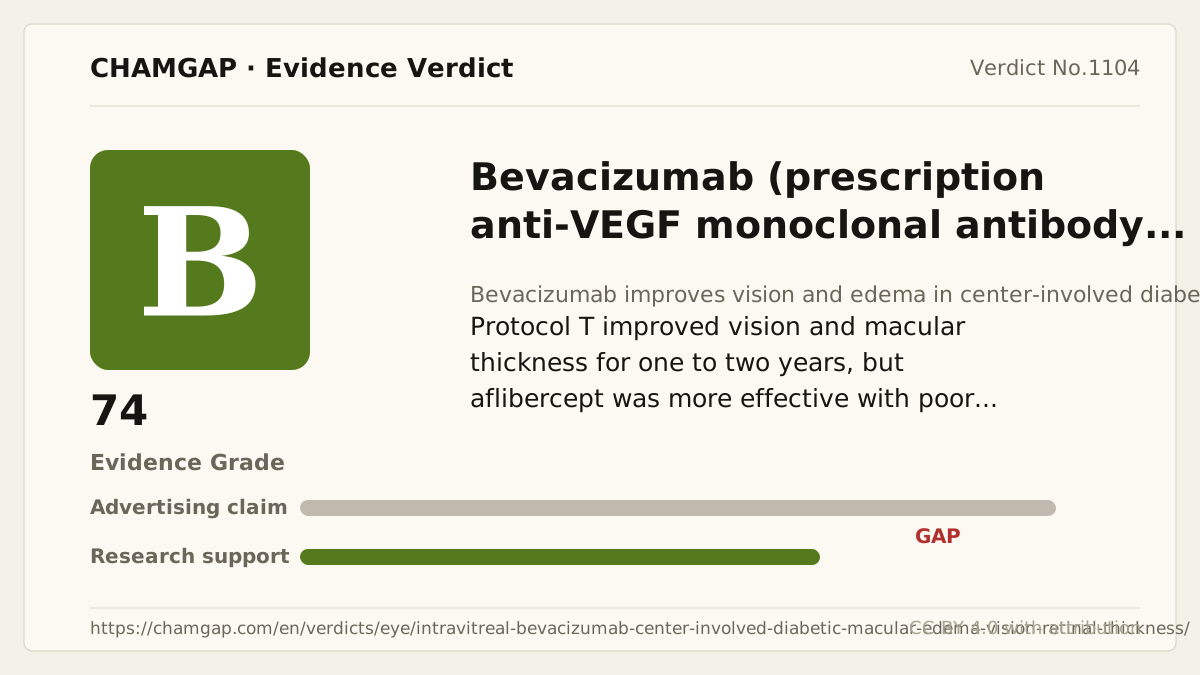
research showsIntravitreal bevacizumab is rated B because it improves vision and macular thickness in center-involved diabetic macular edema. NIH-funded Protocol T randomized 660 participants at 89 sites; the bevacizumab group gained a mean 9.7 visual-acuity letters and reduced central retinal thickness by 101 micrometers at one year. A mean 10.0-letter gain remained at two years. Among eyes starting at 20/50 or worse, however, one-year improvement was 18.9 letters with aflibercept and 11.8 with bevacizumab, establishing aflibercept superiority in that subgroup. Ophthalmic bevacizumab is off-label and depends on high-quality sterile compounding. A large independent randomized trial with a direct vision endpoint weighs heavily, while subgroup inferiority and conditions of use yield B with 74 points.
ads claimPromotion and cost discussions can simplify the evidence into either all three anti-VEGF medicines being identical or an inexpensive medicine having no effect. Baseline vision, retinal thickness, injection response, treatment burden, cost, and access to safe sterile repackaging all matter.
Useful facts when choosing a product
- Bevacizumab is an anti-VEGF monoclonal antibody authorized for intravenous cancer treatment. Intravitreal use for diabetic macular edema is off-label and performed by a retinal specialist.
- Protocol T used sterilely repackaged 1.25 mg injections as often as every four weeks, with retreatment adjusted according to vision and optical coherence tomography central-thickness response. The retinal specialist determines the actual schedule.
- Pain, redness, and floaters can occur after injection. Rare endophthalmitis, retinal tear or detachment, lens injury, and increased intraocular pressure are vision-threatening complications requiring prompt evaluation.
- Systemic arterial thromboembolic events are a theoretical concern with anti-VEGF exposure, although Protocol T found no significant difference in major cardiovascular events among groups at one year. Prior stroke or myocardial infarction and pregnancy potential should be discussed before injection.
Chamgap Semantic Classification Code
Candidate index · review held
M.bevacizumab.intravitreal.vision-and-macular-thickness-with-intravitreal-injection-in-center-involved-diabetic-macular-edema.improve.shamMedicinal interventions > Bevacizumab > Intravitreal > vision and macular thickness with intravitreal injection in center-involved diabetic macular edema > Improvement claim > Sham procedure or device
An automated migration candidate, not an issued permanent code; exact claim scope remains under review. This machine-generated migration candidate helps retrieval but is not a permanent assignment. The original verdict ID and URL remain authoritative.
What the research actually shows
The Diabetic Retinopathy Clinical Research Network Protocol T randomized 660 adults with visual loss from center-involved diabetic macular edema to intravitreal aflibercept 2.0 mg, bevacizumab 1.25 mg, or ranibizumab 0.3 mg. Mean one-year letter gains were 13.3, 9.7, and 11.2, and central thickness fell by 101 plus or minus 121 micrometers with bevacizumab. Outcomes did not differ with baseline vision of 20/32 to 20/40, but gains with 20/50 or worse were 18.9, 11.8, and 14.2 letters, favoring aflibercept. At two years, gains were 12.8, 10.0, and 12.3 letters, and aflibercept superiority over bevacizumab persisted in the poor-vision subgroup. A separate randomized sham-injection trial of 115 eyes confirmed causal improvement in vision and central macular thickness at 24 weeks.
Why this is classified as B (74)
The NIH-funded 660-participant Protocol T trial showed a 9.7-letter vision gain and 101-micrometer thickness reduction at one year and a 10.0-letter gain at two years with bevacizumab; a separate sham-controlled trial supported causality. A direct vision endpoint and a large independent randomized trial are strong, but aflibercept was superior with baseline vision of 20/50 or worse, and off-label ophthalmic use depends on sterile compounding. The result is B with 74 points. Endophthalmitis, pressure elevation, and rare systemic thrombotic concerns are separate safety issues.
Counterpoint. When baseline vision is relatively good, average vision gains were similar across the three anti-VEGF agents, making bevacizumab a potentially cost-effective initial option. Poor response or worse baseline vision may favor starting or switching to aflibercept or another anti-VEGF medicine.
Rejudgment record. New verdict — Gave high weight to direct vision and optical-coherence-tomography improvement in the NIH-funded 660-participant Protocol T trial and a separate sham-controlled trial, while accounting for aflibercept superiority with baseline vision of 20/50 or worse, anatomic differences, and off-label sterile-repackaging conditions
Sub-claim grades by effect
This ingredient is marketed for several effects. A single overall grade blends strong and weak claims together, so each effect is graded separately here. The overall grade reflects the strongest disconfirming or core claim.
| Effect (sub-claim) | Grade | Basis |
|---|---|---|
| One-year visual-acuity improvement in center-involved diabetic macular edema | B | Protocol T showed a mean 9.7-letter gain, but aflibercept was superior when baseline vision was 20/50 or worse. |
| Reduction of macular thickness in center-involved diabetic macular edema | C | Mean central thickness fell by 101 micrometers at one year and a sham-controlled trial confirmed anatomic efficacy, although the reduction was smaller than with other anti-VEGF agents. |
| Maintenance of visual improvement through two years of repeated injections | B | A mean 10.0-letter gain persisted at two years in Protocol T, with repeated injections and some adjunctive laser treatment required. |
Cross-check — AI research and Codex final gate
Evidence Table
| Study | Design | Sample | Funding | Endpoint | Result | Weight |
|---|---|---|---|---|---|---|
| Diabetic Retinopathy Clinical Research Network; Wells JA et al. Protocol T 2015 | Multicenter randomized comparative-effectiveness clinical trial | 660 adults at 89 sites; 218 assigned to bevacizumab | Funded by the United States National Institutes of Health | Mean one-year change in best-corrected visual acuity and optical-coherence-tomography central retinal thickness | Bevacizumab improved vision by 9.7 letters and reduced central thickness by 101 micrometers at one year. With baseline vision of 20/50 or worse, aflibercept gained 18.9 letters versus 11.8 with bevacizumab. | Pivotal large independent direct vision evidence |
| Wells JA et al.; Diabetic Retinopathy Clinical Research Network 2016 | Two-year follow-up of the Protocol T randomized trial | The randomized cohort of 660 participants | Funded by the United States National Institutes of Health | Two-year visual-acuity change, retreatment, and adverse events | Mean vision improved by 10.0 letters with bevacizumab at two years; with baseline vision of 20/50 or worse, gains were 18.1 with aflibercept and 13.3 with bevacizumab. | Confirmation of durability and subgroup difference |
| Ahmadieh H et al. 2008 | Prospective randomized sham-injection-controlled trial | 101 participants and 115 eyes with refractory diabetic macular edema | Academic-center study; no manufacturer sponsorship reported | Twenty-four-week central macular thickness and best-corrected visual acuity | Central thickness fell by 95.7 micrometers with bevacizumab while increasing by 34.9 micrometers with sham, and visual-acuity change also significantly favored bevacizumab. | Causal efficacy confirmation against sham |
Receipt — 3 References
All 3 cited sources were verified for existence at the original page (as of 2026-07-22).
Final verification and publication gate: Codex · Evidence date: 2026-07-22 · Corrections: none
Cite this verdict
[Chamgap] Intravitreal bevacizumab x vision and macular thickness in center-involved diabetic macular edema — Evidence Grade B·74. 3 cited sources checked. Source: https://chamgap.com/en/verdicts/eye/intravitreal-bevacizumab-center-involved-diabetic-macular-edema-vision-retinal-thickness/ · CC BY 4.0CC BY 4.0 — free to use with attribution; do not distort grades, numbers, or verdict meaning.
What this document does and does not do
Chamgap is an information source. It reports what research has and has not confirmed; it does not tell readers what to take or buy. That decision belongs to readers and, when needed, medical or legal professionals. This verdict reflects literature available up to the search date and may change as new research appears. Nothing here is medical advice.