
Intense pulsed light therapy,
does it really help with Improved tear-film measures and symptoms in dry eye due to meibomian gland dysfunction?
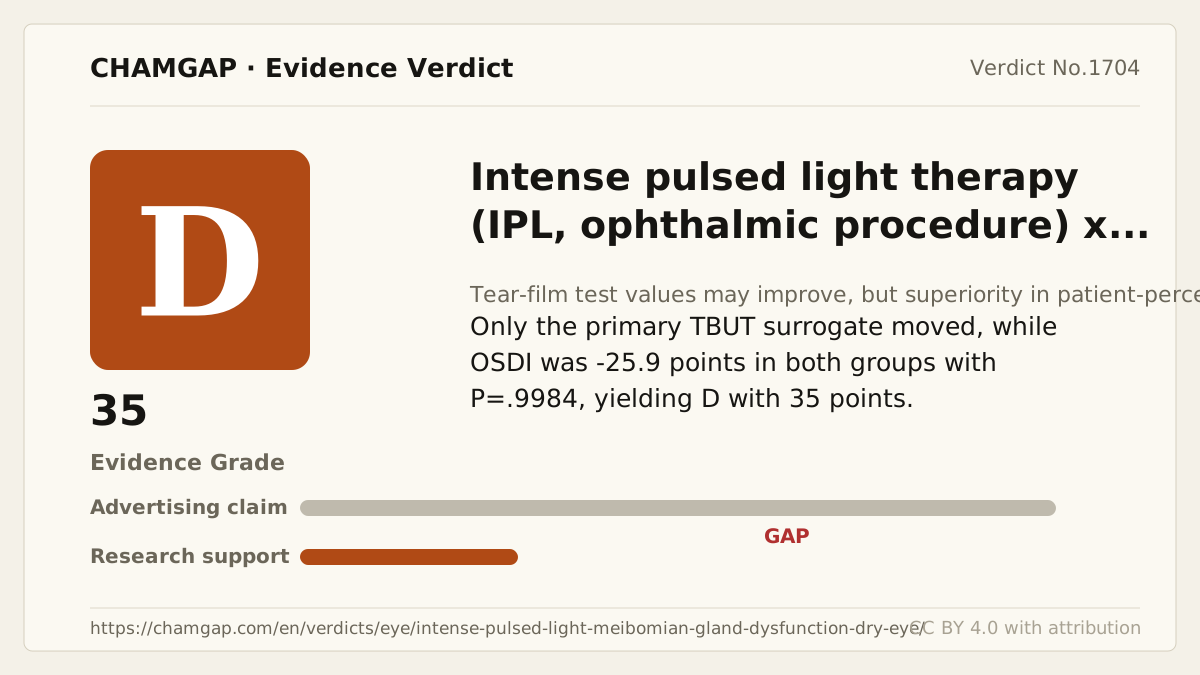
research showsIPL combined with meibomian gland expression is rated D because only a surrogate moved while clinical efficacy remained unproven. The primary TBUT endpoint is a tear-film surrogate under rule ①-ⓐ. Patient-experienced OSDI symptoms changed by -25.9 points in both groups, P=.9984, a completely null result under rule ①-ⓑ. The evidence is limited to one manufacturer-involved trial with 88 randomized participants, yielding D with 35 points.
ads claimPromotion can expand the result into restoration of blocked glands, a root-cause cure for dry eye, and freedom from artificial tears. The clearest evidence is short-term improvement in tear-film testing when expression is co-administered; superiority in patient-perceived symptoms remains unconfirmed.
Useful facts when choosing a product
- The pivotal trial evaluated four sessions of IPL followed by meibomian gland expression, not IPL alone, against sham plus expression.
- Wavelength, fluence, pulse pattern, skin-type restrictions, and number of sessions vary across devices and studies, limiting generalization.
- Periocular light treatment requires appropriate eye protection and trained delivery, with review of photosensitizing medicines and skin conditions.
- Dry eye can arise from aqueous deficiency, medicines, autoimmune disease, corneal neuropathic pain, and other causes, so IPL is not appropriate without an MGD-focused assessment.
Chamgap Semantic Classification Code
Candidate index · review held
P.intense-pulsed-light-therapy.ophthalmic.tear-film-measures-and-symptoms-in-dry-eye-due-to-meibomian-gland-dysfunction.improve.shamProcedures, devices and tests > Intense pulsed light therapy > Ophthalmic > tear-film measures and symptoms in dry eye due to meibomian gland dysfunction > Improvement claim > Sham procedure or device
An automated migration candidate, not an issued permanent code; exact claim scope remains under review. This machine-generated migration candidate helps retrieval but is not a permanent assignment. The original verdict ID and URL remain authoritative.
What the research actually shows
A three-site United States trial randomized 88 patients with moderate-to-severe MGD to IPL plus MGX or sham plus MGX. After protocol deviations at one site and additional missingness, 82 participants supplied the main analysis. Primary TBUT rose from 3.8 to 4.5 seconds in controls and from 4.0 to 6.0 seconds with IPL, producing a significant difference, while OSDI changes were identical and failed. Lumenis designed the study with the authors and analyzed part of the data; its vendor Clinreg performed most primary and secondary analyses and generated the randomization sequence. A synthesis of 11 trials and 759 participants favored test measures but left symptom effects and heterogeneity unresolved.
Why this is classified as D (35)
The primary TBUT endpoint was a tear-film surrogate, while OSDI changed by -25.9 points in both groups with P=.9984. Only a surrogate moved, clinical efficacy was unproven, and evidence was limited to one manufacturer-involved 88-person trial, giving D with 35 points.
Counterpoint. Some patients with confirmed MGD and insufficient response to standard eyelid care may obtain better short-term test measures or selected symptoms. Cost and repeat-session needs should be weighed against perceived benefit.
Rejudgment record. Cross-check applied — Applied rules ①-ⓐ and ①-ⓑ because primary TBUT was a tear-film surrogate while OSDI was -25.9 points in both groups with P=.9984; only a surrogate moved in one manufacturer-involved 88-person trial, so clinical efficacy remains unproven.
Sub-claim grades by effect
This ingredient is marketed for several effects. A single overall grade blends strong and weak claims together, so each effect is graded separately here. The overall grade reflects the strongest disconfirming or core claim.
| Effect (sub-claim) | Grade | Basis |
|---|---|---|
| Prolonged tear breakup time | D | The primary endpoint succeeded, but it is a test surrogate for clinical benefit. |
| Improved patient-reported dry-eye symptoms | D | The key trial failed on the between-group OSDI result with P=.9984. |
| Improved meibomian gland secretion | D | Selected secondary measures were positive, but patient-experienced efficacy remains unproven. |
Cross-check — AI research and Codex final gate
Evidence Table
| Study | Design | Sample | Funding | Endpoint | Result | Weight |
|---|---|---|---|---|---|---|
| Toyos R et al. 2022 | Multicenter randomized double-masked sham-plus-active co-treatment controlled trial | 88 randomized; 82 in the actual primary analysis (43 control and 39 IPL) | Funded by device manufacturer Lumenis, which participated in design and part of the analysis; Lumenis vendor Clinreg performed most analyses | Primary endpoint of change in fluorescein TBUT | TBUT favored IPL by about 1.24 seconds, P=.001, and succeeded; OSDI changed by -25.9 in both groups, P=.9984, and failed. | Key manufacturer-funded direct trial |
| Demolin L et al. 2023 | Systematic review and meta-analysis of randomized trials | 11 randomized trials with 759 participants | Authors reported no external funding; included trials contained industry-supported studies | Dry-eye signs and symptoms including TBUT and OSDI | TBUT was positive, but OSDI superiority over control was unclear and heterogeneity was substantial. | Assessment of replication and limitations |
Receipt — 2 References
All 2 cited sources were verified for existence at the original page (as of 2026-07-24).
Final verification and publication gate: Codex · Evidence date: 2026-07-24 · Corrections: none
Cite this verdict
[Chamgap] Intense pulsed light therapy x dry-eye improvement in meibomian gland dysfunction — Evidence Grade D·35. 2 cited sources checked. Source: https://chamgap.com/en/verdicts/eye/intense-pulsed-light-meibomian-gland-dysfunction-dry-eye/ · CC BY 4.0CC BY 4.0 — free to use with attribution; do not distort grades, numbers, or verdict meaning.
What this document does and does not do
Chamgap is an information source. It reports what research has and has not confirmed; it does not tell readers what to take or buy. That decision belongs to readers and, when needed, medical or legal professionals. This verdict reflects literature available up to the search date and may change as new research appears. Nothing here is medical advice.