
Inferior punctal plug,
does it really help with Improvement in ocular-surface symptoms and tear-film measures?
research showsThe grade is C. In a 48-participant trial, one eye received a plug and the fellow eye remained untreated; six-week OSDI fell by 14.5 points overall (95% CI 5.06-23.94). Plugged eyes had 2.3 seconds longer tear-film breakup time and 0.5 points less corneal staining than fellow eyes. However, OSDI is a person-level binocular questionnaire, so its symptom effect cannot be separated between plugged and untreated eyes, and arm-specific absolute means were not verified. This small, short single trial gives C with 46 points.
ads claimImproved tear-film breakup time or corneal staining cannot automatically be converted into patient-perceived symptom benefit. In a unilateral trial, overall OSDI improvement remains vulnerable to natural history and expectation effects.
Useful facts when choosing a product
- A punctal plug blocks tear drainage to prolong tear residence on the ocular surface.
- The trial inserted a plug in one inferior punctum and left the fellow eye untreated.
- A targeted search found no duplicate verdict for this exact punctal-plug and prostaglandin-associated ocular-surface claim, and the pivotal PMID and DOI were not duplicated.
Chamgap Semantic Classification Code
Candidate index · review held
UNK.unilateral-inferior-punctal-plug-in-prostaglandin-treated-glaucoma-patients.ophthalmic.ocular-surface-symptoms-and-tear-film-measures.improve.shamUnknown > unilateral inferior punctal plug in prostaglandin-treated glaucoma patients > Ophthalmic > ocular-surface symptoms and tear-film measures > Improvement claim > Sham procedure or device
An automated migration candidate, not an issued permanent code; exact claim scope remains under review. This machine-generated migration candidate helps retrieval but is not a permanent assignment. The original verdict ID and URL remain authoritative.
What the research actually shows
This was a single paired-eye randomized trial in which 48 of 60 eligible patients participated. The abstract specifies masked investigators at six weeks, but public material did not verify allocation-concealment method, evidence that participant masking was maintained, a prospectively registered primary endpoint, missing-data handling, or the complete funding statement. The study was small and lasted six weeks, and the subjective OSDI lacked a sham-controlled symptom comparison.
Why this is classified as C (46)
A patient-centered symptom was measured, but no comparable between-eye symptom effect could be calculated for the unilateral intervention. The 48-participant, six-week single trial and absence of a sham symptom control leave no strength-axis credit, giving C with 46 points.
Counterpoint. Masked evaluation showed real improvements in tear-film breakup time, staining, and osmolarity versus the fellow eye. Those objective signals do not by themselves establish patient-perceived symptom benefit.
Rejudgment record. Cross-check applied — We cross-checked the paired-eye design, OSDI unit of analysis, eye-level measures, sample size, follow-up, and adverse events against the Sherwin report and Cochrane full text.
| Endpoint | P | Symptom or function itself is the target - including patient reports and performance tests |
| Replication | R1 | Single confirmatory trial |
| Independence | I1 | Mixed funding sources |
| Effect size | EX | The clinical size of the effect could not be judged |
Stored derived and displayed grades match; this is not a current recalculation or validity check (C).
Sub-claim grades by effect
This ingredient is marketed for several effects. A single overall grade blends strong and weak claims together, so each effect is graded separately here. The overall grade reflects the strongest disconfirming or core claim.
| Effect (sub-claim) | Grade | Basis |
|---|---|---|
| An inferior punctal plug improves ocular-surface symptoms in prostaglandin users. | C | OSDI improved, but as a person-level before-after change it did not isolate the treated-eye effect. |
| An inferior punctal plug improves tear-film breakup time and corneal staining. | C | Between-eye results were statistically positive but were surrogate findings from 48 participants over six weeks. |
Cross-check — AI research and Codex final gate
Evidence Table
| Study | Design | Sample | Funding | Endpoint | Result | Weight |
|---|---|---|---|---|---|---|
| Sherwin et al., Clin Exp Ophthalmol 2018 | Investigator-masked paired-eye randomized trial | 48 of 60 eligible participants enrolled and were analyzed | Complete funding statement not verified | Six-week OSDI, tear-film breakup time, corneal staining, osmolarity, and IOP | Overall OSDI change -14.5 points (95% CI -23.94 to -5.06); plugged versus fellow-eye TBUT +2.3 seconds (1.4-3.2), corneal staining -0.5 (-0.7 to -0.3); plug extrusion 8.5% and increased epiphora 6.5% | Pivotal single trial |
| Ervin et al., Cochrane 2017 | Systematic review of randomized and quasi-randomized punctal-occlusion trials | 18 trials, 711 participants, and 1,249 eyes | Review-author support was disclosed, while funding of included trials was mixed or incompletely reported | Dry-eye symptoms and common ocular-surface signs | Marked heterogeneity; symptom improvement with punctal plugs remained inconclusive | Indirect background evidence from broader dry-eye populations |
Receipt — 2 References
All 2 cited sources were verified for existence at the original page (as of 2026-08-14).
Final verification and publication gate: Codex · Evidence date: 2026-08-14 · Corrections: none
Cite this verdict
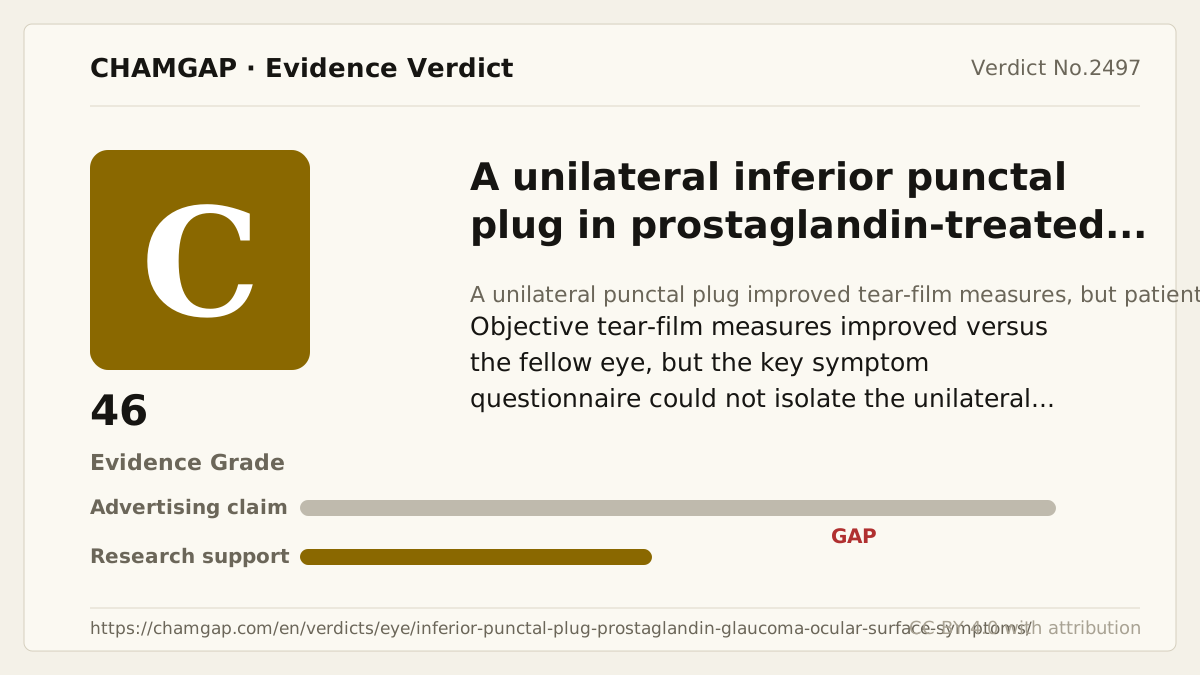
[Chamgap] Inferior punctal plug x prostaglandin-associated ocular-surface symptoms — Evidence Grade C·46. 2 cited sources checked. Source: https://chamgap.com/en/verdicts/eye/inferior-punctal-plug-prostaglandin-glaucoma-ocular-surface-symptoms/ · CC BY 4.0CC BY 4.0 — free to use with attribution; do not distort grades, numbers, or verdict meaning.
What this document does and does not do
Chamgap is an information source. It reports what research has and has not confirmed; it does not tell readers what to take or buy. That decision belongs to readers and, when needed, medical or legal professionals. This verdict reflects literature available up to the search date and may change as new research appears. Nothing here is medical advice.