
Fenofibrate,
does it really help with Reduced progression of diabetic retinopathy and need for first laser treatment in type 2 diabetes?
research showsFenofibrate for diabetic retinopathy is rated B. In 9,795 FIELD participants, first retinal laser treatment occurred in 3.4% versus 4.9%, HR 0.69. In 2,856 ACCORD-Eye participants, four-year retinopathy progression was 6.5% versus 10.2%, adjusted OR 0.60. Those findings were secondary or tertiary eye outcomes nested in cardiovascular trials, but the publicly funded, double-masked 2024 LENS trial of 1,151 participants also reduced its prespecified primary outcome of progression to referable retinopathy or maculopathy or treatment, 22.7% versus 29.2%, HR 0.73. Visual acuity and visual function did not improve, and the cardiovascular primary outcome in FIELD was negative, so B rather than A is appropriate.
ads claimPromotion can turn this into an oral drug that prevents blindness. The trials directly established reductions in retinopathy grading progression and the need for laser, injection, or surgery, not improved vision or proven prevention of blindness. Fenofibrate does not replace glucose and blood-pressure control or regular retinal screening.
Useful facts when choosing a product
- Fenofibrate is a prescription PPAR-alpha agonist used for lipid disorders, and diabetic-retinopathy use is not an approved indication in the United States and many other jurisdictions, so local prescribing rules must be checked.
- Formulations use different strengths, including 48 and 145 mg or 54 and 160 mg, with formulation-specific food instructions; milligram doses should not be interchanged casually.
- The retinal benefit was not explained solely by lipid changes, and glucose, blood pressure, renal care, and regular ophthalmic screening must continue.
- Risks include hepatotoxicity, myopathy or rhabdomyolysis, increased serum creatinine, and gallstones. Dose reduction or avoidance depends on renal function, and muscle symptoms need closer attention during statin coadministration.
Chamgap Semantic Classification Code
Candidate index · review held
M.fenofibrate.UNK.progression-of-diabetic-retinopathy-and-need-for-first-laser-treatment-in-type-2-diabetes.reduce.MULTIMedicinal interventions > Fenofibrate > Unknown > progression of diabetic retinopathy and need for first laser treatment in type 2 diabetes > Reduction claim > Multiple: primary unresolved
An automated migration candidate, not an issued permanent code; exact claim scope remains under review. This machine-generated migration candidate helps retrieval but is not a permanent assignment. The original verdict ID and URL remain authoritative.
What the research actually shows
FIELD randomized 9,795 people with type 2 diabetes to fenofibrate 200 mg or placebo in a cardiovascular trial, with first laser therapy as a prespecified tertiary outcome. Over five years, first laser treatment fell to 164 participants (3.4%) from 238 (4.9%), HR 0.69, while overall two-step progression in the photography substudy was not significant and benefit was clearest with baseline retinopathy. ACCORD-Eye compared fenofibrate 160 mg with placebo on a simvastatin background and found four-year progression of 6.5% versus 10.2%, OR 0.60. The independent, publicly funded 2024 LENS trial double-masked 1,151 adults with early retinopathy or maculopathy and found progression to referable disease or eye treatment in 22.7% versus 29.2%, HR 0.73. LENS showed no visual acuity or function difference and lower mean estimated glomerular filtration rate.
Why this is classified as B (78)
FIELD first-laser HR 0.69 and ACCORD-Eye progression OR 0.60 were replicated clinical eye outcomes but secondary or tertiary analyses of cardiovascular trials. The independent publicly funded LENS dedicated trial substantially addressed those weaknesses with a positive primary outcome, HR 0.73. Absence of visual acuity or function benefit and uncertainty for treatment alone give B with 78 points.
Counterpoint. Evidence is more directly applicable to patients with early or established retinopathy who can undergo renal, hepatic, and muscle-risk monitoring than to universal addition for every person with type 2 diabetes and no retinopathy.
Rejudgment record. New verdict — FIELD first-laser and ACCORD-Eye progression benefits were replicated but originated as secondary or tertiary eye outcomes in cardiovascular trials; the independent publicly funded 2024 dedicated LENS trial added a positive prespecified primary progression-or-treatment outcome, while no direct visual-preservation benefit limits the grade to B
Sub-claim grades by effect
This ingredient is marketed for several effects. A single overall grade blends strong and weak claims together, so each effect is graded separately here. The overall grade reflects the strongest disconfirming or core claim.
| Effect (sub-claim) | Grade | Basis |
|---|---|---|
| Reduced progression of diabetic retinopathy in type 2 diabetes | B | ACCORD-Eye progression reduction agreed with the FIELD baseline-retinopathy signal and was strengthened by the dedicated LENS primary outcome. |
| Reduced need for first laser treatment for diabetic retinopathy | B | FIELD found HR 0.69, but it was a tertiary cardiovascular-trial outcome and treatment alone remained statistically uncertain in LENS. |
| Reduced progression of early retinopathy to a referable stage or ophthalmic treatment | B | The prespecified primary composite in the independently publicly funded LENS trial had HR 0.73, but vision did not improve. |
Cross-check — AI research and Codex final gate
Evidence Table
| Study | Design | Sample | Funding | Endpoint | Result | Weight |
|---|---|---|---|---|---|---|
| Keech AC et al. 2007 FIELD eye analysis | Prespecified tertiary eye outcome and photography substudy of a large randomized double-blind placebo-controlled trial | 9,795 participants with type 2 diabetes; 1,012 in the photography substudy | Industry funding including Laboratoires Fournier | First retinal laser treatment and two-step ETDRS progression | First laser treatment was 3.4% versus 4.9%, HR 0.69; overall photography-substudy progression was not significant and fell among those with baseline retinopathy. | Large clinical treatment outcome with a tertiary-endpoint limitation |
| ACCORD Study Group and ACCORD Eye Study Group 2010 | Prespecified eye substudy of a factorial randomized trial | 10,251 overall; 2,856 in ACCORD-Eye | U.S. NIH public funding with industry-supplied study drugs | Three-step ETDRS progression or laser photocoagulation or vitrectomy | On a simvastatin background, progression was 6.5% with fenofibrate versus 10.2% with placebo; adjusted OR 0.60 (95% CI 0.42 to 0.87). | Independent replication with a substudy limitation |
| Preiss D et al. 2024 LENS | Dedicated randomized double-blind placebo-controlled trial | 1,151 adults with early diabetic retinopathy or maculopathy | Public funding from the United Kingdom NIHR | Progression to referable retinopathy or maculopathy, or laser, injection, or vitrectomy treatment | The primary outcome was 22.7% versus 29.2%; HR 0.73 (95% CI 0.58 to 0.91), with no visual acuity or visual-function difference. | Key independent dedicated primary-outcome confirmation |
Receipt — 3 References
All 3 cited sources were verified for existence at the original page (as of 2026-07-23).
Final verification and publication gate: Codex · Evidence date: 2026-07-23 · Corrections: none
Cite this verdict
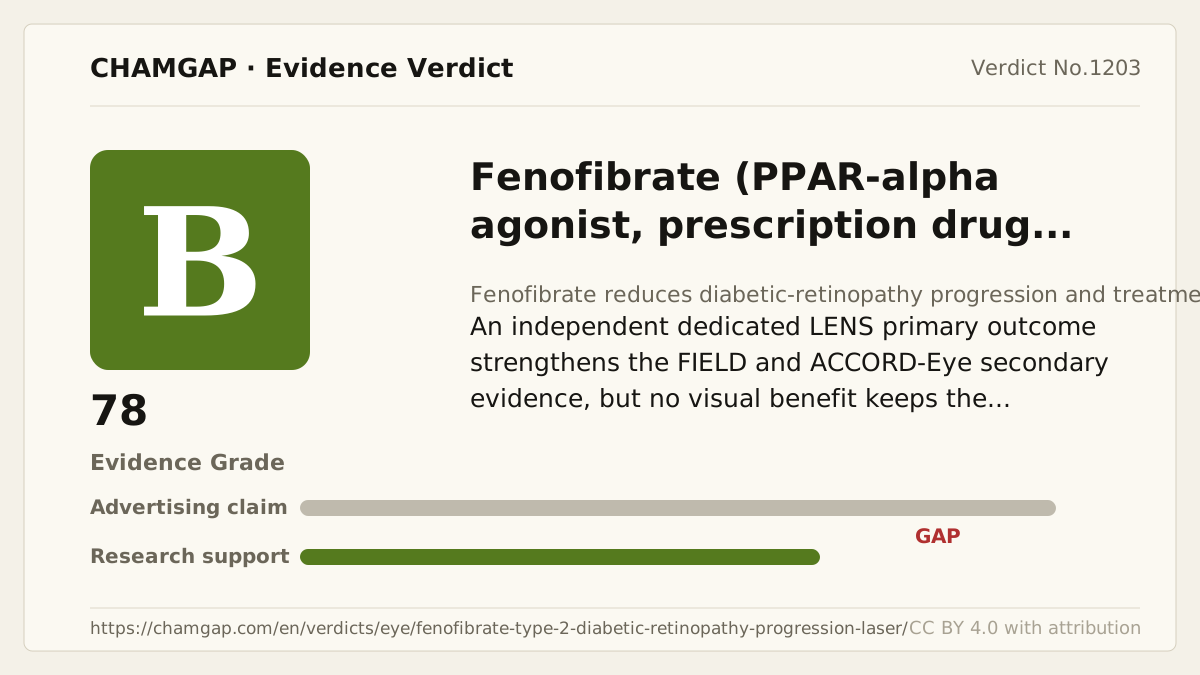
[Chamgap] Fenofibrate x reduced progression and first laser treatment in type 2 diabetic retinopathy — Evidence Grade B·78. 3 cited sources checked. Source: https://chamgap.com/en/verdicts/eye/fenofibrate-type-2-diabetic-retinopathy-progression-laser/ · CC BY 4.0CC BY 4.0 — free to use with attribution; do not distort grades, numbers, or verdict meaning.
What this document does and does not do
Chamgap is an information source. It reports what research has and has not confirmed; it does not tell readers what to take or buy. That decision belongs to readers and, when needed, medical or legal professionals. This verdict reflects literature available up to the search date and may change as new research appears. Nothing here is medical advice.