
Early pars plana vitrectomy,
does it really help with Prevention of long-term severe visual loss and recovery of useful vision in severe vitreous hemorrhage and proliferative diabetic retinopathy in type 1 diabetes?
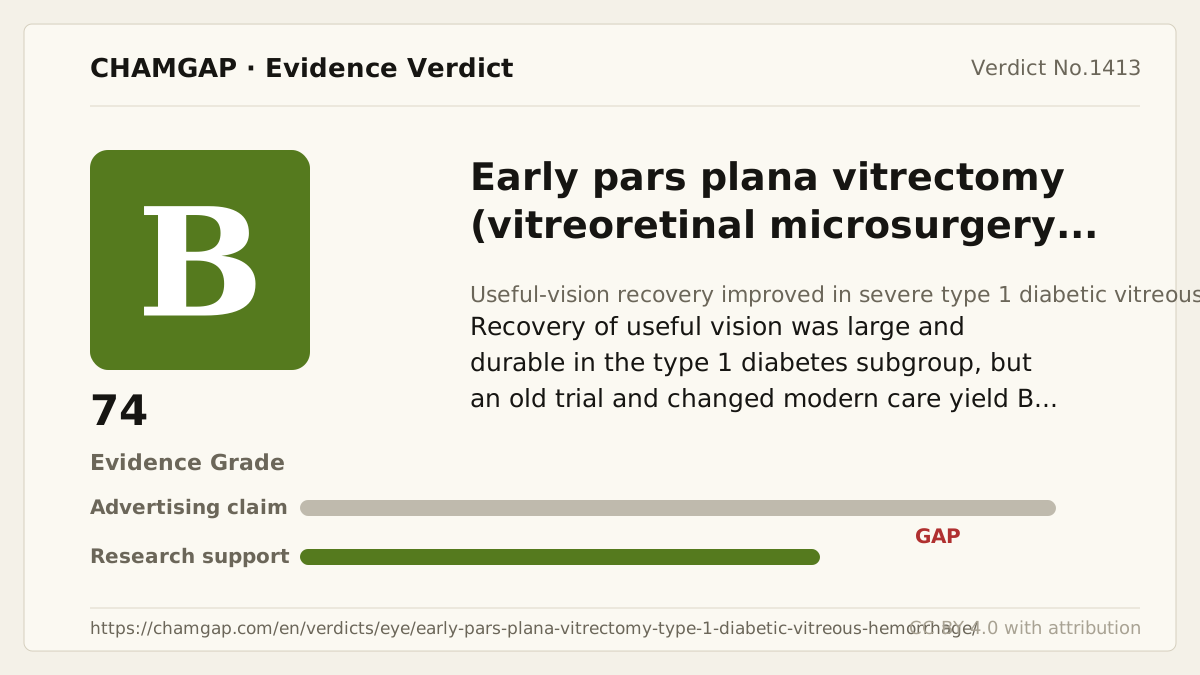
research showsEarly vitrectomy is rated B for recent severe vitreous hemorrhage and very severe proliferative retinopathy in type 1 diabetes. In the randomized DRVS, recovery of visual acuity of 10/20 or better at two years occurred in 36% with early surgery and 12% with one-year deferral, and the advantage persisted through four years. Vision is a direct patient-important outcome, but the trial was conducted in the 1980s, benefit was concentrated in the type 1 diabetes subgroup, and modern small-gauge surgery, panretinal photocoagulation, and anti-VEGF therapy have changed the treatment context. These limitations prevent an A grade.
ads claimMicrosurgical promotion can imply rapid and certain restoration of blurred vision. The pivotal evidence comes from an old population with type 1 diabetes and very severe proliferative disease, while final vision also depends on macular and retinal ischemia and detachment.
Useful facts when choosing a product
- Pars plana vitrectomy uses small ocular incisions to remove opaque vitreous and blood, with membrane peeling, laser, gas, or silicone oil added when needed.
- This verdict best fits recent severe vitreous hemorrhage reducing vision to 5/200 or worse with very severe proliferative retinopathy in type 1 diabetes.
- It is a surgical intervention distinct from anti-VEGF injection or panretinal photocoagulation, although modern care may combine or sequence them.
- Cataract progression, recurrent hemorrhage, retinal tear or detachment, pressure change, and endophthalmitis can occur, and vision can rarely worsen.
Chamgap Semantic Classification Code
Candidate index · review held
P.early-pars-plana-vitrectomy.procedural.long-term-severe-visual-loss-and-recovery-of-useful-vision-in-severe-vitreous-hemorrhage-and-proliferative-diabetic-retinopathy-in-type-1-diabetes.prevent.UNKProcedures, devices and tests > Early pars plana vitrectomy > Procedural > long-term severe visual loss and recovery of useful vision in severe vitreous hemorrhage and proliferative diabetic retinopathy in type 1 diabetes > Occurrence-prevention claim > Unknown
An automated migration candidate, not an issued permanent code; exact claim scope remains under review. This machine-generated migration candidate helps retrieval but is not a permanent assignment. The original verdict ID and URL remain authoritative.
What the research actually shows
The DRVS randomized 616 eyes with recent severe diabetic vitreous hemorrhage and visual acuity of 5/200 or worse to early surgery or one-year deferral with surgery when needed. At two years, 10/20 or better vision occurred in 36% versus 12% among participants with type 1 diabetes, compared with 16% versus 18% in type 2 diabetes. The four-year report found persistent good-vision benefit in type 1 diabetes, particularly with severe proliferative retinopathy and diabetes duration below 20 years. Modern anti-VEGF therapy was unavailable, and instrumentation, laser, and surgical safety differed from current practice.
Why this is classified as B (74)
Randomized two- and four-year follow-up directly improved recovery and maintenance of useful vision in the type 1 diabetes subgroup. Because the trial dates from the 1980s, efficacy was concentrated by diabetes type, and the evidence predates modern anti-VEGF therapy, laser, and small-gauge surgery, the grade is B with 74 points.
Counterpoint. Modern techniques may improve safety and recovery, but that does not validate direct transfer of the historical effect size to every current patient. A retinal specialist must individualize surgical timing.
Rejudgment record. New verdict — Accepted direct two- and four-year visual benefit in the DRVS while applying a ceiling because efficacy was concentrated in the type 1 diabetes subgroup, the trial dates from the 1980s, and it predates modern anti-VEGF therapy, laser, and surgical techniques
Sub-claim grades by effect
This ingredient is marketed for several effects. A single overall grade blends strong and weak claims together, so each effect is graded separately here. The overall grade reflects the strongest disconfirming or core claim.
| Effect (sub-claim) | Grade | Basis |
|---|---|---|
| Recovery of useful vision after severe vitreous hemorrhage in type 1 diabetes | B | Two-year vision of 10/20 or better was 36% versus 12%, but this was a diabetes-type subgroup in an old trial. |
| Recovery or maintenance of good vision through four years in type 1 diabetes | B | The advantage persisted in long-term follow-up of the randomized cohort. |
| Recovery of useful vision after severe vitreous hemorrhage in type 2 diabetes | C | The two-year result was 16% versus 18%, with no demonstrated early-surgery benefit. |
Cross-check — AI research and Codex final gate
Evidence Table
| Study | Design | Sample | Funding | Endpoint | Result | Weight |
|---|---|---|---|---|---|---|
| Diabetic Retinopathy Vitrectomy Study Research Group, Report 2. 1985 | Multicenter randomized trial of early surgery versus one-year deferral | 616 eyes with severe vitreous hemorrhage | Supported by the United States National Eye Institute | Recovery of visual acuity of 10/20 or better at two years | In type 1 diabetes, the result was 36% with early surgery versus 12% with deferral, while type 2 diabetes showed 16% versus 18%. | Pivotal direct visual randomized trial with diabetes-type subgroup effect |
| Diabetic Retinopathy Vitrectomy Study Research Group, Report 5. 1990 | Four-year follow-up of the randomized trial | 616 originally randomized eyes | Supported by the United States National Eye Institute | Recovery or maintenance of visual acuity of 10/20 or better through four years | The good-vision advantage persisted through four years in type 1 diabetes but was not found in type 2 diabetes. | Long-term durability evidence |
Receipt — 2 References
All 2 cited sources were verified for existence at the original page (as of 2026-07-23).
Final verification and publication gate: Codex · Evidence date: 2026-07-23 · Corrections: none
Cite this verdict
[Chamgap] Early pars plana vitrectomy x recovery of useful vision after severe vitreous hemorrhage in type 1 diabetes — Evidence Grade B·74. 2 cited sources checked. Source: https://chamgap.com/en/verdicts/eye/early-pars-plana-vitrectomy-type-1-diabetic-vitreous-hemorrhage/ · CC BY 4.0CC BY 4.0 — free to use with attribution; do not distort grades, numbers, or verdict meaning.
What this document does and does not do
Chamgap is an information source. It reports what research has and has not confirmed; it does not tell readers what to take or buy. That decision belongs to readers and, when needed, medical or legal professionals. This verdict reflects literature available up to the search date and may change as new research appears. Nothing here is medical advice.